
House of Representatives Urges Rapid Mitigation to Prevent Tourism Disruption
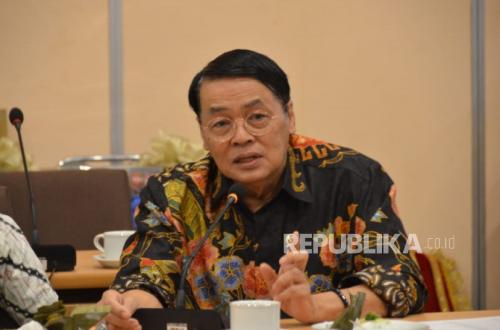
Gandung Pardiman, a member of Commission VII of the Indonesian House of Representatives (DPR RI), is urging the government to strengthen preparedness for volcanic eruption activities to minimise the impact on the tourism sector.
According to Gandung, Indonesia possesses immense tourism potential but is simultaneously located in a disaster-prone region as part of the Ring of Fire. This condition makes the strengthening of mitigation essential to ensure public safety is maintained without hindering the growth of the tourism sector.
He cited the recent eruption of Mount Anak Krakatau, which has affected flight activities, as an example. Gandung noted that any disruption to connectivity has the potential to spread to various sectors that rely on tourist movement.
“Volcanic eruptions are not just a matter of disaster management, but also an economic and tourism issue. When flights are disrupted, tourists cancel or postpone trips, hotels experience a decline in occupancy, and restaurants and MSMEs lose customers; the impact thus enters the entire tourism economic chain,” Gandund stated in a briefing on Tuesday (8/9/2026).
Nevertheless, Gandung believes the national tourism sector still possesses growth momentum that needs to be maintained. Data from the Central Bureau of Statistics (BPS) shows that international tourist arrivals in May 2026 reached approximately 1.38 million visits, representing a year-on-year growth of 5.83 per cent.
Domestic tourism also showed a positive trend. During the same period, the number of domestic trips reached 106.16 million, an increase of 8.69 per cent compared to the previous year.
According to Gandung, these achievements demonstrate that Indonesia’s tourism appeal remains strong. However, this growth must be supported by increasingly mature disaster mitigation systems and public communication.
He reminded that fluctuations in tourist arrivals in several regions also indicate that the tourism sector is highly sensitive to connectivity factors and perceptions of safety. In North Sumatra, for instance, international tourist arrivals in June 2026 reached 23,129 visits, a decrease of 17.76 per cent compared to May. Nonetheless, cumulatively from January to June 2026, the number of visits grew by 9.57 per cent compared to the same period the previous year.
“This data shows that our tourism market still has growth momentum, but is very sensitive to connectivity disruptions and security perceptions. Therefore, volcanic eruptions must be handled with rapid mitigation and appropriate public communication,” said the Golkar Party legislator.
Gandung assessed that certainty in connectivity is a crucial factor for tourists when planning trips. Flight disruptions due to eruptions, he said, can have a broader impact because tourists are often tied to various agendas and travel services.
“When flights are cancelled, tourists do not only lose access to transportation. They may also lose hotel reservations, destination tickets, tour packages, and travel itineraries. This ultimately results in losses for the tourism industry from upstream to downstream,” he added.
Consequently, Gandung hopes the government will use the Anak Krakatau eruption as a momentum to strengthen coordination across ministries and agencies. Such coordination is deemed vital so that disaster responses can be swift, measurable, and continue to provide certainty to both the public and tourism industry players.
He also encouraged that information regarding destination conditions, flights, and volcanic activity developments be delivered quickly and accurately. Good public communication is considered capable of preventing panic while maintaining tourist confidence.
Gandung emphasised that disaster mitigation and tourism growth do not have to be in conflict. With mature planning, both can proceed in tandem so that safety remains the priority without eliminating economic opportunities for the community.
He expressed hope that local governments, destination managers, business actors, transport operators, and the community can build a response system that is increasingly resilient to potential disasters.