
House of Representatives Urges Post-Disaster Recovery to be Monitored Until Citizens Achieve Self-Sufficiency
Disasters do not end when the evacuation process concludes. After public attention begins to shift, affected residents must still face issues regarding housing, healthcare, children’s education, and the restoration of livelihoods. Therefore, the rehabilitation and reconstruction stages require coordination as serious as the emergency response period.
The experience of handling the earthquake in East Nusa Tenggara in August 2026 once again demonstrates the importance of accurate data. Data is not merely an administrative matter. From that data, the government calculates damaged houses, the number of refugees, public facilities that must be restored, and the aid that needs to be distributed. When databases between institutions differ, aid risks being delayed, overlapping, or failing to reach the groups most in need.
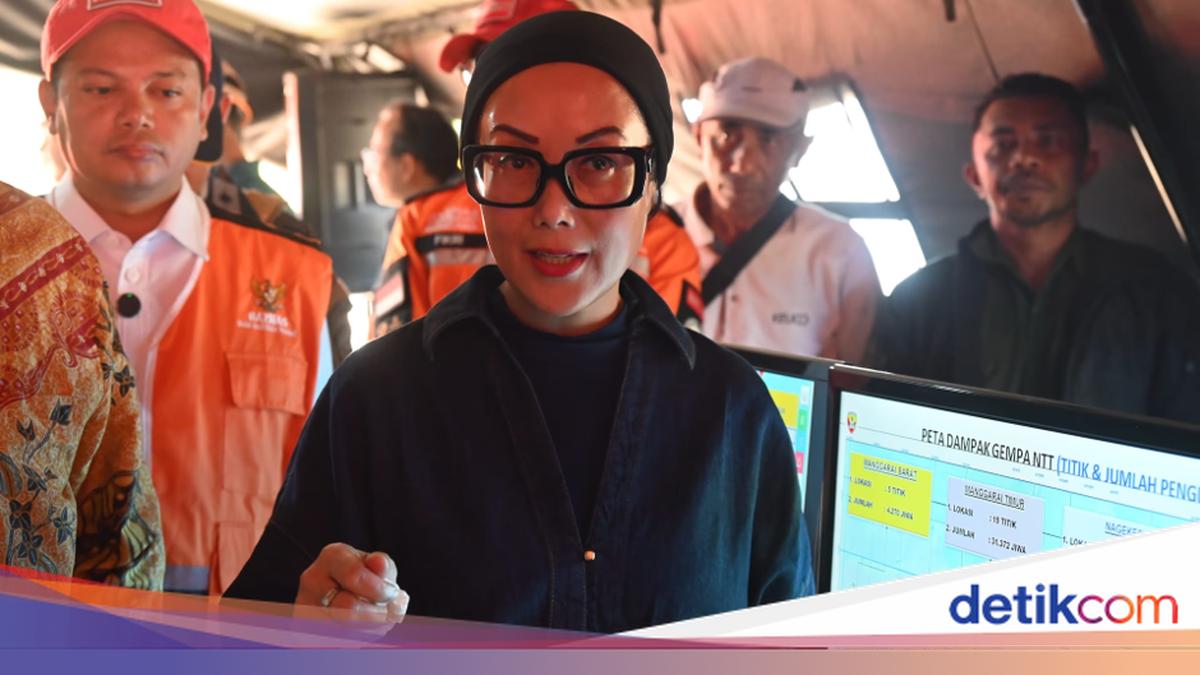
During a visit to the earthquake post in Reok District, Manggarai Regency, Member of Commission VIII of the House of Representatives, Selly Andriany Gantina, appreciated the coordination of ministries and agencies under the BNPB (National Disaster Management Agency). However, she also emphasised the need for integrated data management that is continuously updated.
This note is vital because recovery can only be measured if the government and all parties work with the same information. According to her, oversight must also ensure that basic needs do not stop at logistics distribution. Residents living in displacement camps require certainty regarding temporary and permanent housing, access to clean water, healthcare services, and support to return to self-sufficiency.
Member of Commission IX of the House of Representatives, Obet Rumbruren, while reviewing conditions in Manggarai, highlighted the need for concrete action so that residents do not remain dependent on displacement camps for too long. Health aspects are a particular concern. Disaster victims may experience injuries, infectious diseases in displacement camps, or psychological pressure.
At this phase, coordination between healthcare facilities, BPJS Kesehatan (the national health insurance provider), local governments, and relevant ministries must proceed without administrative hurdles that add to the burden on citizens.
Children must also not lose their right to learn. Member of Commission X of the House of Representatives, Lestari Moerdijat, reminded that schools in disaster-prone areas require human resource readiness, adaptive curricula, emergency learning protocols, and disaster literacy. The 2023 BNPB Disaster Risk Map, cited in the DPR’s references, notes that more than 70,000 educational units are located in areas with moderate to high vulnerability levels.
In this context, the presence of the DPR among the community during disasters is important when it produces follow-up actions that can be audited by the public. Field visits should strengthen the oversight function, break down coordination barriers, and ensure that budget support is available until the recovery stage.
Physical presence is only the beginning; the measure of success is the change felt by the citizens.
Indonesia has long experience in overseeing post-disaster recovery, ranging from the tsunamis in Aceh and North Sumatra in 2004, the earthquakes in Yogyakarta and Central Java in 2006, to the earthquake in West Sumatra in 2009. In various events, the DPR formed teams or working committees to monitor aid, rehabilitation, reconstruction, and budget support.
The main lesson remains relevant: recovery requires a long period, single-source data, clear division of responsibilities, and oversight that does not cease once the cameras leave the location. If these four elements are implemented, the state will not only be present during emergencies but will also accompany citizens until they are able to rebuild their lives.
Source: jawawa.id (https://jawawa.id/newsitem/house-of-representatives-urges-post-disaster-recovery-to-be-monitored-until-citizens-achieve-self-sufficiency-1788347610)
Originally published by detikcom (https://news.detik.com/berita/d-8645427/dpr-dorong-pemulihan-pascabencana-dikawal-hingga-warga-mandiri), translated from Indonesian