
House of Representatives Urges Evaluation of BPS Decile Regulations Regarding Social and Educational Assistance
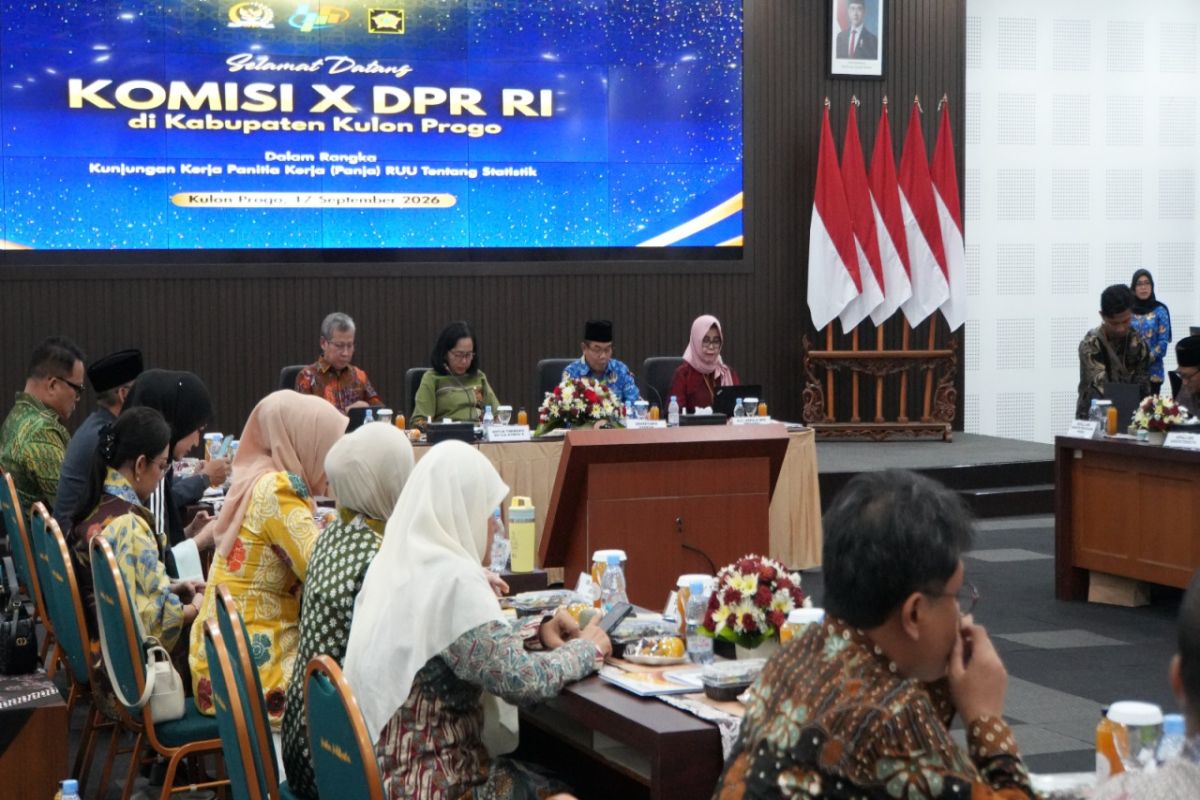
The House of Representatives (DPR) Commission X is urging the government to conduct a thorough evaluation of the use of Central Bureau of Statistics (BPS) decile data as the sole parameter for distributing social assistance (bansos) and educational aid.
The Vice Chairperson of Commission X, My Esti Wijayati, emphasised that the rigid use of deciles and the slow mechanism for data updates frequently trigger social issues, such as the loss of social assistance rights for the poor and the threat to underprivileged prospective students’ university prospects.
“Facts on the ground show that inaccurate decile classification triggers widespread unrest, as it is often used as an absolute requirement without room for factual correction,” said My Esti during a working visit by Commission X to Kulon Progo, Special Region of Yogyakarta, on Thursday.
She noted that village administrations often lack the legal authority to reallocate aid due to limited legal protections. Meanwhile, universities also face obstacles in the distribution of the Indonesia Smart Card (KIP) Kuliah.
Furthermore, My Esti highlighted that the data update process can take up to three months. According to her, such delays are highly detrimental to citizens in need of urgent assistance.
To address data inaccuracies, Commission X of the DPR proposed that the BPS conduct random sampling and involve village administrations directly through Village Deliberations (Muskal) to provide recommendations on the eligibility of aid recipients.
The Regional Secretary (Sekda) of Kulon Progo, Triyuno, welcomed the proposal to revise Law Number 16 of 1997 concerning Statistics.
He cited the case of a rickshaw driver in his region whose economic status temporarily jumped to Decile 9, threatening his child’s right to educational assistance, before the BPS eventually corrected the status to Decile 3.
Meanwhile, the Deputy for Distribution and Services Statistics at BPS RI, Ateng Hartono, explained that the BPS is continuously refining the management of the National Socio-Economic Integrated Data (DTSEN), which integrates data from the Socio-Economic Registry (Regsosek), P3KE (Targeting Extreme Poverty Reduction), DTKS, and the Civil Registry (Dukcapil).
“BPS also supports the revision of the Statistics Law to strengthen the National Statistical System, including agreeing to the idea of placing permanent field statistical officers at the village level to ensure data accuracy,” he said.