
House of Representatives Urges Customs and Police to Trace Drug Networks to Their Financiers
The House of Representatives’ Commission III has urged the Directorate General of Customs and Excise and the Metro Jaya Regional Police to strengthen surveillance and enforcement against the trafficking of narcotics and illegal prescription medicines. Enforcement, it said, should go further by identifying dealers, financiers and the flow of funds supporting these criminal networks.
Commission III member Abdullah said cooperation between the two institutions was important to breaking the chain of drug distribution, including through stronger intelligence-sharing and the development of investigations.
“Collaboration and synergy between the Jakarta Regional Office of Customs and Excise and the Metro Jaya Police must continue to be strengthened to uncover various crimes—not only the production and distribution of illegal prescription medicines, but also narcotics,” Abdullah said on Friday (23 October).
He said enforcement should not stop with manufacturers, couriers or dealers. Authorities needed to trace those financing illegal activities and the proceeds of crime in order to dismantle the networks in full.
“The networks must also be traced to their financiers and the flow of money, so that the entire chain of crime can be exposed and broken,” he said.
Abdullah also called on Customs and Excise to strengthen surveillance, intelligence, patrols and enforcement, backed by adequate staffing and technology. This was necessary to detect smuggling routes and prevent narcotics and illegal prescription medicines from entering the country from abroad.
He said cooperation between Customs and Excise and the police could improve oversight of goods traffic and speed up the handling of discoveries indicating suspected criminal offences. Such efforts were also important to reduce the health, social and economic impacts of illegal drug abuse.
Henry Yosodiningrat, chairman of the central board of the National Anti-Narcotics Movement (GRANAT), also praised cooperation between Jakarta Customs and Excise and the Metro Jaya Police in uncovering the smuggling and illicit distribution of narcotics and prescription medicines.
Henry said coordination between institutions was essential to tackling organised narcotics crime involving transnational networks. Customs and Excise, he said, had a strategic role in monitoring the movement of goods through ports, airports and international shipping routes.
Intelligence provided by Customs and Excise could give police a starting point for investigating suspected smuggling, developing cases and identifying those involved in narcotics distribution networks.
According to Henry, success in combating drugs could not be measured only by the quantity of evidence seized or the number of suspects arrested. Authorities also needed to expose major dealers, financiers, distribution controllers and anyone proven to have protected the networks.
He urged authorities to investigate suspected money laundering if evidence met the requirements of the law. Financial investigations were important to cut off the funding sustaining narcotics syndicates.
Henry also called for firm action against officials or other individuals proven to have protected or facilitated the networks, or to have been part of them. To support these efforts, he urged intelligence-sharing, joint operations and surveillance of routes vulnerable to smuggling.
He added that stronger inter-agency cooperation was needed to prevent narcotics from reaching the public and protect young people from the effects of illegal drug use.
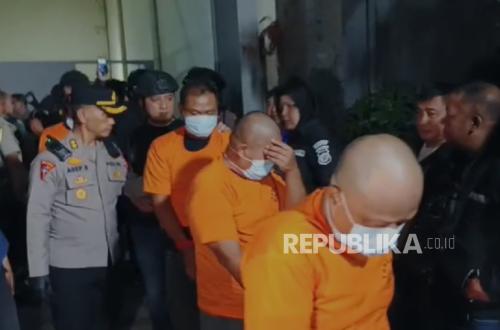
Previously, the Metro Jaya Police Narcotics Directorate and the Jakarta Regional Office of Customs and Excise uncovered suspected illicit distribution of the illegal medicines tramadol and trihexyphenidyl originating in Surakarta, Central Java. The operation began with information from Jakarta Customs and Excise, which was then followed up by police.
In the case, officers seized 7,862,500 tramadol and trihexyphenidyl tablets, as well as 69,272.5 kilograms of raw materials estimated to be capable of producing 492 million tablets.
The seizure is an example of the importance of coordination between Customs and Excise and the police in detecting and suppressing the distribution of illegal prescription medicines. Further investigation into distribution networks and their funding is needed to ensure enforcement does not stop with those operating on the ground.
Source: jawawa.id (https://jawawa.id/newsitem/house-of-representatives-urges-customs-and-police-to-trace-drug-networks-to-their-financiers-1792756355)
Originally published by Republika (https://news.republika.co.id/berita/tncw7r522/dpr-dorong-bea-cukai-dan-polisi-telusuri-jaringan-narkoba-hingga-pemodal), translated from Indonesian