
House of Representatives Pushes for Multi-Layered Verification for KIP Kuliah Disbursement
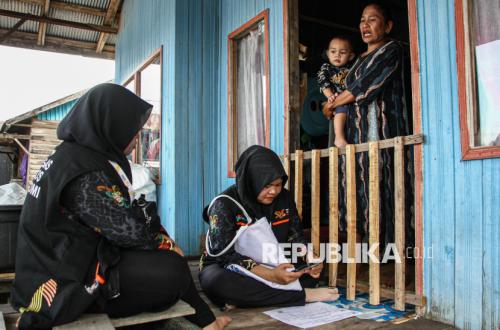
JAKARTA – Errors in the decile classification within the National Socio-Economic Single Data (DTSEN) have affected students’ access to education assistance. Decile data that does not reflect families’ actual economic circumstances has made it difficult for a number of prospective students to complete the administrative requirements for the Kartu Indonesia Pintar (KIP) Kuliah programme.
Atalia Praratya, a member of Commission VIII of the House of Representatives (DPR RI), assessed that the problem is no longer merely an administrative issue. According to her, data classification errors can affect the public’s right to education and social protection.
“The decile system should be a tool to help the government target those most in need, not a wall that blocks poor children from going to university. If the measuring instrument itself is flawed, how can the social justice promised by the state ever reach the people?” Atalia said on Tuesday (15/9/2026).
According to data compiled by Atalia, 86,118 applicants passed the 2026 SNBT admission route. However, after DTSEN screening, only 39,662 were deemed eligible to receive KIP Kuliah.
Another 46,456 applicants were found not to meet the criteria. Of that number, 2,656 students had data that had never been entered into the welfare decile system at all.
Beyond the data classification problem, Atalia said around 60,000 prospective first-year students were recorded as not re-registering at state universities due to tuition cost constraints. According to her, this figure demonstrates the scale of the education financing problem on the ground.
“This is a figure that reflects the true scale of this problem in the field,” said the Golkar Party politician.
Atalia also found decile status changes deemed inconsistent with families’ economic circumstances. Students previously classified in deciles 1–4 were reportedly moved to deciles 6–10 during the verification process, despite no significant change in their families’ economic conditions.
“These figures are not mere statistics. Behind them are children who fought to pass the selection, who had dreams of going to university, but had to return empty-handed simply because of data input errors or a ranking method that does not reflect real conditions in the field,” Atalia said.
The problem is considered even more complex at religious higher education institutions (PTKA) under the Ministry of Religious Affairs. PTKA covers Islamic, Christian, Catholic, Hindu and Buddhist campuses, as well as Ma’had Aly within pesantren (Islamic boarding schools).
“The KIP Kuliah quota for PTKA under the Ministry of Religious Affairs is far smaller than that of the Ministry of Higher Education or other technical ministries, even though their students struggle just as hard and come from poor families. On top of that, many Ma’had Aly are not even registered as KIP Kuliah providers yet. This is not just about wrong deciles, but about access fairness at the source,” Atalia said.
Consequently, Atalia is urging the government to implement multi-layered verification in determining recipients of social assistance and KIP Kuliah. She believes DTSEN deciles should not be the sole basis for determining eligibility.
Atalia also asked the government to expedite the decile correction process, which can currently take months. A special mechanism is deemed necessary ahead of the new student registration period so that data changes or errors do not eliminate prospective students’ opportunities to receive assistance.
“This is so prospective students do not lose their entitlement simply because of system delays,” Atalia said.
Atalia said Commission VIII of the House will continue to monitor the issue in every working meeting with the Ministry of Social Affairs and the Ministry of Religious Affairs. Improving the verification mechanism is important so that welfare data can be used as an instrument for disbursing assistance without disregarding people’s real conditions.
“We do not want a system error that could have been fixed to become the reason the state fails to show up for its own people,” Atalia said.