
House of Representatives Pushes for Acceleration of Separate Tracks for Commuter and Intercity Trains
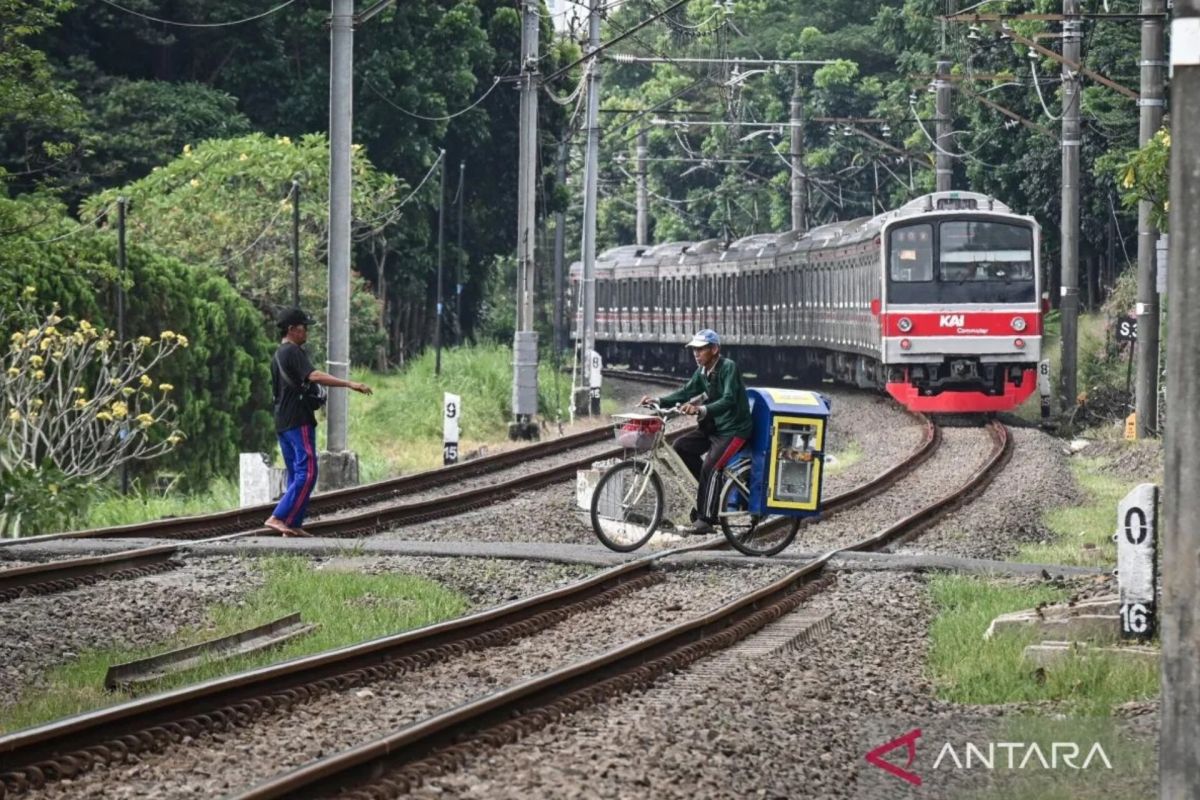
Jakarta (ANTARA) - Deputy Chairman of Commission V of the House of Representatives, Andi Iwan Darmawan Aras, is pushing for the acceleration of the separation of operational tracks for electric commuter trains (KRL) and intercity trains following the train accident in the East Bekasi area, West Java.
“The separation of operational tracks must be a priority. The completion of the Jakarta–Cikarang Double-Double Track (DDT) project will not only increase capacity but also safety,” said Andi in Jakarta on Monday.
According to him, the accident in East Bekasi demonstrates systemic pressure on rail tracks in urban areas, thus requiring a comprehensive evaluation of the railway safety system.
He also urged an evaluation covering the safety system from planning, monitoring, to response in the event of chain disruptions.
According to him, railway safety cannot rely solely on daily operational discipline but must also be viewed as the system’s ability to detect, isolate, and break risks from the initial occurrence of disruptions.
In addition to pushing for the separation of operational tracks, he also highlighted the issue of level crossings, which are still considered accident-prone points.
“Level crossings must be addressed immediately. Issues like this still occur frequently and have the potential to cause accidents,” he said.
With the separation of tracks between local and long-distance trains, train journeys can proceed more safely and with minimal disruptions.
“It is hoped that once the Double-Double Track project is completed, there will be no more disruptions,” he said.
In addition to track separation through the DDT project, Darmaningtyas added the need for the implementation of GPS-based sensor technology as an important step to prevent train accidents.
“Use GPS-based Intelligent Transportation System (ITS) technology to improve train operational safety,” he said.
He explained that this technology allows drivers to know the track conditions ahead, including the presence of other trains or disruptions.
“If all PT KAI facilities are equipped with GPS that can detect disruptions one or two kilometres ahead, it can minimise accidents,” he stated.
The development of GPS-based safety technology is one option that can be studied to strengthen the train journey monitoring system.
With a combination of DDT completion and the implementation of GPS-based technology, he believes that the safety and reliability of train journeys can be further improved.