
House of Representatives Passes Revision to National Police Law, Allowing President to Extend Chief of Police Term
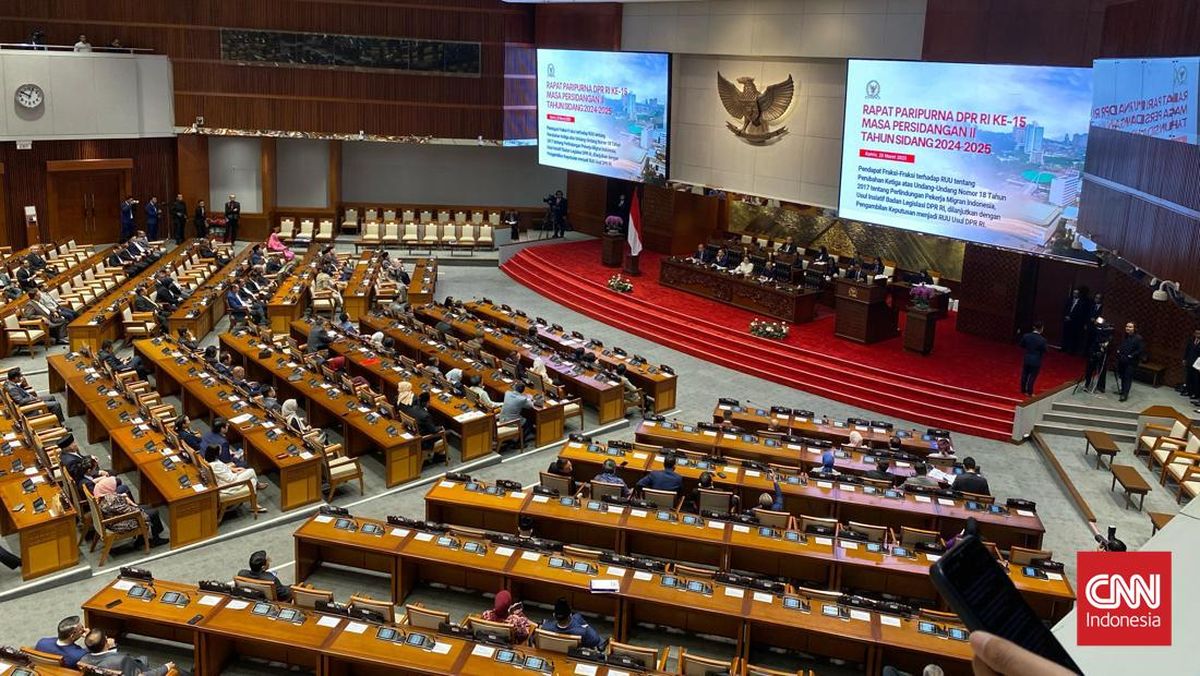
The 21st Plenary Session of the DPR for the V 2025-2026 session officially passed the third revision of the National Police Law (UU Polri) into law on Tuesday (9/5). The meeting was presided over by Deputy Speaker of the House Sufmi Dasco Ahmad and was attended by the Chief of National Police, General Listyo Sigit Prabowo.
Upon being asked if the Bill regarding the Third Amendment to Law Number 2 of 2002 concerning the National Police of the Republic of Indonesia could be approved, Dasco received unanimous consent from the meeting participants. The ratification took place at 11:00 WIB, following a report by the Chairman of the Police Law Working Group and Chairman of Commission III of the DPR, Habiburokhman. Habib noted that the revisions to the Police Law are intended to complement the recently passed Criminal Procedure Code (KUHAP).
The revised Police Law contains several key provisions, including changes to the retirement age for members ranging from privates and non-commissioned officers to commissioned officers, the strengthening of the National Police Commission (Kompolnas), and the placement of police officers in civilian positions.
The specific regulations regarding retirement ages are as follows:
The retirement age for National Police members as referred to in Article 30, paragraph 5, applies to members who are 56 years of age at the time this Law comes into effect.
National Police members who are 57 years of age at the time this Law comes into effect will have their retirement age extended until they reach 59 years of age.
National Police members who will turn 58 this year may have their term extended until they reach 59 years of age, as referred to in Article 30, paragraph 7, effective from the date this Law is promulgated.
Furthermore, the bill regulates the change of the retirement age for the Chief of National Police to 60 years, as stipulated in Article 30, paragraph 5, letter c. The law also specifies that the President may extend the term of the Chief of National Police based on necessity.
‘Specifically for four-star high-ranking officers, the maximum retirement age is 60 years, which may be extended by one year or as required, determined by a Presidential Decree,’ the article states.