
House of Representatives Notes Business Complaints on DMO Coal Price, Here's the Reaction
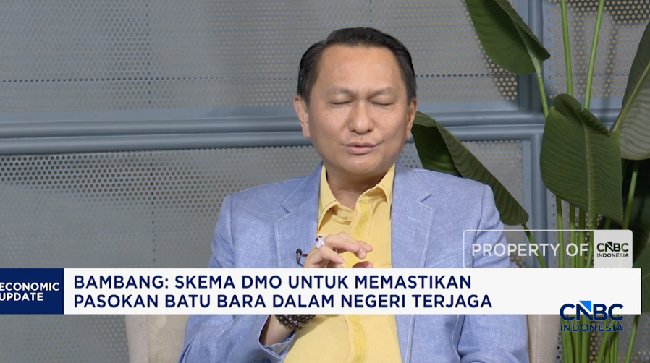
Jakarta, CNBC Indonesia - Commission XII of the Indonesian House of Representatives (DPR RI) has highlighted complaints from domestic coal mining entrepreneurs regarding the benchmark price for the domestic market obligation (DMO). For context, the DMO coal benchmark price has been set at US$70 per tonne since 2018 and has not changed to date.
Chairman of Commission XII DPR RI, Bambang Pati Jaya, stated that business owners are questioning the policy of a uniform price without considering the variation in the quality of the commodity produced. “Indeed, sometimes in several meetings, entrepreneurs have complained, saying that for low-range calorie, medium-range calorie, high-calorie, and even coking coal, the benchmark of US$70 per tonne is applied uniformly to all,” Bambang revealed to CNBC Indonesia in an Economic Update, quoted on Wednesday (24/6/2026).
These complaints stem from the operational conditions of businesses who feel the current DMO coal price scheme is less relevant to the production costs of each type of coal calorie produced. Despite noting these complaints, Bambang emphasised that the policy for fulfilling the DMO coal allocation remains necessary to prevent all production from flowing to the international market when global prices are soaring high.
“This DMO policy was created because sometimes the domestic need versus the export price makes exporting more attractive. So, this DMO is actually more about maintaining that balance,” said Bambang. Under the current DMO policy, the government requires mining companies to allocate 25% of their production output for the domestic market, including a special assignment for PT PLN (Persero).
“In my view, going forward, we invite the Director General of Minerals and Coal at the Ministry of Energy and Mineral Resources to evaluate whatever is necessary, but the most important thing is that we will achieve a balance between ensuring our energy security and also paying attention to the business world,” he explained. He stressed that the state’s main priority is to guarantee the supply of primary energy for the public interest. The government is urged to remain firm in enforcing domestic market fulfilment rules while keeping communication open for industry players to convey the economic constraints they face in the field.
“The most important thing is the guarantee of our energy sustainability, but once again, we must also pay attention to the aspirations of the business world,” he concluded.