
House of Representatives Members Support Government Commitment to Develop Electric Motorcycles Based on Nickel Downstreaming
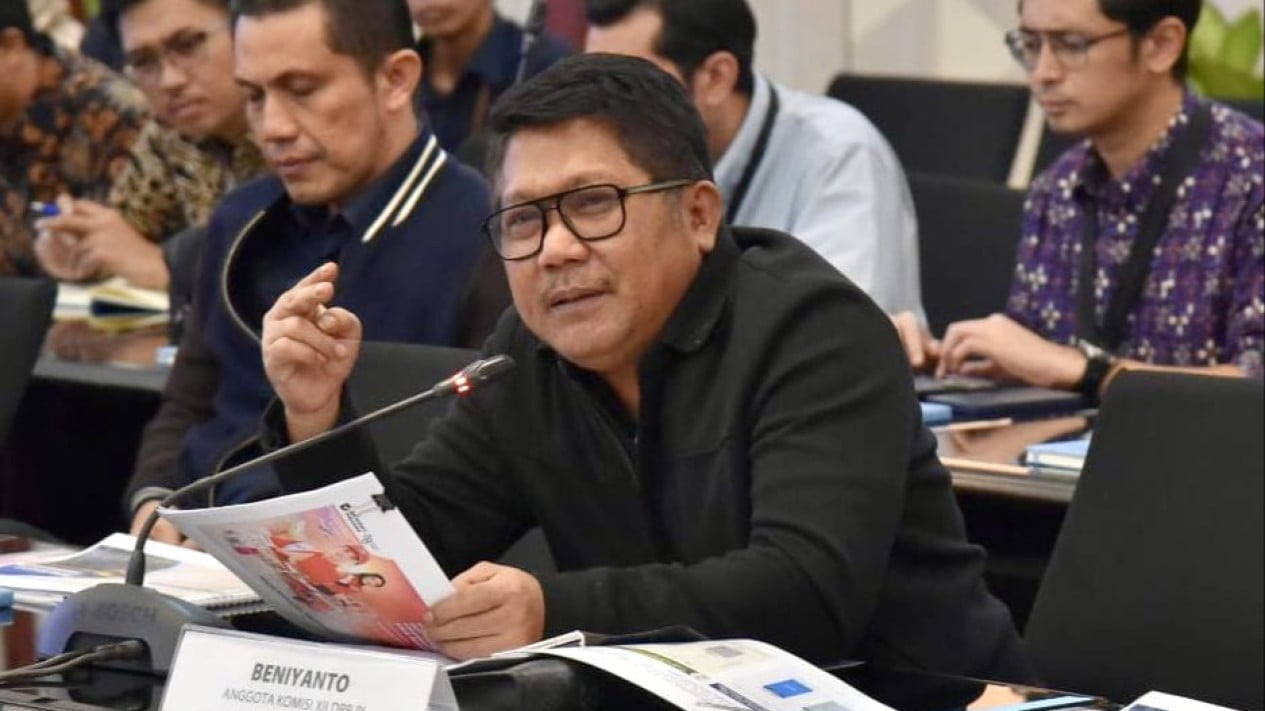
Beniyanto Tamoreka, a member of Commission XII of the Indonesian House of Representatives (DPR RI), has expressed appreciation for the commitment shown by President Prabowo Subianto and the Minister of Energy and Mineral Resources, Bahlil Lahadalia, in driving the development of national electric motorcycles that utilise batteries made from domestic nickel.
According to Tamoreka, this policy is a strategic move to strengthen mineral downstreaming, enhance national industrial competitiveness, and accelerate the transition towards cleaner energy. The commitment demonstrates government synergy in building an integrated national electric vehicle ecosystem, from upstream to downstream.
Beniyument noted that Indonesia possesses a comparative advantage as one of the world’s largest nickel producers. Consequently, the development of national electric motorcycles must be part of the government’s broader strategy to build an industrial value chain, spanning mining, mineral processing and refining, the battery industry, electric vehicle manufacturing, and the development of supporting ecosystems such as charging infrastructure and the component industry.
“The commitment of President Prabowo and the Minister of Energy and Mineral Resources deserves our appreciation, as it shows a policy direction that no longer merely exports raw materials, but optimises the added value of natural resources within the country. By utilising domestically produced nickel-based batteries, Indonesia has a significant opportunity to become a major player in the global electric vehicle industry. This is the essence of downstreaming: delivering greater economic benefits through industrialisation based on national natural resources,” Beniyanto stated on Saturday, 1 August 2026.
According to Beniyanto, the success of the national electric motorcycle programme is not solely determined by vehicle production capabilities but must also be supported by the strengthening of the entire industrial ecosystem. The government needs to ensure the availability of raw materials, expand battery industry capacity, accelerate the construction of electric vehicle charging infrastructure, encourage increased local content, and create an investment climate that provides certainty for businesses to ensure the national industry can grow sustainably.
Furthermore, Beniyanto assessed that this policy will generate a multiplier effect on the national economy through increased investment, job creation, the strengthening of the manufacturing industry, and a reduction in dependence on fuel imports. Additionally, the development of national electric motorcycles opens significant opportunities for nickel-producing regions such as Central Sulawesi, Southeast Sulawesi, North Maluku, Southwest Papua, and other potential areas to become vital parts of the electric vehicle battery industry supply chain, ranging from mining and mineral processing to battery material production and the development of supporting industries.