
House of Representatives Member: Creative Economy Growth Must Be Supported by a Healthy Ecosystem
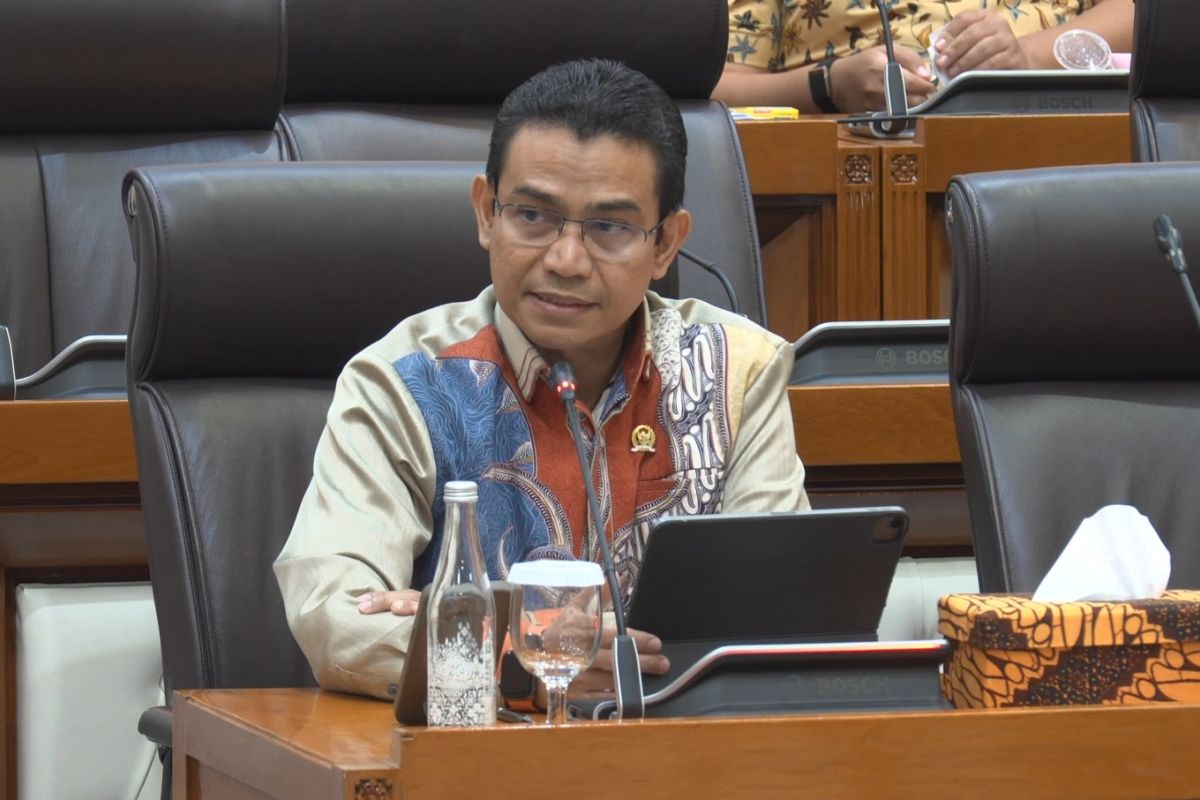
Jakarta (ANTARA) - Hendry Munief, a member of Commission VII of the Indonesian House of Representatives (DPR RI), stated that the growth of Indonesia’s creative economy sector must be balanced with the development of a healthy, inclusive, and sustainable ecosystem. He expressed appreciation for the positive growth trends observed from 2025 through the first half of 2026.
“Based on what the Minister (of Creative Economy) presented, the growth of the creative economy has risen remarkably, but there remains one major question: is the ecosystem also healthy?” Hendry said in a statement received in Jakarta on Wednesday.
According to data presented during a working meeting between Commission VII and the Minister of Creative Economy, Teuku Riefky Harsya, at the Parliament Complex in Senayan, creative economy investment in the first quarter of 2026 reached IDR 11.33 trillion, with export values amounting to US$7.38 billion. The sector’s contribution to the national economy continues to increase.
Despite praising these achievements, Hendry noted a gap between macro-level growth figures and the real-world conditions faced by industry players. “While the growth narrative is excellent and deserves appreciation, there is a reality within the ecosystem that we must collectively address,” he remarked.
He identified several primary challenges in national creative economy development, most notably the prevalence of digital piracy which continues to harm creators. “Paid content is still being pirated, and illegal streaming practices remain widespread. This poses a serious threat to the sustainability of our creative industry,” he said.
Furthermore, Hendry highlighted the issue of welfare for creative workers, which remains far from ideal, ranging from low wages to job insecurity. “We still see low wages, long working hours, and job uncertainty experienced by many creative workers,” he noted.
Amidst technological advancements, he also warned of the significant impact of Artificial Intelligence (AI), which is beginning to alter the creative industry landscape. “AI is starting to replace jobs in design, illustration, animation, and content production. This must be a serious concern to ensure that technological transformation does not marginalise Indonesian creative workers,” he added.
Additionally, Hendry observed that Indonesia’s creative economy export structure is still dominated by traditional sub-sectors such as fashion, crafts, and culinary arts. Meanwhile, sub-sectors based on intellectual property, such as gaming, animation, digital applications, and film, have yet to provide an optimal contribution. “The question to be discussed is no longer how much the creative economy is growing, but whether that growth is truly creating a healthy, sustainable ecosystem capable of protecting creative economy actors,” said Hendry.
He encouraged Indonesia to move beyond being merely a market and instead become a competitive global producer of intellectual property. “We want Indonesian creators to ascend to the level of global intellectual property (IP) owners capable of competing in international markets,” he said.
During the forum, Hendry also raised several strategic questions for the Ministry of Creative Economy, including the effectiveness of programmes in driving investment, the low contribution of digital sub-sectors to exports, and the tangible impact of the 76 Memorandums of Understanding (MoUs) that have been signed. He expressed hope that the government’s achievements could serve as a strong foundation for building a creative economy industry that grows not just statistically, but is also ecosystemically resilient, globally competitive, and capable of improving the welfare of industry players.