
House of Representatives Highlights Controversy Over Regional Bond Issuance, Issues Warning
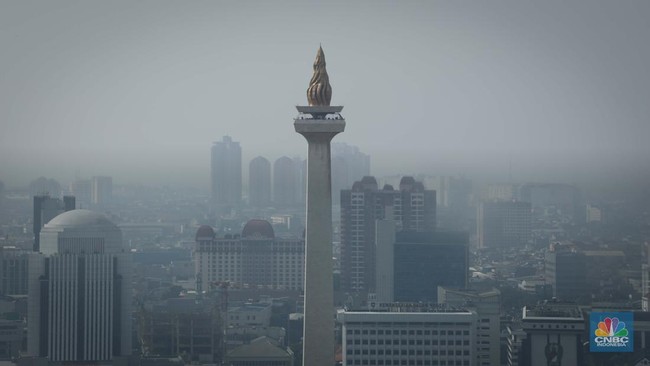
The controversy surrounding the issuance of regional bonds, which is to be launched by the Jakarta Provincial Government, has drawn the attention of the House of Representatives (DPR) following responses from the Central Government.
Andreas Eddy Susetyo, a member of Commission XI of the DPR from the PDI Perjuangan faction, believes that the differing views between the Jakarta Provincial Government and the Ministry of Finance should be resolved through a direct meeting between the leaders of both institutions.
“I am encouraging the central government and the Jakarta Provincial Government to sit down together. Let us examine the data, calculate the fiscal capacity, the ability to repay, and review the projects to be financed. Only then can it be assessed whether this bond issuance is feasible or not,” said Andreas, as quoted on Monday (14/9/2026).
According to Andreas, regional bonds are a financing instrument with a legal basis and are not a new instrument in regional financial management. The legal framework has been established through the enactment of Law Number 33 of 2004 concerning Financial Balance between the Central Government and Regional Governments (UU HKPD), and further regulated through Government Regulation Number 54 of 2005 concerning Regional Loans.
Furthermore, Minister of Finance Regulation (PMK) Number 87 of 2024 stipulates the need for approval from the Minister of Finance and consideration from the Minister of Home Affairs for regional governments to issue what are known as municipal bonds.
Since regional bond issuance must receive approval from the central government, he believes that Jakarta’s plan to issue bonds worth Rp5.6 trillion needs to be tested against its fiscal capacity, ability to meet payment obligations, the feasibility of the financed projects, and compliance with applicable regulations.
Regarding Jakarta’s fiscal capacity, he noted it stands at approximately Rp81.32 trillion, while the indicator for repayment ability can utilise the debt service coverage ratio (DSCR). This ratio is considered vital to determine whether available revenue is sufficient to meet debt obligations, including principal and interest or coupons.
“Therefore, do not base it on the perception of whether the bond is large or small, but calculate how much regional revenue is available compared to the payment obligations that will arise,” said Andreas.
Once fiscal capacity and repayment ability are deemed sufficient, Andreas stated that the central government should then focus on whether the fund usage is appropriate—specifically, whether it is to finance development projects that are productive, measurable, and provide long-term benefits to the community.
“What we must ensure is not just the ability to pay, but also what the money is used for. The projects must be clear, the benefits must be measurable, and we must ensure that bonds are not used merely to finance routine needs,” he added.
He also requested that the central government explain openly if there are concerns regarding Jakarta’s bond issuance plan. In his view, any objection should be accompanied by clear indicators and parameters.
“If there are concerns, let us open the parameters. Is the issue repayment capacity, the financing structure, the projects, or unmet regulations? Everything can be discussed if it is based on data. Therefore, the central government must also be fair in its stance,” said Andreas.
On the other hand, Andreas assessed that the Jakarta Provincial Government also needs to be transparent regarding the financing structure, payment projections, and the projects that will serve as the basis for the bond issuance. Such transparency is essential to ensure that the issuance decision is accountable to the public and investors.
“In my opinion, there should be no conflict between the central and regional governments. The centre has the function of maintaining fiscal health, while the region has development needs. Both can meet on the same data, parameters, and regulations,” he said.
Previously, the Governor of Jakarta, Pramono Anung, emphasised that the funds from the regional bond issuance would be focused on the development of LRT Phase 1C (Manggarai-Dukuh Atas), regional public hospitals (RSUD), new school units, reservoirs and polders for flood control, and low-cost apartment buildings (rumah susun).
Meanwhile, Minister of Finance Purbaya Yudhi Sadewa stated that he permits Jakarta to release regional bonds, as such a step is legal if required by the Jakarta Provincial Government. However, he questioned the urgency of the debt instrument, noting that Jakarta currently possesses significant funds.
“However, if I may share my view, if there is plenty of money, why borrow?” said Purbaya.
Source: jawawa.id (https://jawawa.id/newsitem/house-of-representatives-highlights-controversy-over-regional-bond-issuance-issues-warning-1789343563)
Originally published by CNBC Indonesia (https://www.cnbcindonesia.com/news/20260913190730-4-767529/dpr-soroti-polemik-penerbitan-obligasi-daerah-beri-peringatan-ini), translated from Indonesian