
House of Representatives Highlights Ambiguous Spatial Planning: Disaster-Prone Areas Must Not Be Converted into Residential Zones
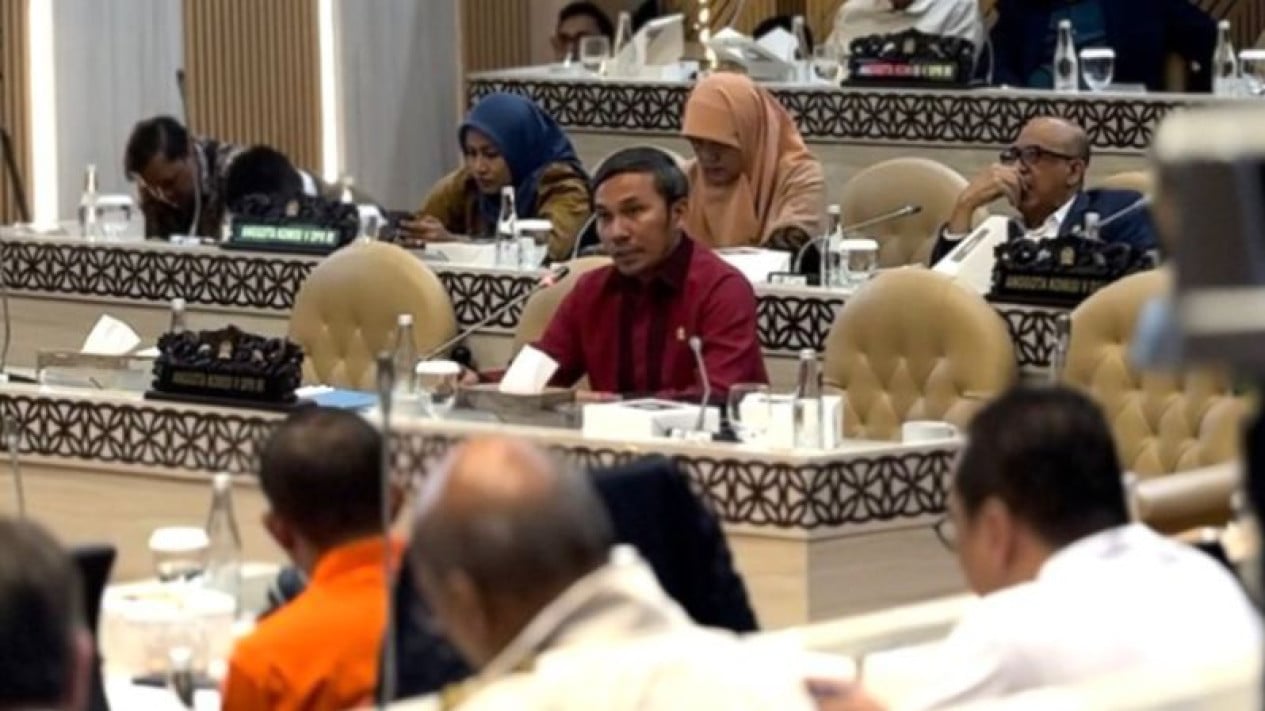
A member of Commission V of the Indonesian House of Representatives (DPR), Edi Purwanto, has stated that consistent regional spatial planning is a crucial factor the government must prioritise to prevent the widening impact of natural disasters.
He made these remarks during a discussion titled “Alert for Mount Merapi: What are the Mitigation Steps?” held at the Parliament Complex, Central Jakarta, on Thursday (10/09/2026).
According to Purwanto, highly vulnerable and dangerous areas must be protected from being repurposed into residential settlements.
“Equally important, my fifth point is the need for consistent regional spatial planning,” said Edi.
He highlighted that there are still disaster-prone areas that are actively developing into residential zones. This situation, he noted, requires serious attention from the government, particularly in regions situated near river distributions.
He cited examples in West Sumatra, North Sumatra, and Aceh, where areas were impacted by disasters because settlements had been established along river flows.
“Highly disaster-prone and extremely dangerous areas must be strictly guarded; they must not be allowed to become residential areas,” Edi explained.
Purwanto argued that the government must establish clear policies regarding the use of high-risk disaster zones. He assessed that there should be no ambiguity in determining which areas are habitable and which are not.
“The state must be clear on this. If it is a ‘yes’, it must be a ‘yes’; if it is a ‘no’, it must be a ‘no’. We must not create ambiguous textures in our regulations,” Edi stated.
Furthermore, he pointed to issues regarding the Self-Help Housing Stimulant Assistance (BSPS) programme from the Ministry of Housing and Residential Areas (PKP).
He noted that the government cannot provide assistance for houses located within river distribution zones, even if the residents hold valid land certificates.
“For example, the Ministry of PKP has the BSPS programme. We cannot provide aid to areas within river distribution zones, even if they possess certificates,” he said.
Consequently, Edi emphasised the need for consistency between spatial planning policies, land ownership, and government programmes. He concluded that clarity in spatial planning is essential so that citizens are not left disadvantaged when their places of residence are found to be within disaster-prone zones.