
House of Representatives Commission VIII Highlights Hajj 'Ticket War' Proposal, Raises Concerns Over Potential Envy
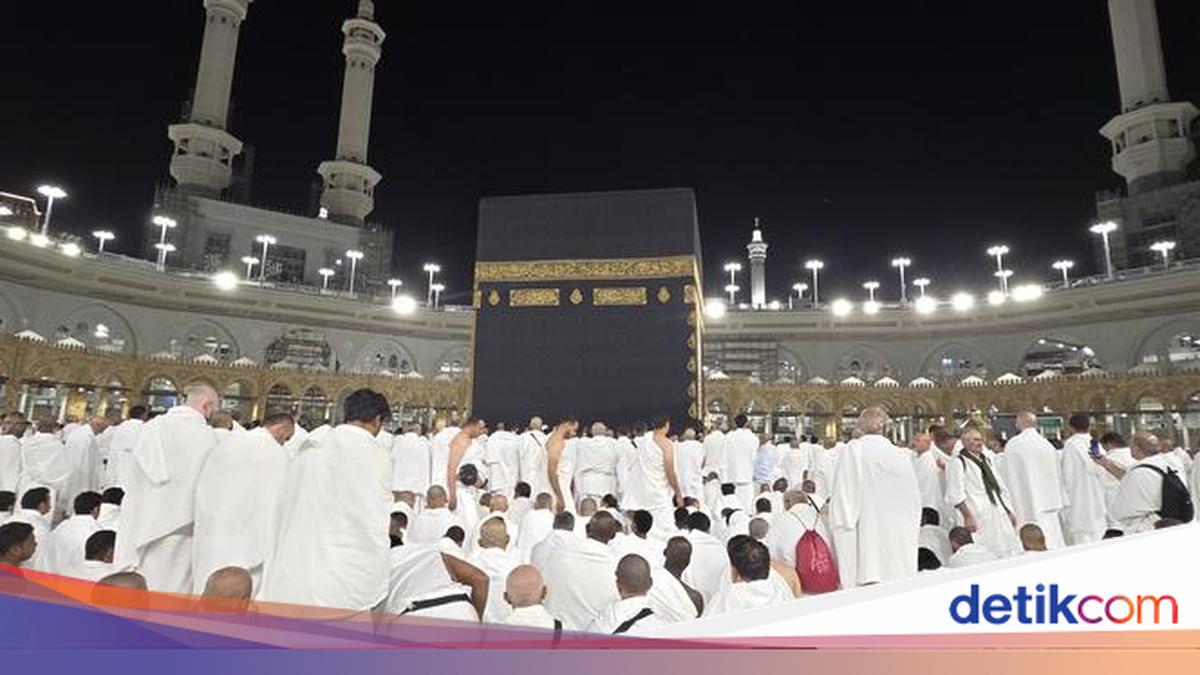
The Chairman of Commission VIII of the Indonesian House of Representatives, Marwan Dasopang, has highlighted the proposal for a ‘ticket war’ mechanism or direct registration system without long queues for Hajj departures. Marwan assessed that this idea could generate envy.
Marwan initially reminded that the current Hajj organisation mechanism is regulated under Law No. 14 of 2025. In that regulation, the applicable system is registration, not ticket hunting.
“We just have Law No. 14 of 2025. It states registration, not ticket hunting. Similarly, with this law, Law No. 8 of 2019, it’s the same, still registration,” said Marwan at the Parliamentary Complex in Senayan, Jakarta, on Friday (10/4/2026).
He explained that the Hajj waiting list system has been in place since 2008. This was created in response to the high public interest in performing Hajj.
“At that time, the ticket war was somewhat difficult to anticipate due to the high demand. Back then, the cost of Hajj was not too expensive either. Finally, the government opened that policy, by the Minister of Religious Affairs,” he clarified.
According to him, implementing a ticket war scheme would create disparities. Because, he said, only certain groups with the ability would hunt for tickets.
“For example, if it’s a ticket war, who would hunt? The ticket hunters would be rich people, right? So, the rich wouldn’t be limited either. If given free rein, then ordinary people won’t go on Hajj. There will be envy,” he elaborated.
This PKB politician also touched on the rule limiting pilgrims who have already performed Hajj to wait 10 years before re-registering. That rule, he said, was made to give opportunities to the public who have never performed Hajj.
“Because of that, if the Hajj Minister mentions this as a concept, a study, that’s fine. But those aspects must be mentioned. Otherwise, people will be anxious. We must amend the law,” he stated.
Furthermore, Marwan assessed that the ticket war policy has the potential to conflict with existing rules. He said that Indonesia’s current Hajj quota is around 221,000 pilgrims, with a composition of 92 percent for regular Hajj and 8 percent for special Hajj.
“If it’s divided for ticket hunting, where is the basis? Like that. So, it’s impossible for that policy to exist without legal provisions. Therefore, for that concept, a minister must have aspects. Legal, historical, sociological aspects,” he explained.
“So if we say it like that, then the previous Hajj Minister when forming the law with the DPR, wow, it seems disregarded. We just made the law. Just recently and there’s no concept for that at all,” he added.
In addition, Marwan also highlighted that the government should focus more on resolving the Hajj queue. According to him, the main solution is to increase the quota and strengthen international cooperation, not with a ticket war scheme.
“His task is actually to resolve the 5 million pilgrims. How? We’ve already given space. First, convince the Saudi government to add quotas. Then, cooperate with friendly countries sending Hajj pilgrims whose quotas are unused. We’ve talked to those countries, they agree,” he said.
He also warned that immature policies risk creating injustice in access to Hajj worship. According to him, many people would be reluctant to perform Hajj.
“What about the justice aspect? Later, there will be announcements that poor people are prohibited from Hajj, right? Because ticket hunting isn’t easy, right? When there’s a ticket to hunt, they don’t have money. Now if they have money, they sell assets, then save the money,” he explained.
“If at that time they don’t have it for ticket hunting, then there will come a time when the quota for ticket hunting goes unused. Because not everyone is interested in Hajj and those with money are very few. Those aspects must be studied,” he added.
Previously, the Ministry of Hajj and Umrah (Kemenhaj) is studying a radical breakthrough to address the Hajj queue issue that has lasted for decades. One emerging concept is implementing a “Ticket War” mechanism or direct registration system without long queues, similar to the Hajj departure process in the past.
The Minister of Hajj and Umrah, Mochamad Irfan Yusuf, revealed that this idea stems from progressive thinking within the Ministry, including from the Deputy Minister of Hajj and Umrah. The goal is to find a solution so that prospective pilgrims do not have to wait too long to depart to the Holy Land.
“Does there need to be such a long queue? Shouldn’t we think about returning to the era before BPKH (Hajj Financial Management Agency) existed? Before BPKH, insyaallah there was no queue,” said the Hajj Minister at the National Work Meeting (Rakernas) for Consolidation of Hajj Worship Implementation for 1447 H/2025 M held at the Grand El Hajj Hajj Dormitory (Cipondoh Hajj Dormitory), Tangerang, Banten, on Wednesday (8/4/2026).
In this “Ticket War” scheme, the government will later announce the Hajj costs for the current year and open registration on a specific date. Anyone who is financially and physically ready can register directly and depart in the same year.