
House of Representatives Begins Deliberating State Finance Bill as Experts Flag Non-Tax Revenue Rules
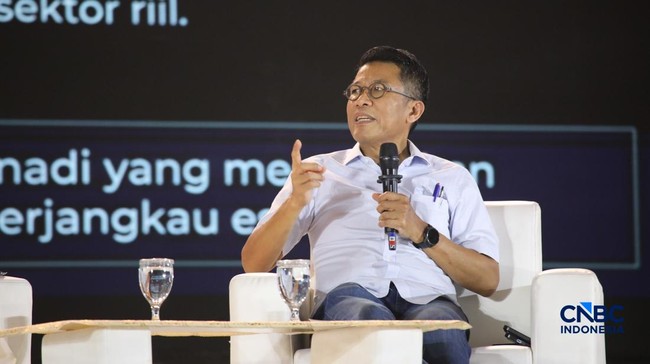
Commission XI of the House of Representatives (DPR) has held a general hearing (RDPU) with several economic and legal experts to discuss the State Finance Bill.
Four economic and legal observers took part in the hearing: Dr Dewi Kania Sugiharti, a lecturer in law at Padjadjaran University; Tauhid Ahmad, a senior economist at the Institute for Development Economics and Finance (INDEF); Prof Candra Fajri Ananda, an economics expert at Brawijaya University; and Dr Dian Puji Nugraha Simatupang, a lecturer in administrative law at the University of Indonesia.
The hearing gathered input from the economic and legal experts, particularly concerning Non-Tax State Revenue (PNBP) and Separated State Assets.
The Chairman of Commission XI, Mukhamad Misbakhun, said the State Finance Bill is being drafted using the omnibus law method.
“This meeting concerns the State Finance Bill using the omnibus law system, where the meeting hears input in the spirit of meaningful participation as material for consideration on the substance of the bill in the working committee meeting,” said Misbakhun as he opened the meeting on Monday (14/9/2026).
The bill is being drafted to follow up on the revision of Law Number 19 of 2003 on State-Owned Enterprises through Law Number 1 of 2025 and Law Number 16 of 2025.
Several economic observers highlighted the issue of PNBP, which they consider still suboptimal.
Tauhid Ahmad, a senior economist at the Institute for Development Economics and Finance (INDEF), said PNBP has fallen short for several reasons, including varied tariff policies, the imposition of tariffs without corresponding improvements in service quality, and suboptimal PNBP tariffs in the natural resources (SDA) sector.
“There are many issues currently being faced, including in the relevant ministries and agencies where manual services still occur and are often slow, tariffs have not been accompanied by improvements in quality, especially at PNBP implementing institutions, as well as matters relating to PNBP receivables,” said Tauhid.
Furthermore, the suboptimal performance of PNBP, particularly in natural resources, is also due to several commodities not yet being accommodated in regulations, whether in Government Regulations (PP) or laws.
“For example, PNBP on new and renewable energy (EBT) currently only covers geothermal. Solar, wind and bioenergy have not been accommodated because the government regulation does not yet exist. I believe these natural resources hold great prospects for optimisation,” said Tauhid.
He therefore proposed periodic evaluations of the types and tariffs of PNBP, as well as comprehensive data integration, with a shift towards simpler, service-based tariffs, whilst ensuring that natural resources remain under state control.
“Tariff optimisation is also needed, including the imposition of windfall profit on natural resources,” Tauhid proposed.
He also gave recommendations regarding consistency if state-owned enterprise (BUMN) dividends are no longer classified as separated state assets.
“There still needs to be a synchronisation and coordination clause in the utilisation of BUMN dividends with the financial authorities,” he asserted.
Meanwhile, Professor of Economics at the Faculty of Economics and Business at Brawijaya University, Prof Candra Fajri Ananda, revealed that Indonesia’s PNBP appears to be running in place.
He cited the example of Middle Eastern countries such as Qatar, which has already exploited its natural resources to reap PNBP through hydrocarbons.
“What we need to look at is the direct ownership model in several countries, where state ownership influences how PNBP can be imposed. In the implementation seen in Kuwait, Qatar and Saudi Arabia, the state holds the majority of all shares in natural resource companies,” said Prof Candra.
He therefore also made recommendations for PNBP to become more optimal. Firstly, the state’s right should accommodate developments in new sources of economic value, such as the utilisation of limited public resources, data, public infrastructure, digital space, spectrum and other economic rights granted by and controlled by the state.
Secondly, the mechanisms for identifying and evaluating new revenue sources should be strengthened.
“Strengthening is necessary so that technological developments, business models, strategic commodities and new forms of resource utilisation can be quickly responded to within the PNBP framework,” explained Prof Candra.
Thirdly, flexibility in developing the types and tariffs of PNBP should be increased.
“So ideally, tariffs for PNBP from natural resources should incorporate externality variables, meaning the tariff price should not simply equal the marginal cost, but the marginal cost composition should include externality elements,” he said.
Source: jawawa.id (https://jawawa.id/newsitem/house-of-representatives-begins-deliberating-state-finance-bill-as-experts-flag-non-tax-revenue-rules-1789433498)
Originally published by CNBC Indonesia (https://www.cnbcindonesia.com/news/20260915034020-4-767882/dpr-mulai-bahas-ruu-keuangan-negara-pakar-soroti-aturan-pnbp), translated from Indonesian