
House Member Urges Government to Improve KPIs to Reform Civil Servant Mentality
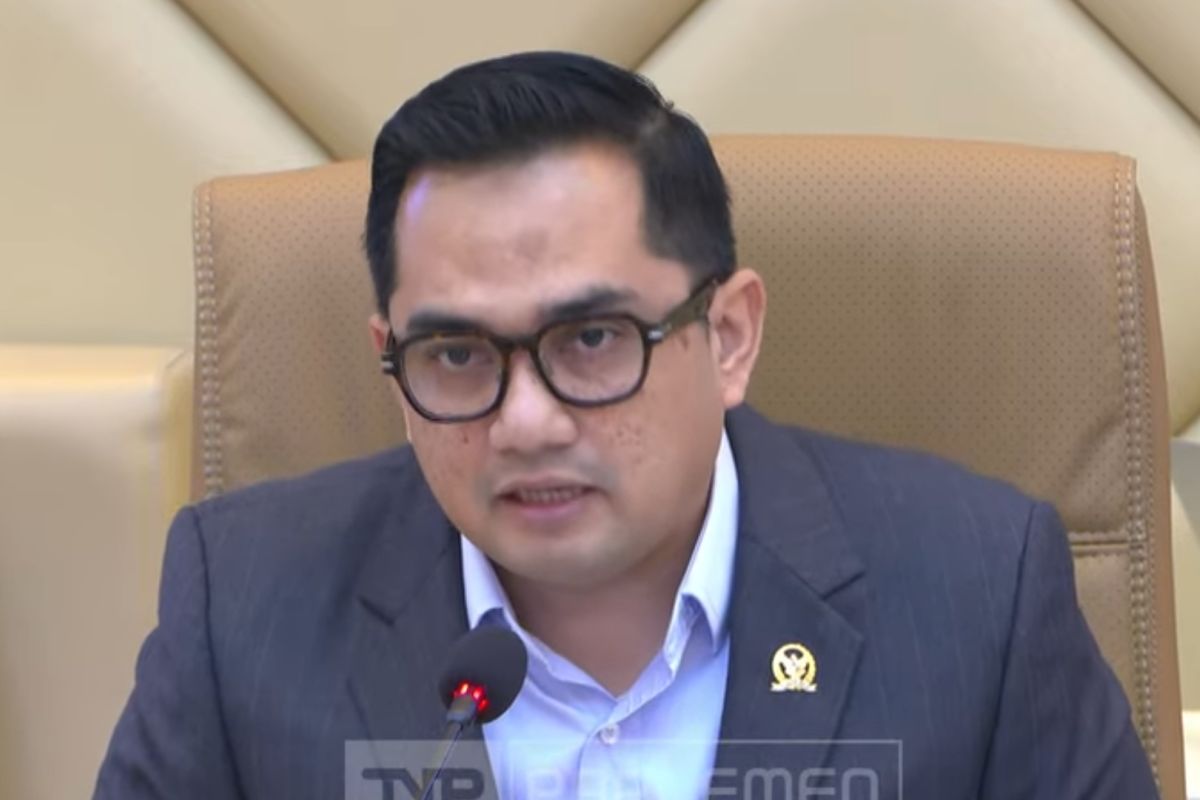
Jakarta (ANTARA) - Rifqinizamy Karsayuda, Chair of Commission II of the House of Representatives (DPR RI), has urged the government to strengthen Key Performance Indicators (KPIs) in order to improve the mentality of the state civil apparatus’ (ASN) human resources.
He said the government has now digitalised its governance systems, but performance has not changed because the mentality of ASN human resources remains the same.
“The mentality of the human resources hasn’t changed — they still clock in, go home, have coffee, and clock in again in the afternoon,” Rifqinizamy said during a meeting with the Ministry of State Apparatus Utilisation and Bureaucratic Reform (PANRB) at the parliamentary complex in Jakarta on Wednesday.
Based on the results of several indices, he said Indonesia’s bureaucratic reform is currently progressing and public services are improving.
However, this has not yet been effective in producing government output and outcomes.
For example, he noted that Indonesia’s Government Effectiveness Index (GEI) currently sits at 82nd out of 193 countries.
Meanwhile, Indonesia’s Corruption Perception Index (CPI) is quite worrying, ranked at 115th out of 180 countries.
According to him, securing a job as an ASN is a particular pleasure because one’s worldly concerns, including income, are settled.
Under the rules still in force, an ASN could potentially receive pension payments for longer than the period they served the state.
However, Rifqi added that the pension received is not necessarily proportional to the effectiveness of their performance during their service.
This means that the problem of performance assessment must be fixed through a revision of the Law on ASN, which has now entered the National Legislation Programme.
Working as an ASN, Rifqi said, should not merely become a symbol of stability without working competitively.
“So people should work with KPIs — if they’re good, we keep them; if not, they’re out. Well, this is now a burden for us in the regions,” he said.