
House member urges formation of special team to evaluate decile data
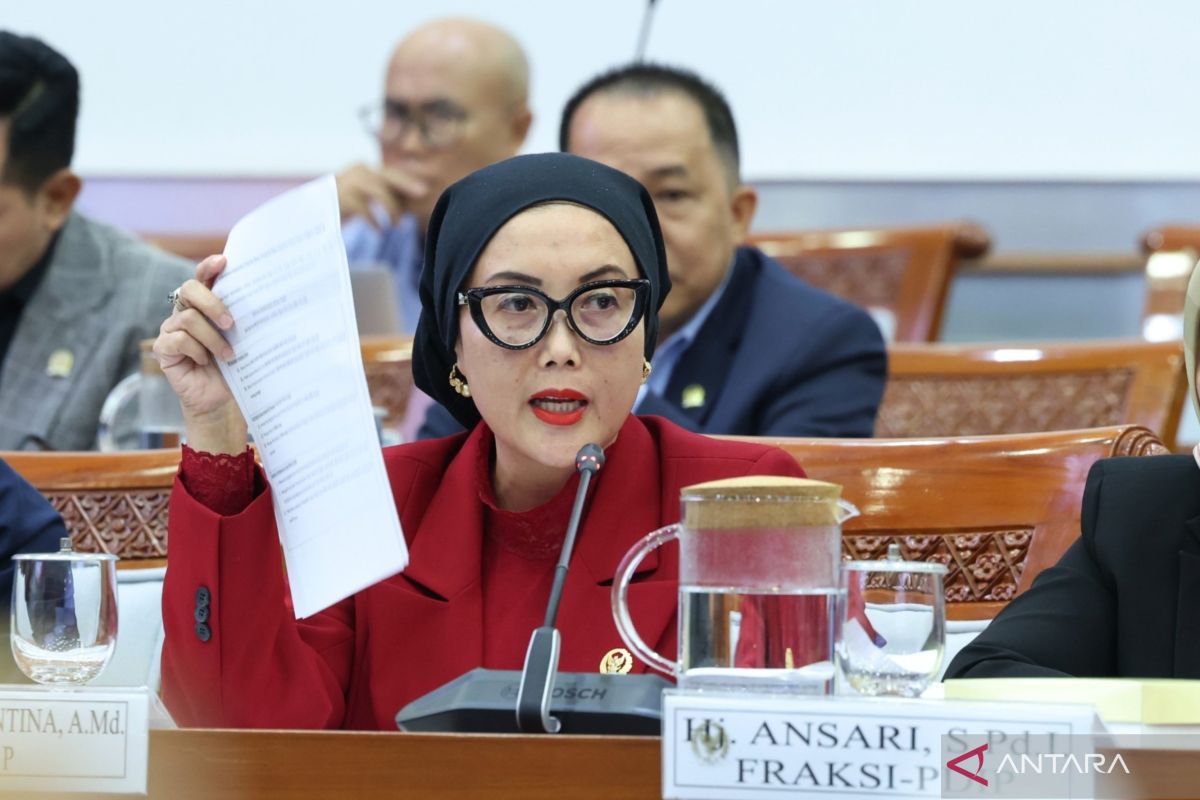
A member of Commission VIII of the Indonesian House of Representatives, Selly Andriany Gantina, has urged the government to form a special team to evaluate decile data, following findings of anomalies that could potentially threaten citizens’ rights to receive social protection programmes.
According to Selly, evaluation is needed to ensure that the data used as the basis for determining deciles truly reflects the socio-economic conditions of communities on the ground.
“If the system’s results contradict the visible facts on the ground, what must be examined is the quality of the data, the methodology, the updating process, and the verification mechanism,” said Selly.
She assessed that the problem of inaccurate decile data cannot be taken lightly, as changes in decile status can directly impact citizens’ access to government assistance, including the Indonesia Smart Card (KIP).
She cited findings from Kulon Progo, Special Region of Yogyakarta, where a pedicab driver named Timbul was recorded as having changed from decile 1 to decile 9. This change potentially threatens scholarship access for his child who has been accepted to university.
“This means that poverty and social vulnerability data is indeed not as simple as decile numbers. Therefore, the case of a pedicab driver placed in decile 9, while a village head is in decile 8, should serve as an alarm for the government to evaluate the quality of data matching and updating,” she said.
She also asked the government not to make decile rankings the sole basis for determining whether someone is eligible for social protection. Selly said that determining citizens’ economic conditions should consider various variables, from family identity, housing conditions, sanitation, water and electricity sources, income, expenditure, asset ownership, to the condition of family members.
“We must not end up with a sophisticated system while the data entered does not reflect the actual conditions of society,” she said.
She also encouraged the mechanism for updating and appealing data to be made fast, free, simple, transparent, and responsive so that citizens at risk of losing assistance do not have to wait for months.
In addition to forming a special team, Selly suggested that the government provide protection for recipients of ongoing programmes through a grandfathering mechanism, or maintaining the rights of social protection programme recipients while further verification and data matching is carried out.