
House Member: State Must Ensure Public Access to Safe Drinking Water
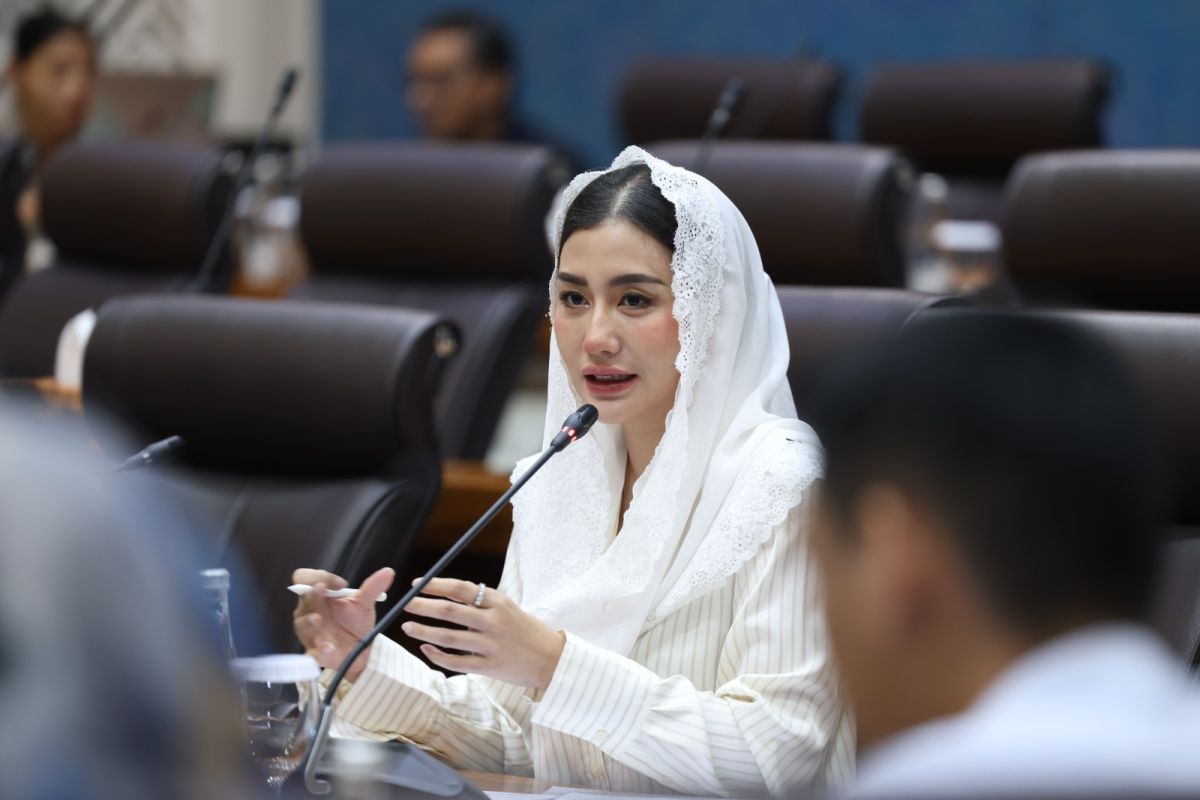
Jakarta (ANTARA) - Novita Hardini, a member of Commission VII of the Indonesian House of Representatives (DPR RI), has reminded that the state must ensure the public has access to safe drinking water.
“Water is the essence of life. Therefore, the state must ensure that the community has access to safe, healthy, and protected drinking water,” she stated during a meeting at the parliamentary complex in Senayan, Jakarta, on Monday.
During the hearing of the Working Committee for the Bottled Drinking Water Industry, Novita emphasised that bottled water is not merely an industrial issue, but concerns a fundamental right of the people.
“The basic rights of the people must not be defeated by weak supervision and overlapping regulations,” she said.
According to her, there are at least three issues that require government attention: the water justice crisis, the product safety crisis, and the crisis of social responsibility within the bottled drinking water industry.
“The question is, who is responsible for supervising the usage lifespan of reusable gallon bottles? To this day, the public has not received certainty regarding a clear supervisory mechanism,” she noted.
In the meeting, which was attended by the Indonesian Food and Drug Authority (BPOM) and the National Consumer Protection Agency (BPKN), Novita also questioned the effectiveness of supervision over bottled water companies.
She stated that the government must be transparent in disclosing data regarding companies that violate regulations so that the public can receive accurate information and make wise decisions.
In addition to supervisory aspects, she also highlighted the need for public education regarding the safety of consuming bottled water.
She mentioned that some members of the public still do not understand the risks of storing drinking water in conditions that do not meet standards, such as exposure to excessive heat or direct sunlight.
“We often see socialisation regarding food safety, but education regarding the storage and use of bottled water is still very minimal, even though this concerns the health of millions of Indonesians every day,” she said.
“When the DPR voices consumer protection, it should not be pitted against opinions that mislead the public. Our duty is to ensure that the community receives correct information and maximum protection,” she added.
Novita urged BPOM and BPKN to be more proactive in conducting supervision while expanding socialisation to regional areas. The state must be tangibly present in guaranteeing the quality and safety of the drinking water consumed by the public.
“Consumer protection must not stop at the meeting table. There must be strong supervision, transparent data, and massive education so that the public is truly protected. This is a constitutional mandate that we must carry out together,” she concluded.