
House Member Says State Campaign Funding Has Not Reduced Political Costs
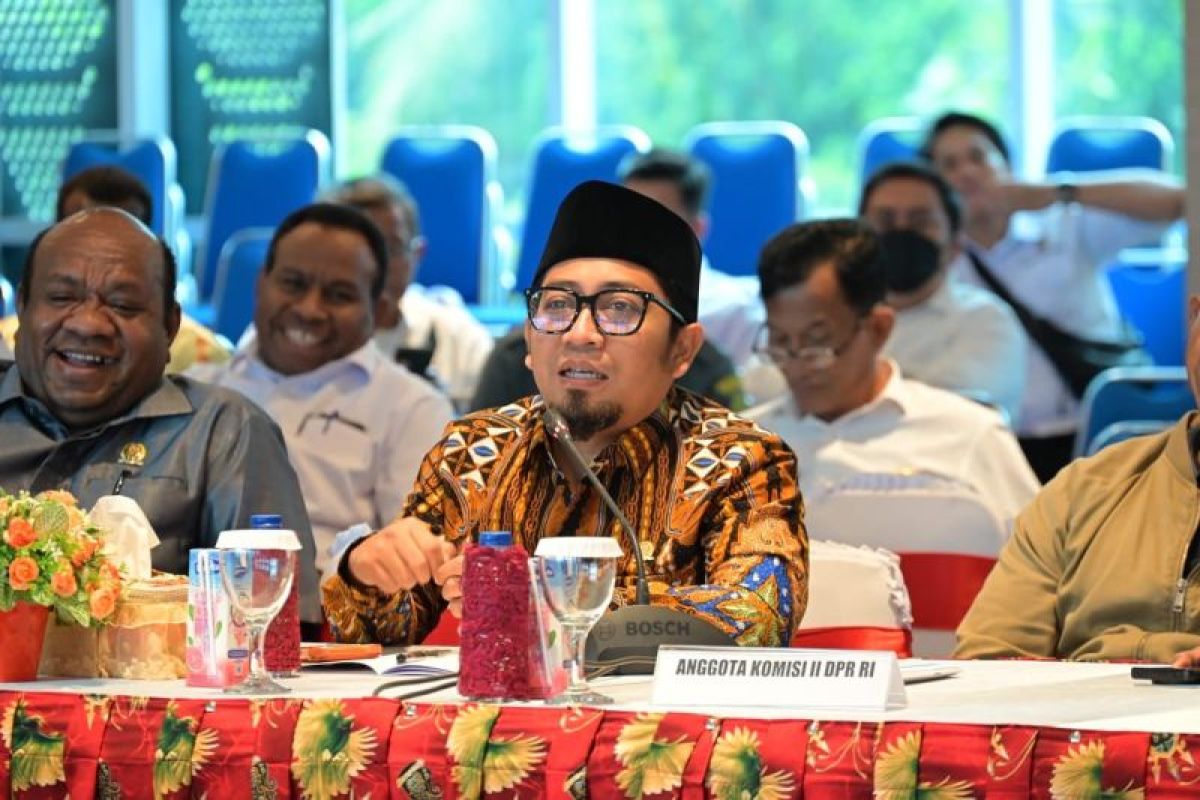
Jakarta (ANTARA) - A member of the House of Representatives (DPR) Commission II, Muhammad Khozin, has assessed that state-financed election campaigns have not proven effective in reducing political costs or preventing corruption, necessitating a more comprehensive political financing reform through enhanced transparency, oversight, and law enforcement.
Khozin stated on Monday that the Corruption Eradication Commission’s (KPK) proposal for the state to fund campaigns is not a new idea, as it is already regulated in the Regional Elections Law and the General Elections Law through the facilitation of campaign props (APK). “The evaluation shows that this scheme is not effective and not optimal in reducing political costs,” Khozin said.
He explained that Article 65 paragraph (2) of Law Number 10 of 2016 concerning Regional Elections and Article 275 paragraph (2) of Law Number 7 of 2017, along with their derivative regulations, have already regulated state facilitation in the procurement of campaign props. The policy aims to reduce political costs, minimise excessive billboard installations, and create more equal opportunities for all election participants.
However, according to him, the implementation has faced various obstacles, such as a limited number of props, procurement delays, inadequate quality of props, and minimal space for candidates to socialise their vision, mission, and work programmes. “The evaluation of the implementation of these regulations reveals phenomena such as a limited number of props, procurement delays, inadequate quality of props, a lack of creativity among participants in conveying campaign messages, and minimal socialisation of the candidates’ vision, mission, and work programmes,” he said.
Khozin assessed that these issues are influenced by the varying fiscal capacities of regional governments, as funding for the props comes from the Regional Budget (APBD). This situation has become more difficult following reductions in regional transfer funds (TKD) affecting many regions. “Especially in the current context, regions are facing problems with reductions in regional transfer funds amidst the weak fiscal condition of the majority of regions,” he said.
He noted that the financing of campaign props only covers a small portion of the overall political cost structure. In practice, the largest expenses come from mobilising campaign teams down to the polling station level, witness fees, transportation and logistics, face-to-face campaigns, surveys, political consultant services, and even vote-buying practices.
Therefore, Khozin urged a comprehensive reform of political financing through strengthening transparency and auditing of campaign funds, regulating political party financing, monitoring sources of campaign funding, and enforcing laws against vote-buying. “Thus, political financing reform does not stop at funding campaign props, but truly reduces high political costs while minimising the incentive for corruption after general or regional elections,” Khozin said.