
House Member Says PIP Quota Comparison at Ministry of Religious Affairs Far Lower Than Other Institutions
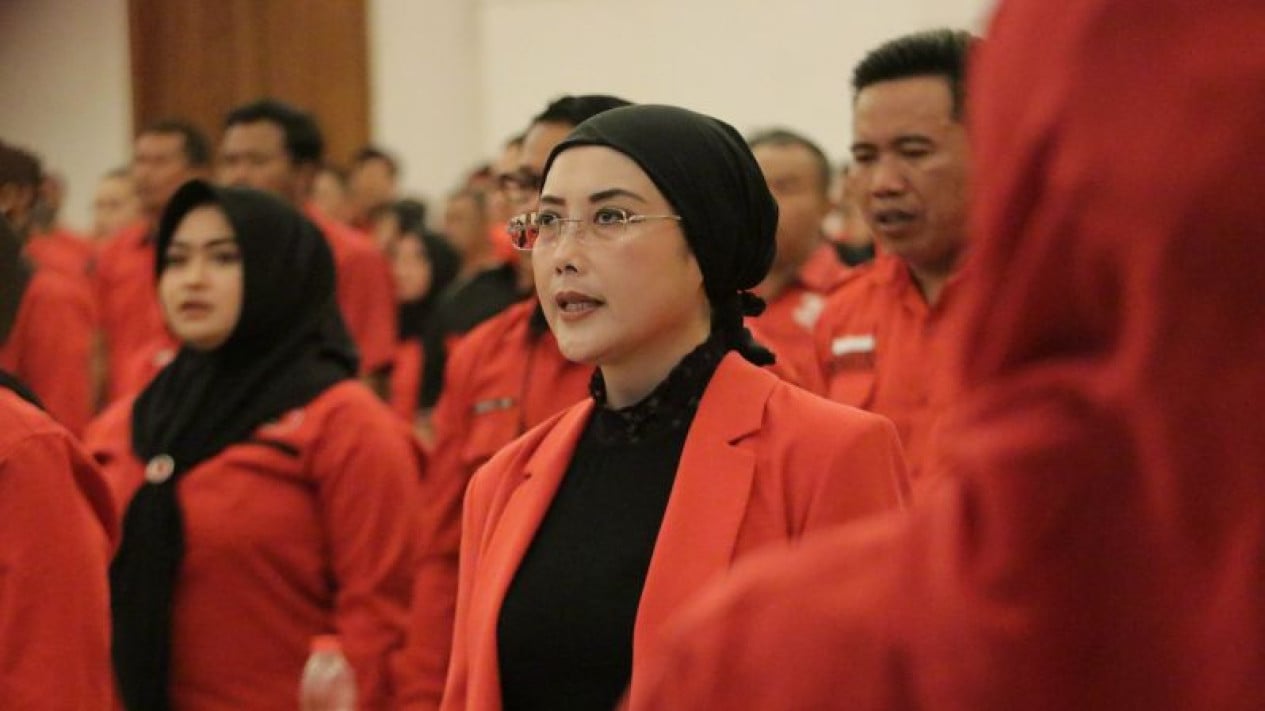
A member of Commission VIII of the Indonesian House of Representatives (DPR) from the PDI Perjuangan faction, Selly Andriany Gantina, has stated that the comparison of educational support between the Ministry of Religious Affairs (Kemenag) and the Ministry of Primary and Secondary Education, as well as the Ministry of Higher Education, Science, and Technology, is like ‘earth and sky’.
She made these remarks during a hearing with the Minister of Religious Affairs, Nasaruddin Umar, and his officials regarding the discussion of educational assistance funds within the Ministry of Religious Affairs.
“If we compare the PIP targets, the Ministry of Primary and Secondary Education has 20.8 million, while the Ministry of Religious Affairs has only 2 million. Clearly, this comparison is as vast as the earth and the sky,” said Selly Gantina, as reported on Thursday, 2 July 2026.
In addition to the PIP, she also highlighted the disparity in the Indonesia Smart Card (KIP) between the Ministry of Religious Affairs and the Ministry of Higher Education, Science, and Technology, as well as teacher incentives and the welfare of educators.
This includes the ‘passing grade’ issues for numerous madrasah teachers, which remain unresolved by the Ministry of Administrative and Bureaucratic Reform (Kemenpan RB), despite firm statements from the leadership of the DPR during a previous audience.
Consequently, the former Acting Regent of Cirebon emphasised that the PDI Perjuangan faction will closely monitor this case. In addition to urging the Ministry of Religious Affairs to provide larger quotas for PIP and KIP, she will also push for teacher incentives to improve educator welfare.
“There must not be any perception that education under the Ministry of Religious Affairs is being marginalised. We in Commission VIII will oversee this until a sense of justice is achieved for them,” she asserted.
Including the ongoing revisions to the Civil Servant Law (UU ASN), Selly expressed hope that there would be regulatory changes that favour teachers and educators within the Ministry of Religious Affairs’ environment.