
House Member Says Constitutional Court Ruling on Residual Internet Quota Protects People's Rights
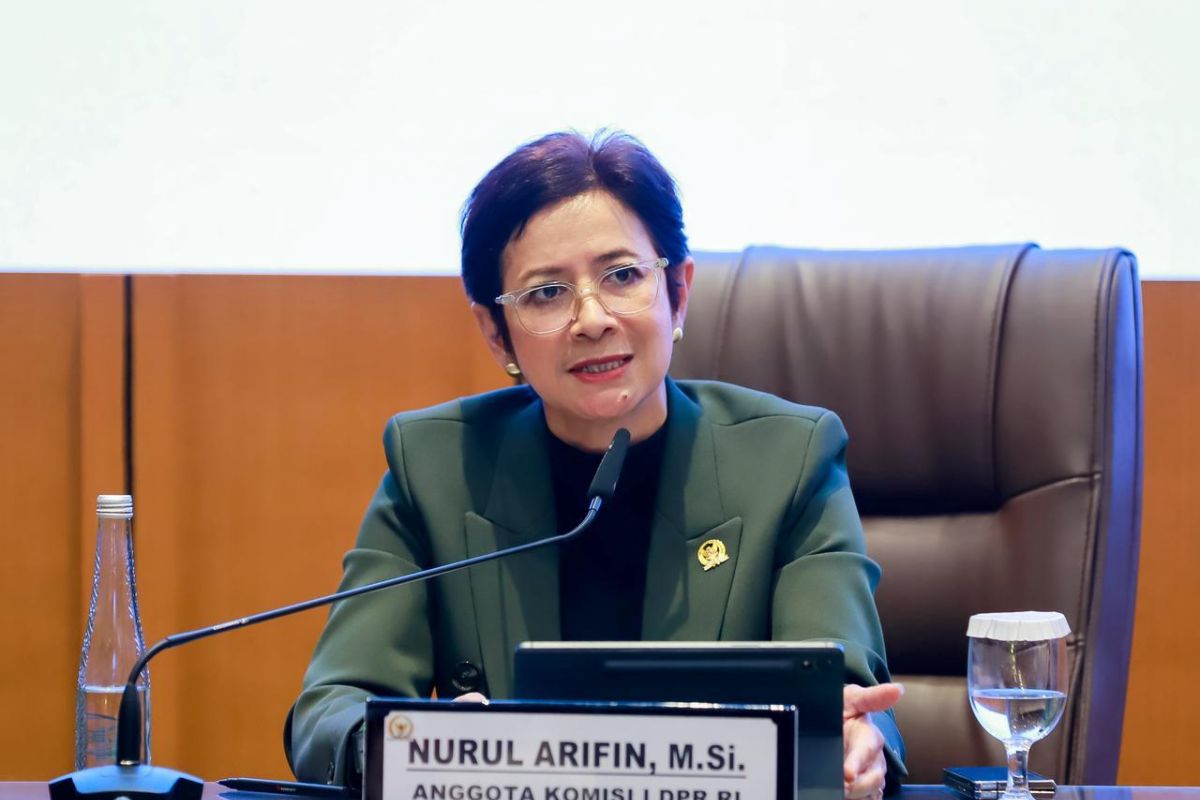
Jakarta (ANTARA) - Nurul Arifin, a member of Commission I of the House of Representatives (DPR RI), has said that the Constitutional Court’s ruling stating that unused internet quota is the consumer’s property and may not be unilaterally forfeited by telecom operators is a form of state protection of the people’s rights.
According to her, the ruling is an important milestone in strengthening consumer rights protection in the digital era. She noted that the internet has become a basic need for society, not only for communication but also for education, work, health services, and digital economic activity.
“The Constitutional Court’s ruling deserves our collective respect and support. It is a form of state protection of consumer rights. Internet quota that people have already paid for is theirs, so it should not simply disappear without being able to be used,” Nurul said in Jakarta on Friday.
However, she warned that the ruling’s implementation must not instead create new problems in the form of higher internet tariffs or reduced data package benefits, which would ultimately burden the public.
“It must not be the case that people gain the right to keep their remaining quota, but have to pay more expensively. That would clearly contradict the spirit of the Constitutional Court’s ruling, which seeks to deliver justice for consumers,” she said.
Telecom operators, she said, have many business strategy options beyond passing additional costs on to customers. In her view, companies need to treat the ruling as a momentum to improve efficiency and innovation.
“Operators can strengthen network efficiency through technology optimisation, including the use of artificial intelligence in traffic management. With a more efficient network, operational costs can also be reduced without having to sacrifice customers,” she said.
She therefore urged the government to promptly draft derivative regulations that provide certainty for all parties, both operators and the public. She said such regulations should clearly govern the rollover mechanism (unused internet quota carrying over), transparency of data package information, and protection for consumers in the event of unjustified tariff changes.
“On the other hand, the Business Competition Supervisory Commission (KPPU) also needs to monitor against price collusion among operators that could harm the public,” she said.
Previously, the Constitutional Court partially granted a judicial review petition concerning the forfeiture of internet quota, requiring the availability of service options that guarantee users’ remaining quota stays active and usable.
Chief Justice Suhartoyo read out the operative part of the ruling at a hearing in Jakarta on Thursday (23 July), stating that petition number 273/PUU-XXIII/2025 was granted in part.
“The petitioners’ petition is granted in part,” Suhartoyo said.
The Court declared that Article 28 paragraph (1) in Article 71 point 2 of the Annex to Law Number 6 of 2023 on Job Creation is contrary to the 1945 Constitution of the Republic of Indonesia and has no binding legal force conditionally, to the extent it is not interpreted to mean that telecommunication providers are obliged to provide service options that guarantee users’ remaining quota stays active and usable.