
House Member Pushes Cassava as Wheat Substitute to Strengthen Self-Sufficiency
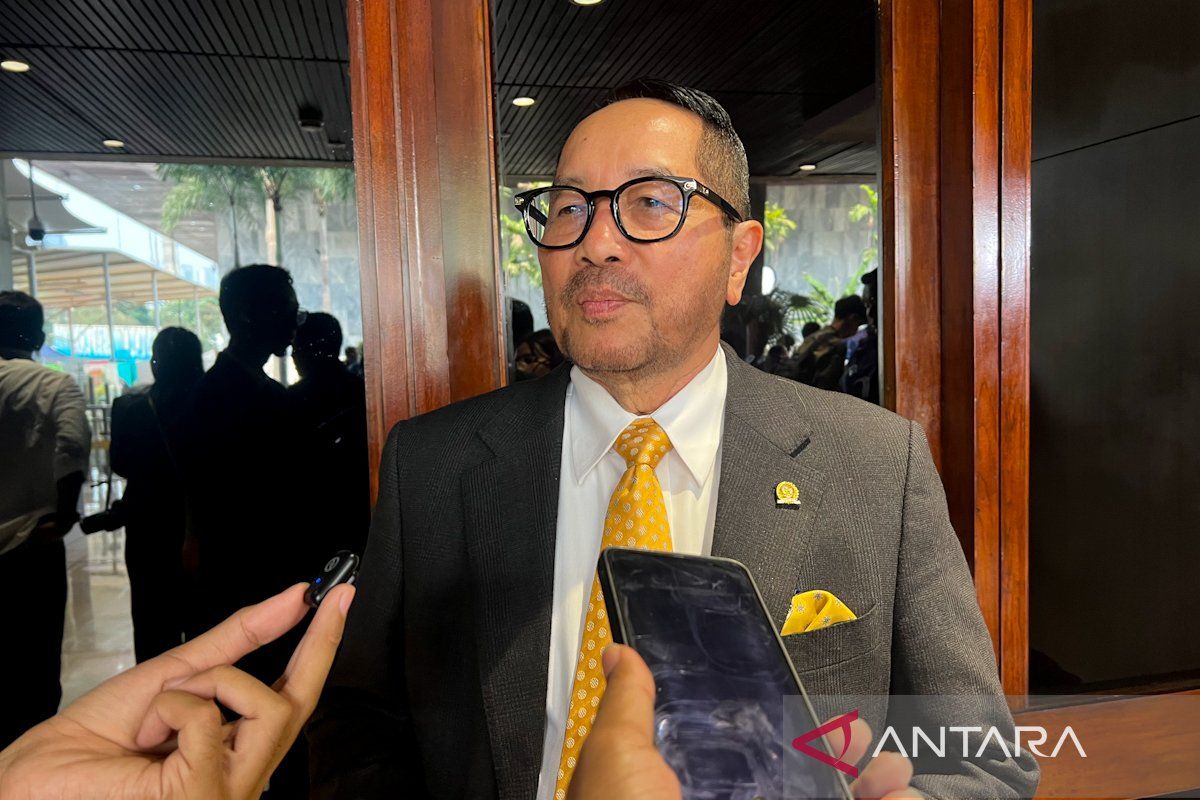
A member of Commission IV of the Indonesian House of Representatives, Firman Soebagyo, is encouraging the use of cassava as a substitute for wheat to strengthen food self-sufficiency while reducing Indonesia’s dependence on imports. Speaking after the 2026 Annual Session of the People’s Consultative Assembly and the Joint Session of the House of Representatives and the Regional Representatives Council in Jakarta on Friday, Firman said Indonesia needs to reinforce the sustainability of self-sufficiency in eight food commodities by developing local commodities with great potential to replace imported raw materials. “In order for the self-sufficiency of the eight commodities to be sustainable, the government should set a price for the eight commodities, including cassava, just like rice. Then, innovation regarding imported raw materials such as wheat can be replaced with sorghum,” Firman said. According to him, cassava can be a strategic alternative to wheat because it has the potential to be used for various food products, including noodles and various other processed foods. He added that sorghum is also worth developing as a raw material to replace wheat, giving Indonesia more choices of local commodities to support the national food industry. “In fact, sorghum can be used everywhere to replace raw materials for noodles and then for cakes and so on. Even in China, cassava is already used as a substitute for noodle ingredients,” he stated. Firman assessed that increasing the utilisation of cassava and sorghum would help save the country’s foreign exchange because it can reduce the need for wheat imports, which have been quite high. “If that is done, the foreign exchange savings will be quite large. Because currently, our wheat imports reach 2 million tonnes per year, if I’m not mistaken,” he said. To support the development of cassava, Firman suggested setting a government price so that farmers have business certainty and are encouraged to increase production sustainably. According to him, the price scheme can be adjusted to the conditions of each region because not all provinces are cassava production centres in Indonesia. Firman mentioned that the government has begun discussing the policy through coordination between the Ministry of Agriculture and the Ministry of Home Affairs as a step to strengthen cassava commodity governance. “There is a policy that we have conveyed to the government, and reportedly the Minister of Agriculture has held a meeting with the Ministry of Home Affairs,” he explained. He also encouraged the refinement of regulations regarding cassava refraction so that harvest assessments are fairer and provide better protection for farmers. Firman hopes that strengthening cassava policy can improve farmers’ welfare while accelerating the realisation of sustainable national food independence. In his speech, President Prabowo Subianto said Indonesia has achieved self-sufficiency in eight food commodities over the past year. The eight commodities include rice, corn, consumer sugar, industrial sugar, garlic, beef, buffalo meat, and soybeans. However, Prabowo acknowledged that several commodities have not yet fully achieved self-sufficiency. One of them is garlic, which is targeted to be met independently within three years. “We are still not self-sufficient in garlic; we are striving so that within three years we can achieve garlic self-sufficiency,” Prabowo said in his speech. Besides garlic, Prabowo mentioned that Indonesia has still not achieved self-sufficiency in beef and buffalo meat. Nevertheless, he assessed that the public’s protein needs can generally be met by fish, eggs, and chicken meat.