
House Member: Many Who Should Receive Social Assistance Are Not Registered
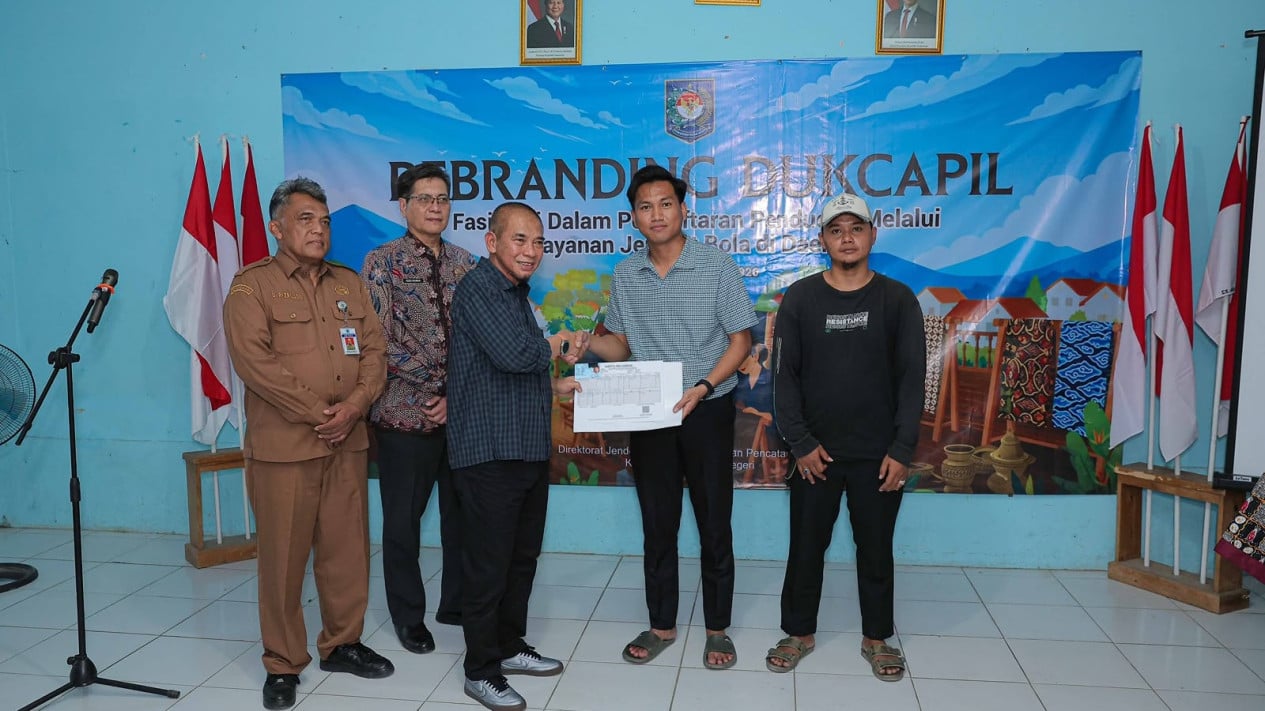
The rebranding of population and civil registration services in Brebes Regency is directed at bringing services closer to the public while strengthening the accuracy of social assistance recipient data. The rebranding event was held at the Muhammadiyah Larangan Junior High School hall on Monday, 10 August 2026, as part of efforts to enhance mobile services and the digital use of population data.
Wahyudin Noor Aly, a member of Commission II of the Indonesian House of Representatives, welcomed the initiative. He said data problems remain a challenge in various government services, including elections and the distribution of social assistance. “In every election we always argue about the number of voters. Likewise with social assistance, many who should receive it are not registered, while those who are not entitled are on the list,” he said.
Wahyudin said population administration services are now easier, faster and free of charge. He assessed that digital transformation needs to be continuously strengthened to build more orderly and integrated population data. “In the past, obtaining an ID card was complicated; now it is free and earlier it was completed in just a few minutes. This digitalisation programme is very important because it makes things easier for the public,” he said.
Commission II of the House of Representatives, Wahyudin continued, is also pushing for the realisation of a single identity number. The integration is expected to reduce duplicate data problems and improve the validity of population data.
Meanwhile, Agus Irawan, Director of Regional Population Data Integration at the Directorate General of Population and Civil Registration of the Ministry of Home Affairs, said the event was a form of partnership between Commission II of the House of Representatives and the Ministry of Home Affairs to strengthen the use of population data in digital-based social protection. “This is a national priority programme aligned with the President’s Asta Cita, especially in efforts to eradicate poverty and improve public welfare,” he explained.
Agus said the distribution of social assistance still faces the problem of inaccurate targeting. Some eligible citizens are not yet on the list, while residents who do not meet the criteria can still be included as recipients. “Through digitalisation, this programme is expected to help improve the targeting accuracy of social assistance recipients,” he said.
According to Agus, data integration between ministries through data exchange or interoperability will strengthen the verification process for recipient eligibility. The data can support the distribution of various programmes, including the Family Hope Programme and Non-Cash Food Assistance.