
House Member: Data is Key to President's 29 Poverty Eradication Policies
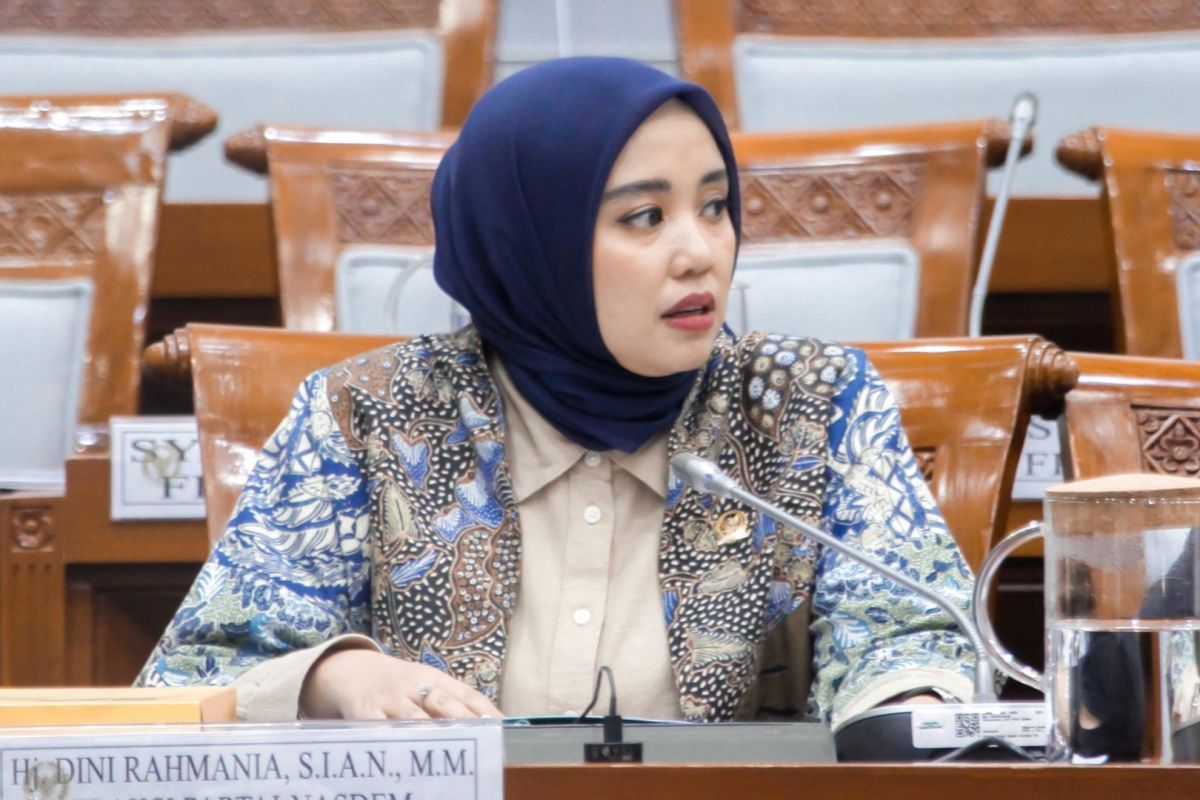
A member of Commission VIII of the Indonesian House of Representatives (DPR RI), Dini Rahmania, has stated that the accuracy of beneficiary data is the main key to the success of President Prabowo Subianto’s 29 policies to eradicate extreme poverty. She is therefore continuing to encourage the Ministry of Social Affairs to periodically update the National Single Socio-Economic Database (DTSEN), utilise digital technology, and strengthen synergy with regional governments down to the village and sub-district levels. “With accurate and continuously updated data, the distribution of aid will be more targeted, minimising overlap, and ensuring that people who truly need it receive their rights,” Dini said in Jakarta on Thursday. Among the various policies launched by the President, she considers those directly addressing the basic needs of the community to be the most urgent, such as strengthening social protection, improving human resource quality through education and nutrition, empowering poor communities economically, and creating jobs. For the time being, she noted, Commission VIII is focused on ensuring that all social protection programmes under the authority of the Ministry of Social Affairs genuinely reach the people who need them. “We encourage the involvement of regional governments and the community in supervising the distribution of aid. This way, every rupiah of the budget spent can provide real benefits and be right on target,” she said. In addition to ensuring budget adequacy, she also stressed the importance of spending efficiency, requiring every programme to have clear performance indicators, measurable targets, and periodic evaluations for effective implementation. She also urged the Central Statistics Agency (BPS) to ensure data alignment or updates can be carried out promptly without convoluted bureaucracy, with transparent verification and validation, including room for the public to submit corrections if inaccurate data is found. “In principle, the state budget must provide the greatest possible benefit to the community, not just be administratively absorbed,” she said.