
House Deputy Speaker Says Political Parties Struggle to Meet 30% Female Quota
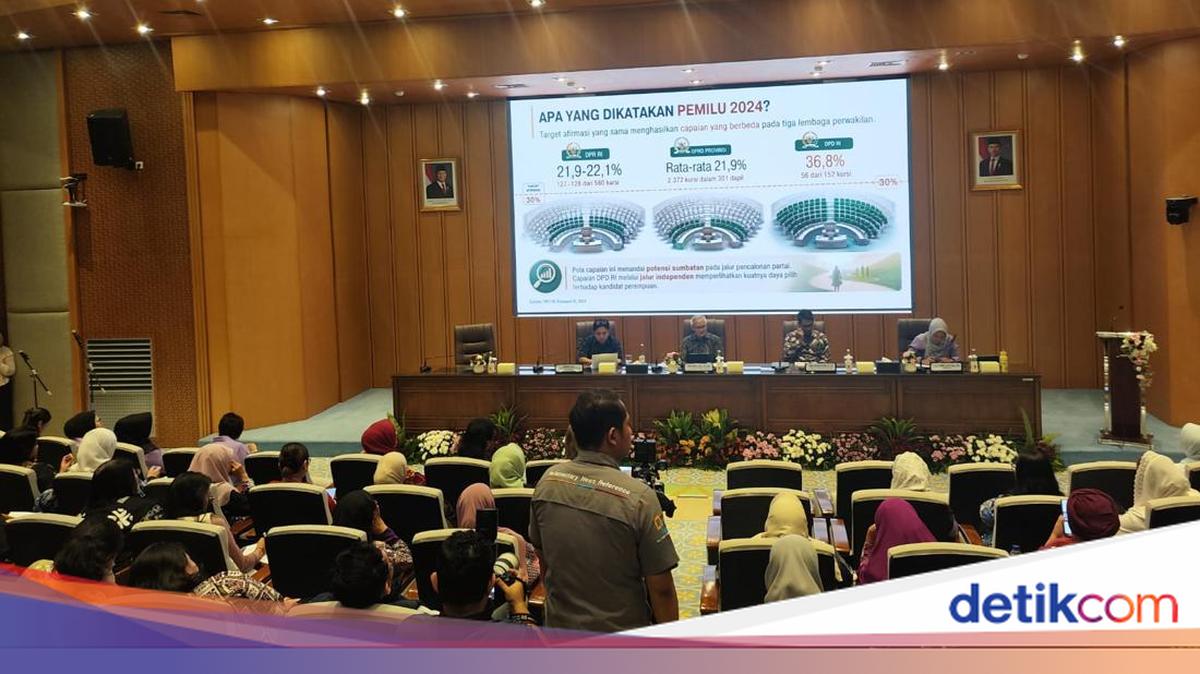
Deputy Speaker of Commission II of the House of Representatives (DPR), Aria Bima, has highlighted the reality that the 30% female representation quota remains difficult for political parties to fulfil in legislative nominations. Bima stated that some parties merely seek candidates to meet the requirement.
Aria Bima initially noted that the 30% female representation rule is final and must be implemented based on Constitutional Court Decision Number 128. This ruling provides a basis for maintaining the 30% quota throughout the electoral process, not just on the registration day. “Therefore, the 30% quota must be maintained until the final candidate list. This is important. The ruling stipulates that at least 30% of candidates in each electoral district must be women,” Aria Bima said during a discussion at the DPR building in Senayan, Jakarta, on Wednesday (15/7/2026).
Bima stated there are significant consequences for ignoring this requirement. According to him, a political party could be disqualified. “A political party that disregards this can be disqualified in the relevant electoral district. This is crucial because our weakness so far has often been in the placement of this norm. The 30% obligation is met during the submission of prospective candidates,” he explained.
“After entering the verification and final candidate list stages, the provision suddenly loses its force. Last-minute list changes, candidate replacements, or various administrative loopholes cause the affirmative substance to gradually evaporate. This is a fact that can be checked from the provisional candidate list to the final candidate list in every election, especially in regional candidate lists,” he continued.
He therefore stressed the need for commitment from political parties and their supporting organisations, noting that empowerment is not easy. He said many parties struggle to meet the quota. “In fact, many political parties seek out proxy candidates, even paying for their medical tests and covering the costs of obtaining police clearance certificates. The reality is, many parties still struggle to meet the 30% nomination quota,” he explained.
Furthermore, Bima mentioned that the issue of women’s representation has not yet been addressed in the Election Bill currently under discussion. He said concrete steps are needed to accommodate the requirement. “Interestingly, strengthening the placement rules has not yet found adequate space within the group of issues in the current revision. I have not seen various women’s caucuses meeting with Commission II to discuss concrete steps on this matter,” he said.
Echoing Bima, Commission I DPR member Nurul Arifin also believes in the need to fight for women’s affirmation in elections, including in nominations. Nurul hopes the recommendations from the discussion can be forwarded to the DPR leadership. “We have done this several times, but today we are doing it on a larger scale so that more people are involved and it is more comprehensive, because the recommendations will be submitted to the DPR leadership, then to the leadership of Commission II and the Legislation Body,” Nurul said.
“This forum also aims to gather various views, ideas, and strategic recommendations regarding strengthening affirmative policies for women in the electoral system. This ranges from the nomination mechanism and the placement of legislative candidates in each electoral district, to efforts to substantively increase women’s representation in legislative institutions,” she continued. Nurul expressed hope that the regulations being discussed by the DPR can deliver justice and strengthen women’s political representation. “Our hope is that this entire series of processes will produce electoral regulations that are more inclusive, fair, and capable of strengthening women’s political representation in Indonesia,” she said.