
House Commission X Targets Completion of National Education System Bill by 2027
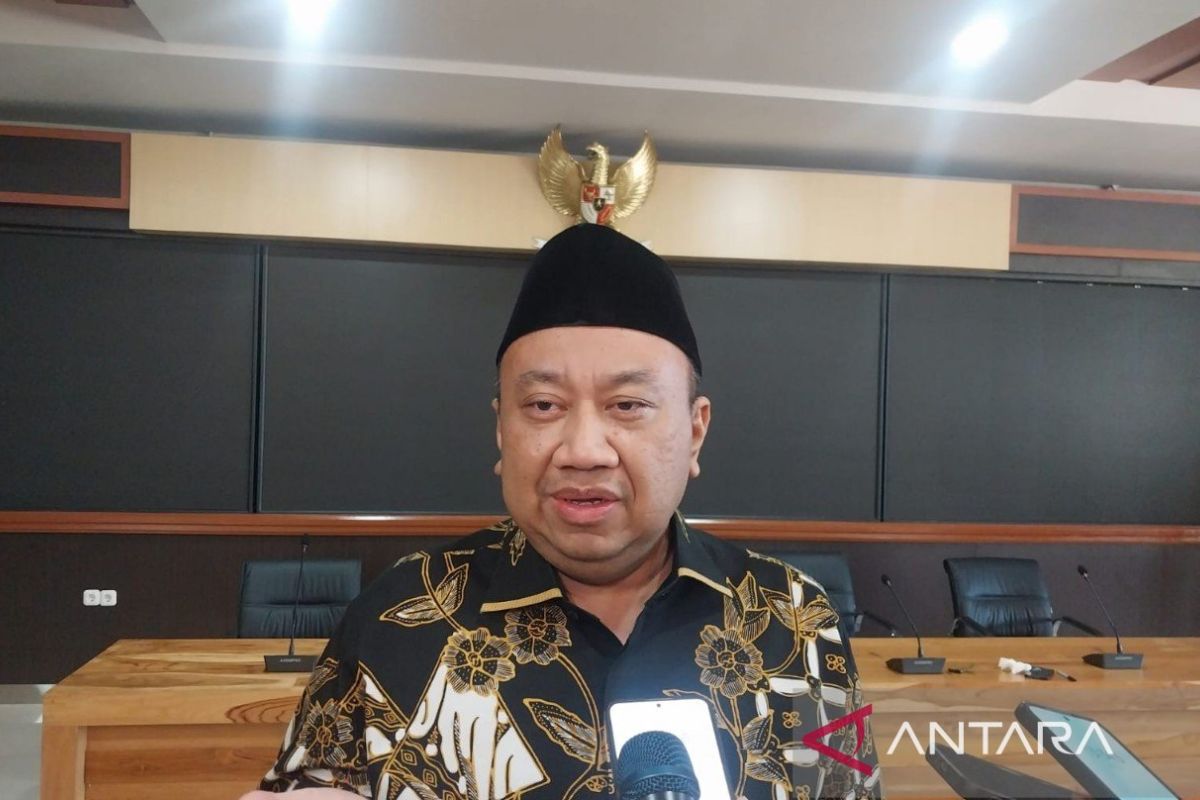
Mataram (ANTARA) - Commission X of the Indonesian House of Representatives (DPR RI) is targeting the Draft Law on the National Education System, or Sisdiknas, to be completed and enacted into law by 2027.
Deputy Chairman of Commission X, Lalu Hardian Irfani, said one of the crucial points specifically regulated in the Sisdiknas Bill is total equality for all educators in Indonesia, regardless of the institution under which they serve.
“There must no longer be any clusters or disparities between teachers under the Ministry of Religious Affairs and teachers under the Ministry of Primary and Secondary Education. Their positions must be aligned and equal,” Hardian told journalists after a Sisdiknas Bill socialisation event with Commission X members at the Governor’s Office of West Nusa Tenggara (NTB) in Mataram on Thursday.
He said this equality also extends to educators in Islamic boarding schools (pondok pesantren) and madrasahs, such as ustadz, tuan guru, and kiai.
“So their positions must also not be unequal to teachers in general education or public schools,” Hardian stressed.
According to him, the Sisdiknas Bill also mandates that educational facilities and infrastructure be distributed evenly across the most remote parts of the country in order to achieve inclusive services.
Recognising the disparities in fiscal capacity between regions, he said Commission X is currently reviewing the division of authority between central and regional governments.
“We are also discussing whether education management needs to be brought back under the central government, or whether it is enough to improve the governance of the division of powers,” said the MP from the NTB 2 Lombok electoral district.
In addition, the Sisdiknas Bill is designed to address the rapid advances in artificial intelligence (AI) technology in the world of education. The use of AI will become a necessity for students from primary level through to higher education.
“This bill will later contain specific guidelines. Technological advancement automatically brings positive effects. However, in this Sisdiknas Bill, we are also regulating mechanisms for filtering and scrutinising content so that AI does not harm our students,” he said.
Through the roadmap locked in within the Sisdiknas Bill, it is hoped that the direction of national education will no longer be easily swayed by short-term political interests.
“We want the applicable curriculum to have a minimum period of validity, for example 10 or 15 years, before it can be changed. So there will no longer be the notion of a change of leader, a change of policy, a change of curriculum,” Hardian said.
He stated that the Sisdiknas Bill is currently under deliberation, as well as undergoing synchronisation and harmonisation with the House’s Legislative Body (Baleg).
Once this stage is complete, the draft will be finalised as a House Initiative Bill, after which it will await a presidential letter to be deliberated together with the government’s working committee.
“At the moment, the study continues to be refined because our target is that, God willing, by 2027 this Sisdiknas Bill can already be passed into law by the House,” he said.