
House Commission X: School Renovation Programme Must Address Students' Basic Needs
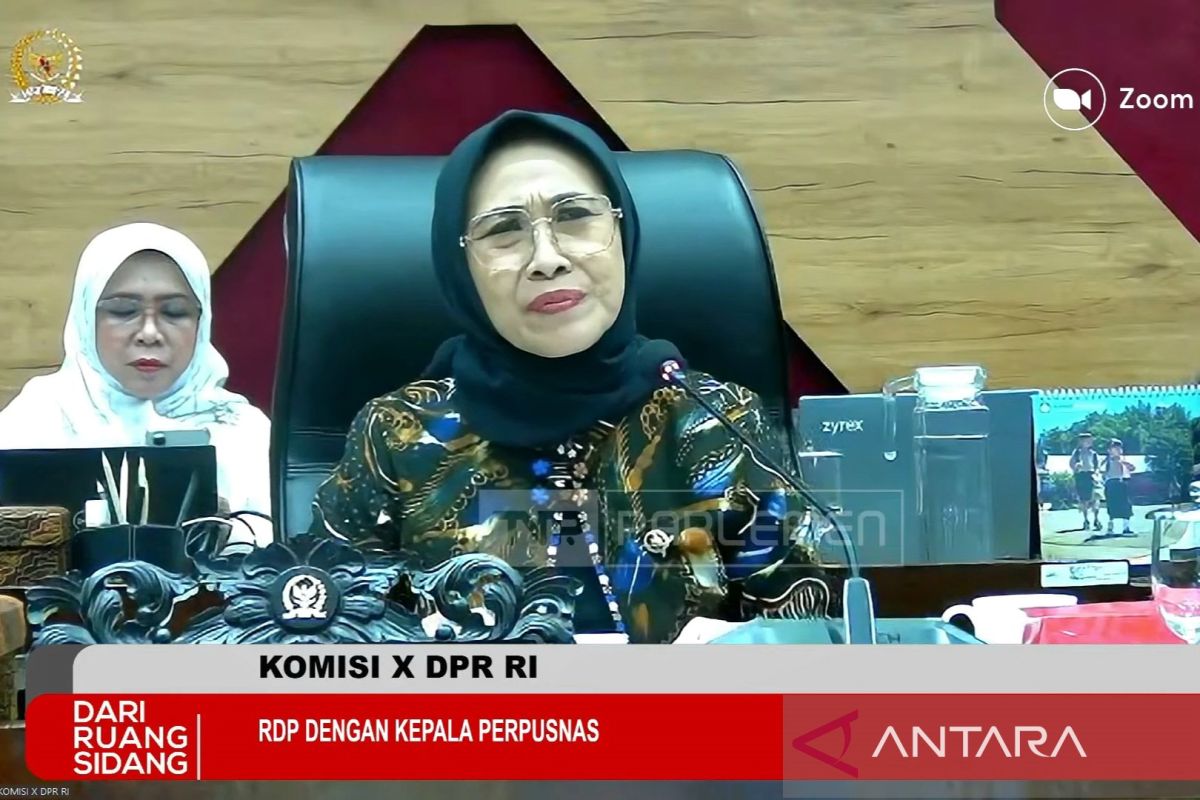
The school renovation programme needs to be implemented with clear standards and must not stop at repairing classrooms or building structures.
Jakarta (ANTARA) - Chair of House of Representatives Commission X Hetifah Sjaifudian has reminded that the school revitalisation programme must meet the basic needs of students and create a safe, healthy and comfortable learning environment.
“This school renovation programme needs to be implemented with clear standards and must not stop at repairing classrooms or building structures,” Hetifah said in her statement in Jakarta on Friday.
Hetifah appreciated President Prabowo Subianto’s commitment to carrying out large-scale renovation and revitalisation of schools throughout Indonesia.
According to her, the programme is not only related to the construction or repair of buildings, but also to ensuring that every child has a safe, proper, healthy learning space that supports quality learning.
Accelerating school repairs, she continued, is important to address the gap in educational facilities and infrastructure that still occurs in various regions.
Therefore, Hetifah paid special attention to the government’s commitment to ensuring that the programme reaches underdeveloped, frontier and outermost regions (3T).
According to Hetifah, clean, healthy, proper and adequate toilets are an important part of the educational environment, but remain a problem in a number of schools.
She stressed that improving school facilities and infrastructure must go hand in hand with improving the quality of learning.
Schools that have been physically repaired need to be equipped with educational facilities that allow teachers and students to make optimal use of various learning resources.
In this context, Hetifah appreciated the government’s policy of expanding the provision of interactive flat panels (IFP) or digital smart screens in schools.
“The addition of these digital screens is a positive step because school revitalisation must also prepare learning spaces that are in line with the demands of the times,” she said.
She said children must have equal opportunities to utilise technology in learning, both in urban and remote areas.
However, the provision of digital devices must be followed by increasing teacher capacity, the availability of electricity and connectivity, as well as mentoring so that technology is used to improve the quality of learning.
“Do not let the devices be available but not optimally used. We must ensure that teachers have the ability to utilise the technology pedagogically, not merely turning digital screens into a substitute for blackboards,” she said.
The government needs to ensure the continuity of the programme from year to year so that the target is achieved while maintaining quality.
“The target is large and the timeline is clear. Therefore, we need to ensure that budget planning is also consistent, the data on targeted schools is accurate, the implementation process is transparent, and the quality of work can be accounted for,” she said.
“Do not pursue quantity at the expense of quality,” she continued.
She also reminded of the importance of accurate needs mapping so that renovation budgets are directed to schools that need them most, especially schools with severe damage, limited sanitation and inadequate learning facilities.
“We need proper learning spaces, healthy toilets, competent teachers, adequate learning devices, good connectivity, and an environment that supports children’s growth and development. All of this must go hand in hand,” she stressed.
Hetifah added that House Commission X will oversee the implementation of the school renovation programme through its legislative, budgetary and oversight functions.
“The President’s commitment must be translated into measurable policies and programmes that are directly felt by students, teachers and the community,” she said.
The commitment was conveyed by President Prabowo in his state address at the House of Representatives session and the submission of the Financial Note for the 2027 State Budget Draft at the Parliamentary Complex, Jakarta, Friday (14/8).
The President said the government is prioritising a large-scale school improvement programme alongside a number of other programmes.
In 2025, around 17,000 schools have been revitalised. In 2026, the government is targeting the improvement of more than 71,744 schools, and all schools in Indonesia are targeted to be fully renovated by 2029.