
House Commission X Ensures National Education System Bill Involves Meaningful Public Participation
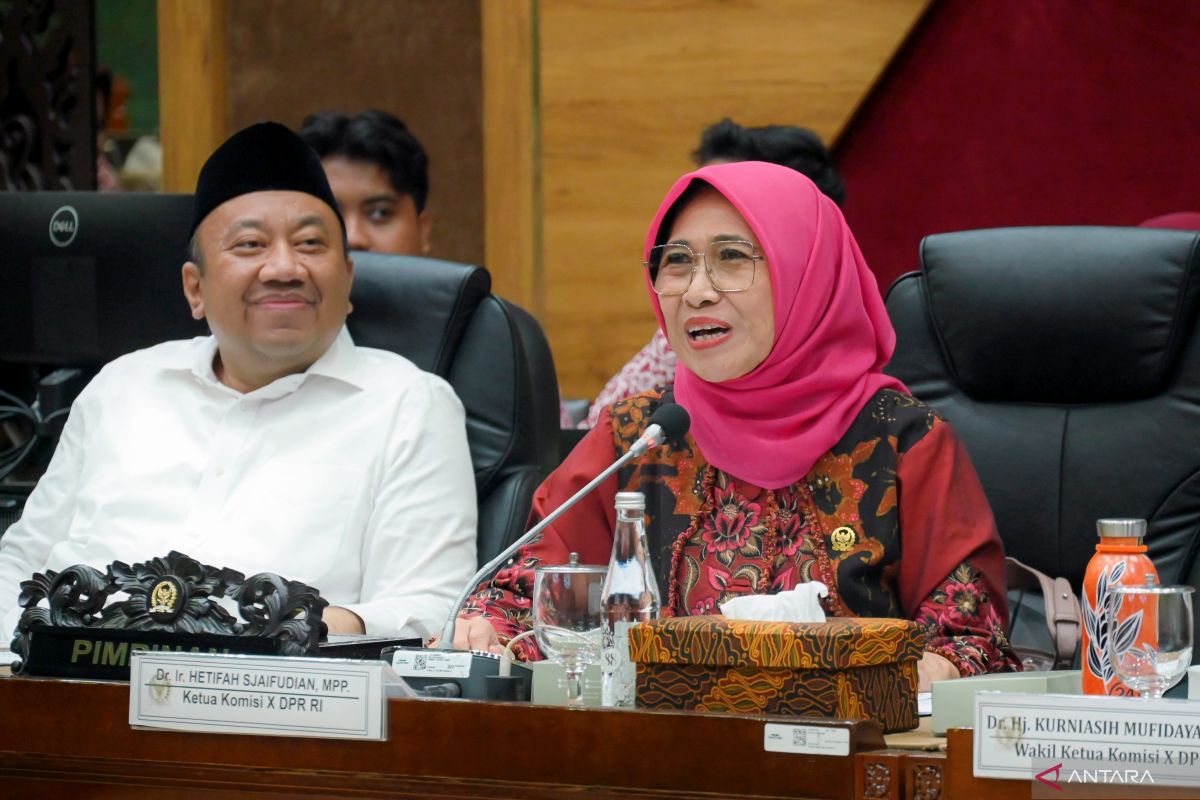
Jakarta (ANTARA) — Hetifah Sjaifudian, Chair of Commission X of the House of Representatives (DPR RI), has assured that the drafting of the Bill on Amendments to Law Number 20 of 2003 on the National Education System (RUU Sisdiknas) involves meaningful public participation.
“The drafting of the RUU Sisdiknas has been participatory from the outset, involving various elements of society. The input we have received from different regions and stakeholder groups forms an important part of refining the substance of this bill,” Hetifah said in a statement in Jakarta on Thursday.
She explained that the drafting of the RUU Sisdiknas has been a lengthy process that began in January 2025.
Over more than a year, she said, Commission X of the DPR has held numerous meetings, working visits, public discussions, and consultations with relevant ministries and agencies, regional governments, academics, professional organisations, education providers, civil society organisations, and various other stakeholders.
At an internal meeting on Wednesday (8 July), Commission X agreed to proceed with the bill to the harmonisation stage, marked by the submission of the draft to the DPR’s Legislative Body (Baleg).
According to her, harmonisation within Baleg is a crucial stage in lawmaking, particularly as the RUU Sisdiknas integrates various education provisions currently scattered across several laws into a single, more comprehensive and unified regulatory framework.
“We have been through a fairly lengthy drafting process. The harmonisation stage at Baleg is an important part of further refining the substance of the bill before it is eventually adopted as a DPR initiative proposal,” she said.
Although the bill has entered the harmonisation stage, Hetifah emphasised that the space for public participation remains open. The public can still submit input, criticism, and suggestions for improvement regarding the substance of the bill at subsequent stages.
“Public participation does not stop at the drafting stage. During the harmonisation process at Baleg and in the following stages of deliberation, input from society remains essential to ensure that the RUU Sisdiknas genuinely addresses the needs of national education,” she said.
Once harmonisation is complete, the RUU Sisdiknas will be brought before a DPR plenary session to seek approval as a DPR initiative proposal. Deliberations will then continue with the government at the first level of discussion, before proceeding to the second level, namely a plenary session for final approval.
The RUU Sisdiknas comprises 16 chapters and 257 articles. Among its strategic provisions are the extension of compulsory education to 13 years — covering one year of early childhood education, nine years of basic education, and three years of secondary education — accompanied by the state’s obligation to guarantee funding, teacher availability, and educational facilities and infrastructure.
In addition, the bill also regulates strengthening the relevance of higher education to the business and industrial world, the recognition of pesantren as part of the national education system, the professionalism and welfare of teachers and lecturers, the protection of students and educators, the integration of the national education data system, and the affirmation of a minimum 20 per cent allocation of the state and regional budgets (APBN/APBD) for education.