
House Commission VIII Warns of Potential Hajj Cost Increase in 2027
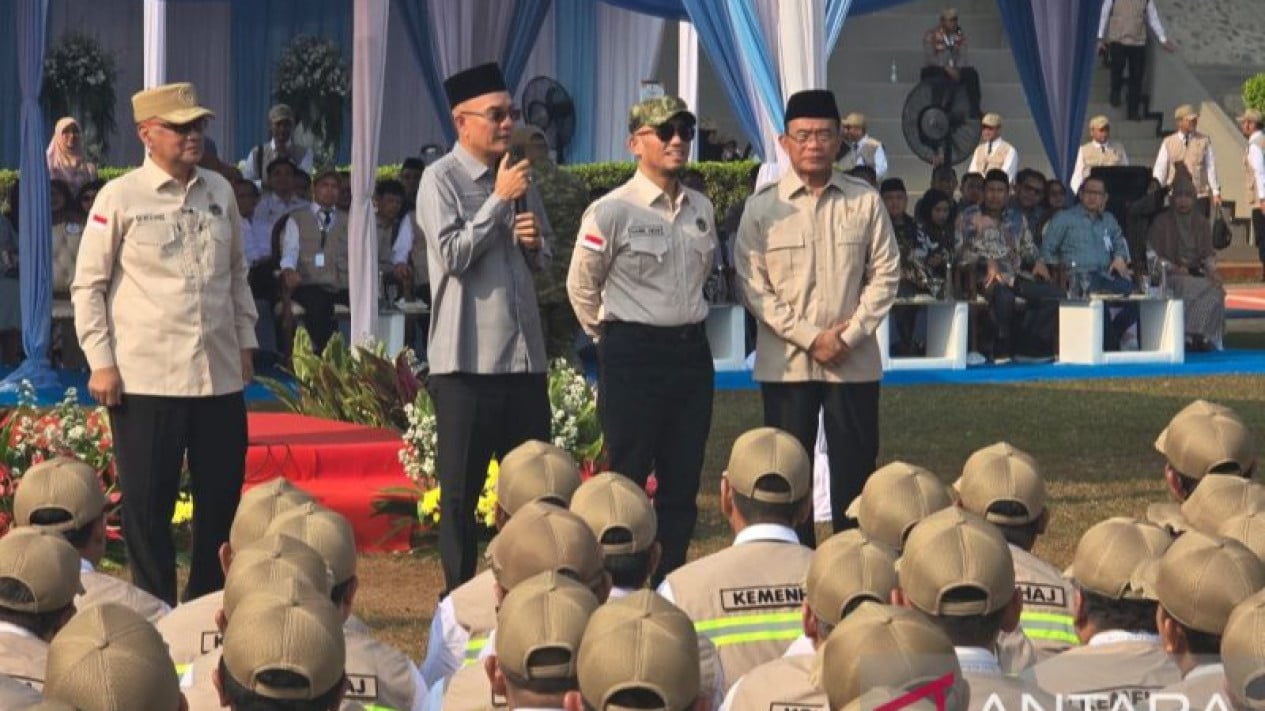
The House of Representatives Commission VIII has warned of a potential increase in the Hajj Travel Cost (BPIH) for 2027, which must be anticipated through a comprehensive evaluation of cost components and improved service efficiency to maintain affordability for pilgrims.
Speaking at the opening of the National Working Meeting for the Evaluation of the 2026 Hajj Implementation, Commission VIII Chairman Marwan Dasopang stated that rising costs both domestically and in Saudi Arabia are likely to push up the overall expenses for organising the pilgrimage. “If we calculate the figures needed to fulfil the obligations of the Hajj organiser, it appears the cost of Hajj will increase,” Marwan said at the Pondok Gede Hajj Dormitory in Jakarta on Saturday, 4 July 2026.
He stressed that the commission, together with the Ministry of Hajj and Umrah, will examine various schemes to suppress the increase. Marwan noted that the government needs to formulate which cost components can still be made more efficient. He pointed out that flight costs have limited flexibility due to airline regulations, while accommodation services also need to be evaluated without compromising service quality.
Beyond costs, Marwan also highlighted the need for a long-term solution to the limited capacity in Mina, which remains a persistent challenge in the Hajj operation. “The challenge is significant for us; Mina never expands. We hope for an increase in quota, but the area of Mina does not increase,” he said.
He noted that the Tanazul scheme for some pilgrims has been one effort to reduce overcrowding in Mina. Going forward, he said, the government needs to formulate an optimally managed Tanazul capacity so that the Mina issue does not recur every year.
Earlier, Minister of Hajj and Umrah Mochamad Irfan Yusuf requested that the evaluation meeting serve as an open forum to identify all shortcomings in the Hajj operation as a basis for service improvement. “This 2026 Hajj Implementation Evaluation National Working Meeting is certainly an opportunity for us to find various deficiencies that we have and are currently experiencing, to become part of future Hajj service improvements,” the Minister said. He added that all deficiencies need to be disclosed openly with the aim of improving service quality, not to find fault, so that future Hajj operations will be better prepared and optimised.