
House Commission VIII Urges Hajj Ministry to Comprehensively Improve Hajj System
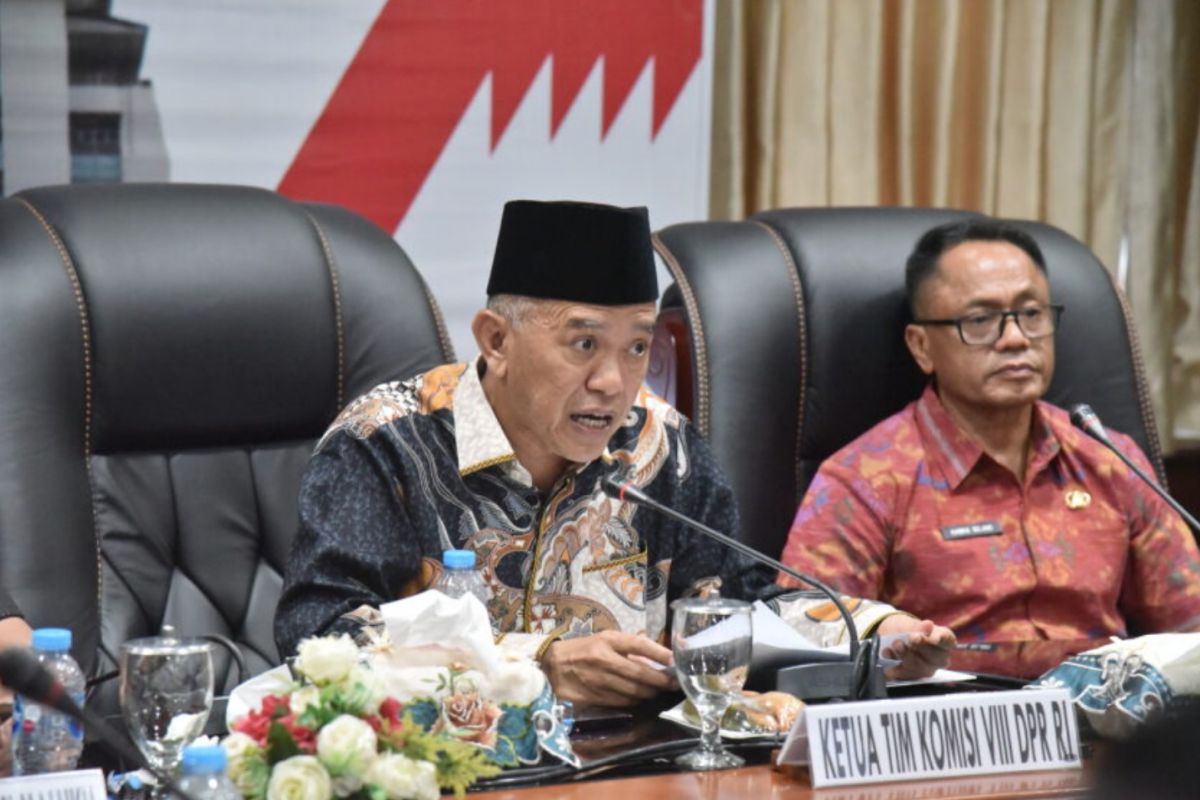
Jakarta (ANTARA) - The Deputy Chairman of Commission VIII of the Indonesian House of Representatives (DPR RI), Singgih Januratmoko, has requested the Ministry of Hajj and Umrah to comprehensively refine the Hajj system by conducting an evaluation focused on three key aspects.
According to him, there are three evaluation focuses communicated by the Ministry of Hajj and Umrah of Saudi Arabia to Indonesia: management in Mina, the requirements for ‘istitha’ah’ (physical/financial capability), and flight delays, which are shared concerns between the Saudi Arabian government and all countries sending Hajj pilgrims, including Indonesia.
“I appreciate the 2026 Hajj implementation, which generally proceeded well. However, this success should not lead to complacency. Rather, post-Hajj evaluation must become a culture of continuous improvement,” Singgih stated in his remarks in Jakarta on Thursday.
He explained that Hajj services always face increasingly complex challenges every year, necessitating a comprehensive evaluation. The politician from Central Java’s 5th electoral district assessed that the Mina area remains a major challenge in the implementation of the Hajj pilgrimage to this day.
The limited land capacity, which must accommodate millions of pilgrims simultaneously, makes the regulation of mobility, tent placement, logistics distribution, and human flow management require an increasingly modern and technology-based system.
“Mina is the epicentre of Hajj services. As long as the capacity of this area remains limited while the number of pilgrims worldwide continues to increase, more adaptive governance innovations are needed,” he said.
Singgih stated that Indonesia needs to continue advocating for increased service capacity, the optimisation of tent placement, and the strengthening of pilgrim movement management systems based on digital data.
Based on the experience of Hajj implementation in recent years, he noted that the success of services in Mina depends not only on the readiness of officers but also on quota policies, the regulation of pilgrim movement schedules, and coordination across various ‘syarikah’ (service providers).
Furthermore, regarding the ‘istitha’ah’ requirements, he believes these are not merely administrative requirements but a form of protection for pilgrim safety. He assessed that the implementation of health ‘istitha’ah’ must be conducted objectively, transparently, and based on accountable medical standards so as not to create a perception of differential treatment for prospective pilgrims.
“Hajj is a very strenuous physical worship. Therefore, the application of ‘istitha’ah’ must truly serve as an instrument of protection for pilgrims, rather than just an administrative formality,” he said.
To this end, he noted that the health coaching of prospective pilgrims should begin long before the departure period so that the public has sufficient time to improve their health condition.
“Flight delays are not merely a technical issue for airlines. The impact can affect worship schedules, the physical condition of pilgrims, and even the readiness of officers in Saudi Arabia,” he said.
Therefore, he believes the evaluation must be comprehensive so that, moving forward, there is a better mitigation system in place when unforeseen conditions occur.
Singgih emphasised that Commission VIII of the DPR RI, as a working partner of the Ministry of Hajj and Umrah, will continue to perform its oversight function to ensure that every evaluation result is followed up with concrete policies.
He added that Indonesia’s Hajj implementation is already on a positive track. However, future challenges are growing larger alongside increasing public expectations regarding service quality.
“We should not merely say that the Hajj implementation was successful. What is far more important is ensuring that every deficiency, no matter how small, can be rectified so that the quality of service continues to improve year after year,” he said.
“The evaluation of the 2026 Hajj implementation is not just about identifying problems, but must also present systemic improvements in the form of an Indonesian Hajj governance that is professional, adaptive, safety-oriented, and capable of becoming one of the best Hajj service models in the world,” he concluded.
Source: jawawa.id (https://jawawa.id/newsitem/house-commission-viii-urges-hajj-ministry-to-comprehensively-improve-hajj-system-1782986180)
Originally published by Antara (Indonesian) (https://www.antaranews.com/berita/5632323/komisi-viii-minta-kemenhaj-sempurnakan-sistem-haji-secara-menyeluruh), translated from Indonesian