
House Commission VII Urges Expansion of Intellectual Property Financing Implementation
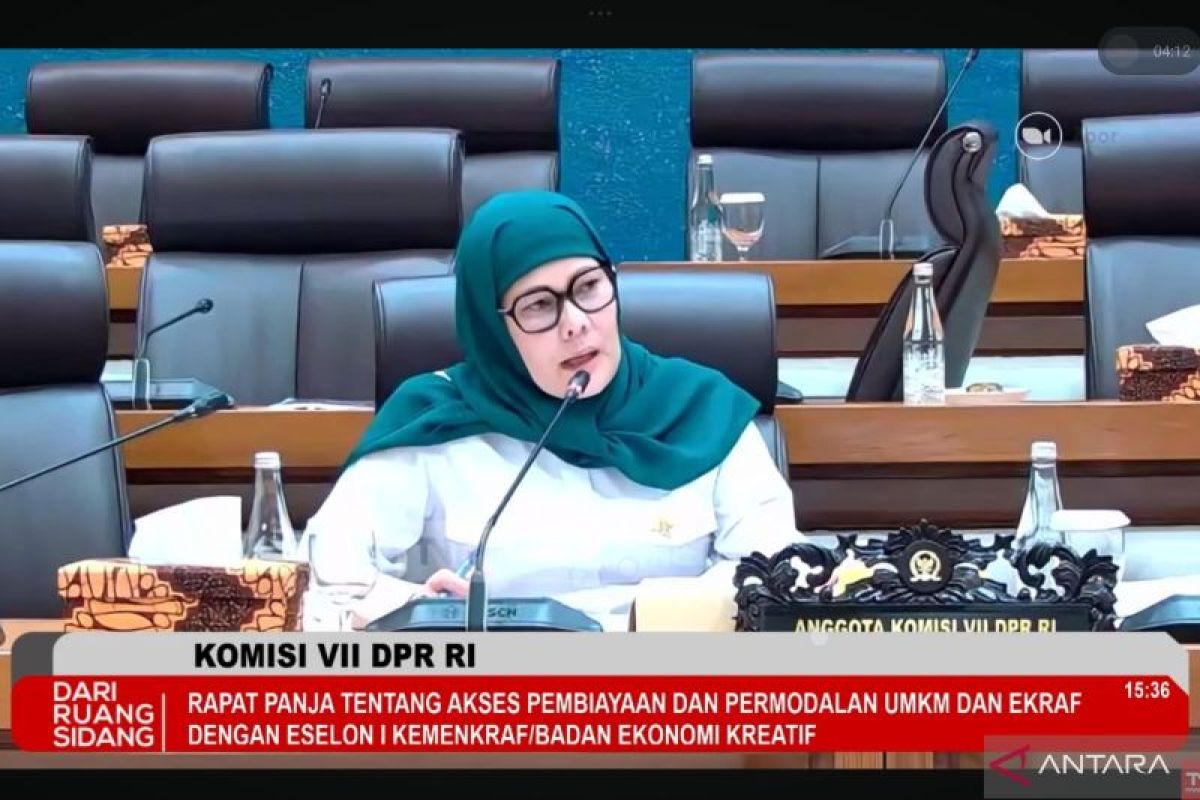
Member of Commission VII of the Indonesian House of Representatives (DPR RI), Eva Monalisa, has urged the government to implement intellectual property (IP) financing widely and not stop at the trial stage. She stated that the financing programme based on people’s business credit (KUR) and the capacity of intellectual property valuation standards need to be driven with a clear roadmap so that the programme can be widely felt by creative business players. “The value of IP is often difficult to calculate because it is intangible. So, my note is that a national standard for IP valuation may be needed. So that financial institutions also have confidence in providing financing,” said Eva during a hearing with Commission VII of the DPR RI, which was followed online in Jakarta on Monday. Eva said the government needs to ensure equal access to financing also covers creative economy players in regions, villages, and underdeveloped areas because so far, most creative investment is still concentrated in certain areas. Thus, creative economy players can also develop from start-ups into competitive creative industries nationally and globally. In addition, she said banks still view the creative economy sector as a risky sector because the concept of the creative economy, which is intangible design, makes it difficult to determine value in numbers. Therefore, according to her, the government needs to accelerate the establishment of an IP guarantee or insurance scheme to protect financial institutions and business players to mitigate financing risks. Financing also needs to be accompanied by mentoring, not just providing capital but must be followed by business development, strengthening governance, and access to marketing and digital literacy. “So, because we also know that the creative economy actually has great potential for economic growth through creativity, innovation, and intellectual property, but the main challenge still lies in access to financing because the asset characteristics of our creative economy are different from conventional business sectors,” said Eva. Responding to this, Secretary of the Ministry of Creative Economy Dessy Ruhati conveyed that the strategy for strengthening creative economy financing includes reinforcing IP-based financing through the refinement of national valuation standards, strengthening guarantee schemes, valuation cost subsidies, secondary market development, and expansion of IP-based commercial financing. In addition, the Ministry of Creative Economy will strengthen the overall creative economy ecosystem by increasing the capacity of business players, expanding market access, strengthening data, and fostering collaboration between ministries and agencies, local governments, the business world, financial institutions, academics, communities, and the media. “We believe that financing will succeed when businesses are ready, intellectual property is protected, markets are available, data is trustworthy, and risks are shared proportionally,” said Dessy. To accelerate these efforts, the Ministry of Creative Economy also expects support from the Working Committee of Commission VII DPR RI to increase financing distribution and build a sustainable creative economy financing system. This support is expected so that intellectual property becomes not just a legal document, but a productive asset that opens access to financing, strengthens creative businesses, and ultimately improves community welfare.