
House Commission VII Gathers Bottled Water Industry Issues During Bogor Visit
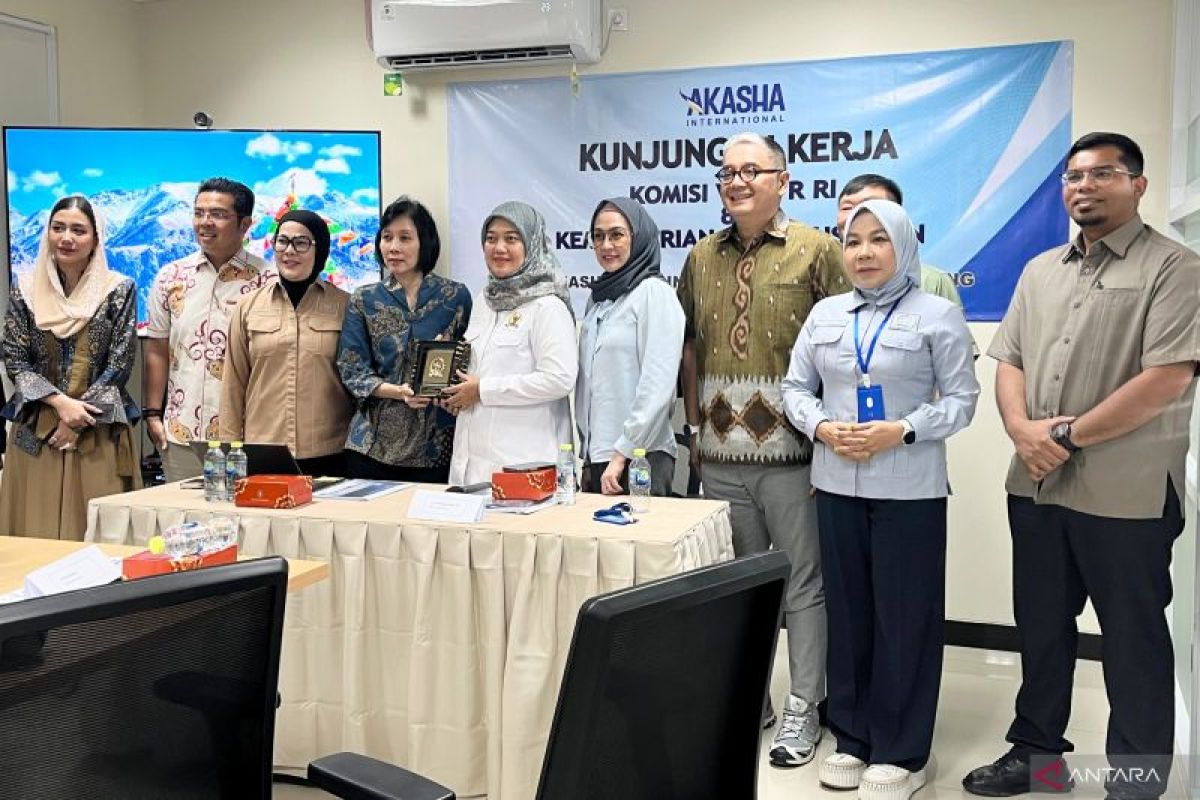
House of Representatives Commission VII gathered various issues facing the bottled drinking water industry during a visit by its Bottled Drinking Water Working Committee to PT Akasha Wira International in Cibinong, Bogor Regency, West Java, on Thursday.
Deputy Chair of Commission VII Chusnunia Chalim said the visit was conducted to collect the problems faced by the bottled water industry as material for the working committee’s deliberations.
“Today we came to PT Akasha Wira International in connection with our work on the Bottled Drinking Water Working Committee. Today we are shopping for problems, anything related to bottled water,” Chusnunia said.
She explained that the issues of concern to the working committee cover aspects of water resource utilisation, environmental conservation, plastic waste management, consumer protection, and the potential dangers of microplastics.
According to her, bottled water companies that use large amounts of water must bear a proportional responsibility for preserving the environment and water availability.
“We hope the ratio of water used for production is matched by conservation efforts so as not to harm other parties,” Chusnunia stated.
She said excessive groundwater extraction has the potential to harm communities, including farmers who depend on water sources. Moreover, uncontrolled groundwater use can trigger land subsidence.
Chusnunia appreciated a number of conservation measures undertaken by the company, such as the construction of infiltration wells and rainwater harvesting systems. However, she noted that on-the-ground implementation still needs to be monitored.
Beyond water conservation, the working committee also highlighted plastic waste management as a consequence of plastic packaging use in the drinking water industry.
“We also demand that plastic waste processing become a solution to the use of this plastic packaging,” she said.
Commission VII is also paying attention to the potential release of microplastics due to product distribution that does not meet standards, such as exposure to sunlight during storage and transport.
According to Chusnunia, there are currently no national or international provisions regarding the threshold for microplastic content in food and beverages.
“We encourage BPOM to issue that standard even though international regulations do not yet exist,” she said.
During the visit, the working committee also received input from industry players regarding regulation, product distribution, and consumer protection.
She assessed that drinking water is a basic human need, so the state must pay greater attention to the water supply sector, including encouraging improved drinking water services by regional water companies.
“Water is a mandatory need for all humans. Therefore, the state must be present to handle water issues and its attention must be greater,” Chusnunia said.