
House Commission VII Emphasises Stricter Sanctions in Industrial Estate Bill
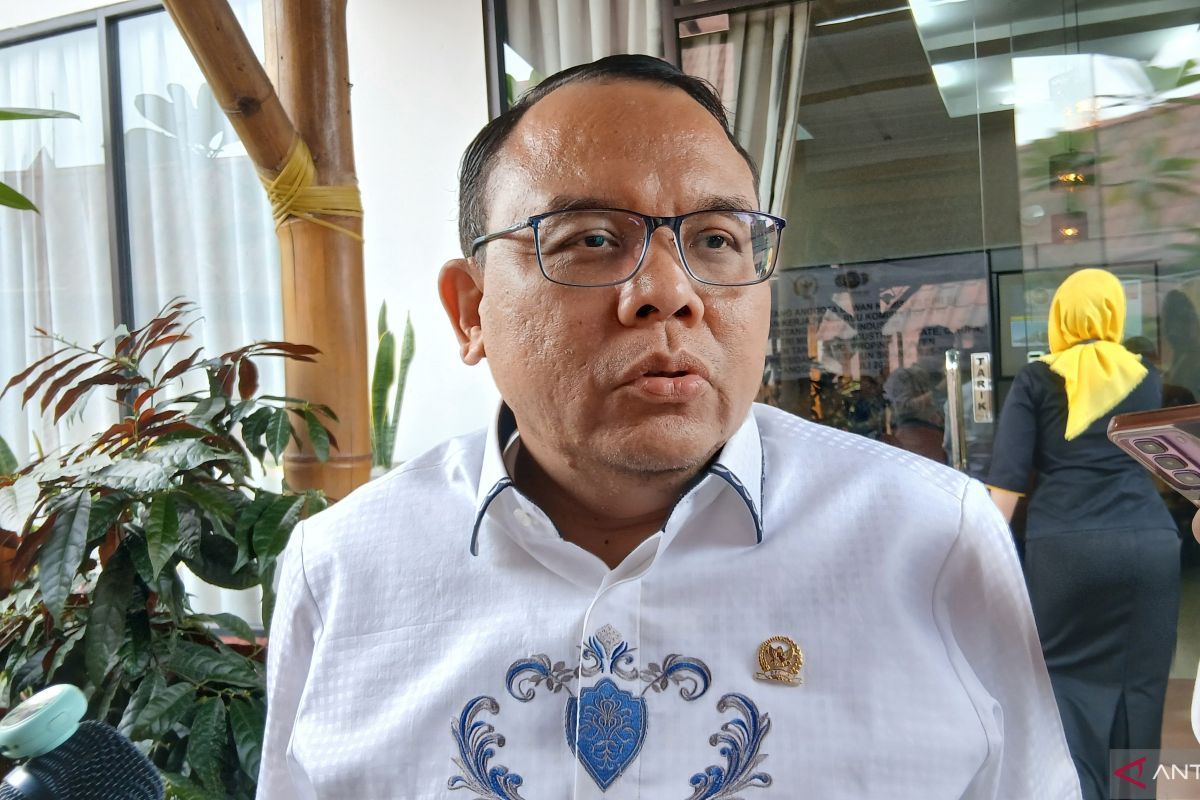
Tangerang Regency, Banten (ANTARA) - Commission VII of the Indonesian House of Representatives (DPR) has emphasised that the maturation of the draft Bill on Industrial Estates currently being formulated by the legislature is intended to strengthen the enforcement of sanctions and public participation.
“So later there will certainly be rewards and punishments. That is the principle of the law. It is our basis for determining justice within it,” said Saleh Partaonan Daulay, Chair of Commission VII DPR, in Tangerang Regency, Banten, on Monday.
He explained that the bill is being drafted to regulate business operators so they conduct their enterprises in an orderly manner, fulfilling their rights and obligations in accordance with the provisions. Furthermore, the regulation is also designed to ensure that communities around industrial estates receive their rights so as not to suffer losses that could lead to social jealousy.
“We have summoned the DPR’s Expertise Body. The DPR’s Expertise Body, along with experts and our members, have discussed and drafted the academic manuscript for the law, and we have now handed it over and it is currently being deliberated in Commission VII,” he stated.
Saleh said the current stage of finalising the draft bill focuses on three crucial points: public involvement, environmental sustainability, and the role of primary developers. Commission VII highlighted the ongoing problem of environmental pollution, such as the case of pollution in the Cisadane River in Banten, which is suspected to originate from industrial estates.
“This unresolved case reflects the urgency for stricter oversight in the regulation being drafted,” he said.
Furthermore, Commission VII of the DPR RI asserted that the bill is designed to strengthen the foundation of green industry in Indonesia. This transformation is considered crucial in line with the government’s vision, which is increasingly oriented towards sustainable industrial practices and more organised waste management.
“This law must be able to safeguard green industry. Indonesia’s future orientation must indeed head in that direction. Waste management must also be more organised and orderly,” Saleh concluded.