
House Commission VI Proposes PTPN Develop Sorghum-Based Bioethanol
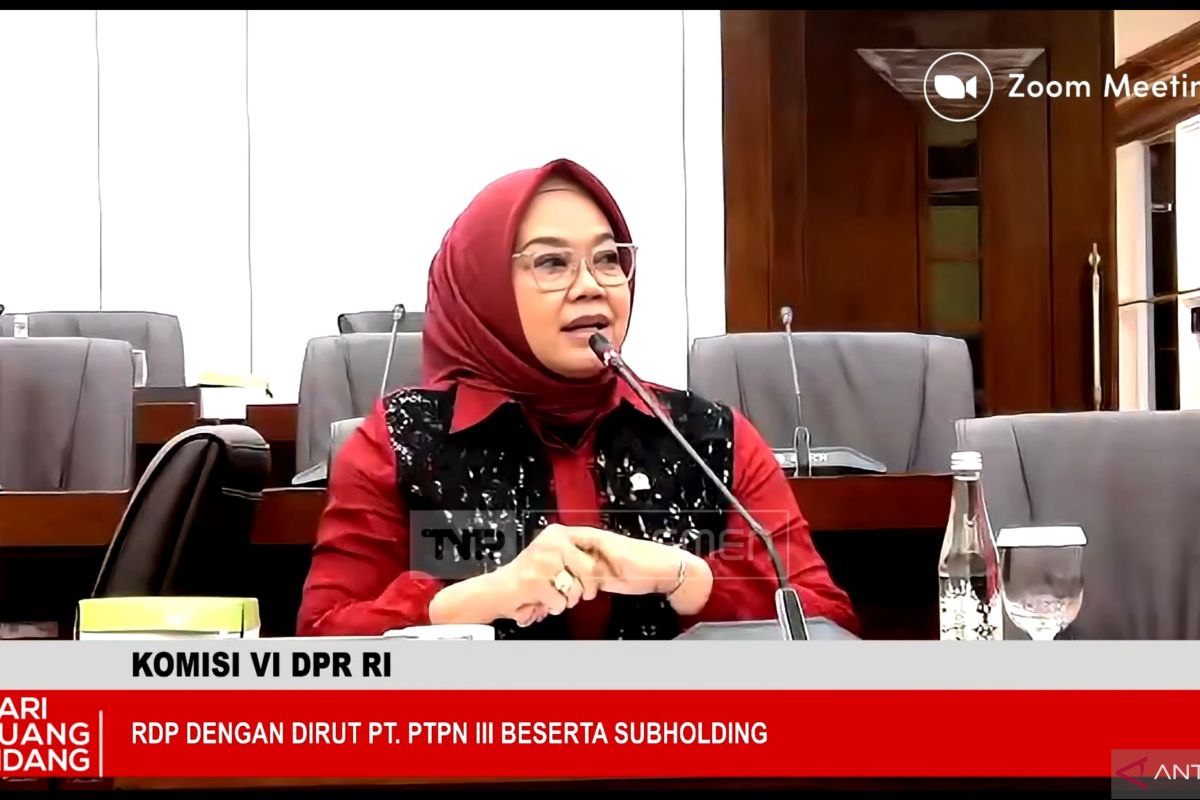
In West Java, there are many areas of land that may be unproductive, which could be developed using crops such as sorghum.
Jakarta (ANTARA) - Member of Commission VI of the Indonesian House of Representatives (DPR RI), Ida Nurlaela, has proposed that PT Perkebunan Nusantara (PTPN) consider the development of sorghum-based bioethanol as an alternative for food and energy downstreaming, alongside cassava and maize commodities.
“In West Java, we have many areas of land that may be unproductive, which could be developed, including through sorghum. Perhaps this can serve as an input for PTPN,” said Ida during a Hearing Session with PTPN III and its Subholdings and Commission VI of the DPR RI, at the Parliament Complex in Senayan, Jakarta, on Monday.
According to her, sorghum plants have the potential to be developed in dry, hot land characteristics located in lowlands at altitudes below 400 metres above sea level, such as in the Pangandaran region and several other areas in West Java.
She explained that based on academic research, the processing of bioethanol from sorghum also produces economically valuable derivative products. The waste from sorghum seed production can be utilised as organic fertiliser, while the residue from sap extraction has the potential to be used as biomass for coal co-firing needs in steam power plants (PLTU).
Therefore, she encouraged PTPN, particularly through PalmCo, to study the use of sorghum as a raw material for bioethanol. In addition to supporting the diversification of renewable energy feedstocks, the development of sorghum is considered capable of optimising the use of less productive lands without disrupting primary food commodities.
“Perhaps PTPN has the desire to undertake this process, so that bioethanol production does not only rely on food crops like cassava or maize; sorghum is one of the materials that can be used for bioethanol, and there is sufficient land available that is currently unproductive,” Ida added.
PTPN’s downstreaming efforts for food and energy to support industrial development have so far utilised palm oil, sugarcane, cassava, and maize to produce bioethanol. However, challenges remain, such as inadequate sugar mills and difficulties faced by sugarcane farmers in selling their crops, which has led to sugar stock accumulation.
This proposal is expected to serve as an alternative for diversifying bioethanol processing materials, providing an economic impact on other commodities, such as sorghum, which can be developed in the West Java region.