
House Commission IX Proposes Buffer Quota for PBI to Protect Vulnerable Groups
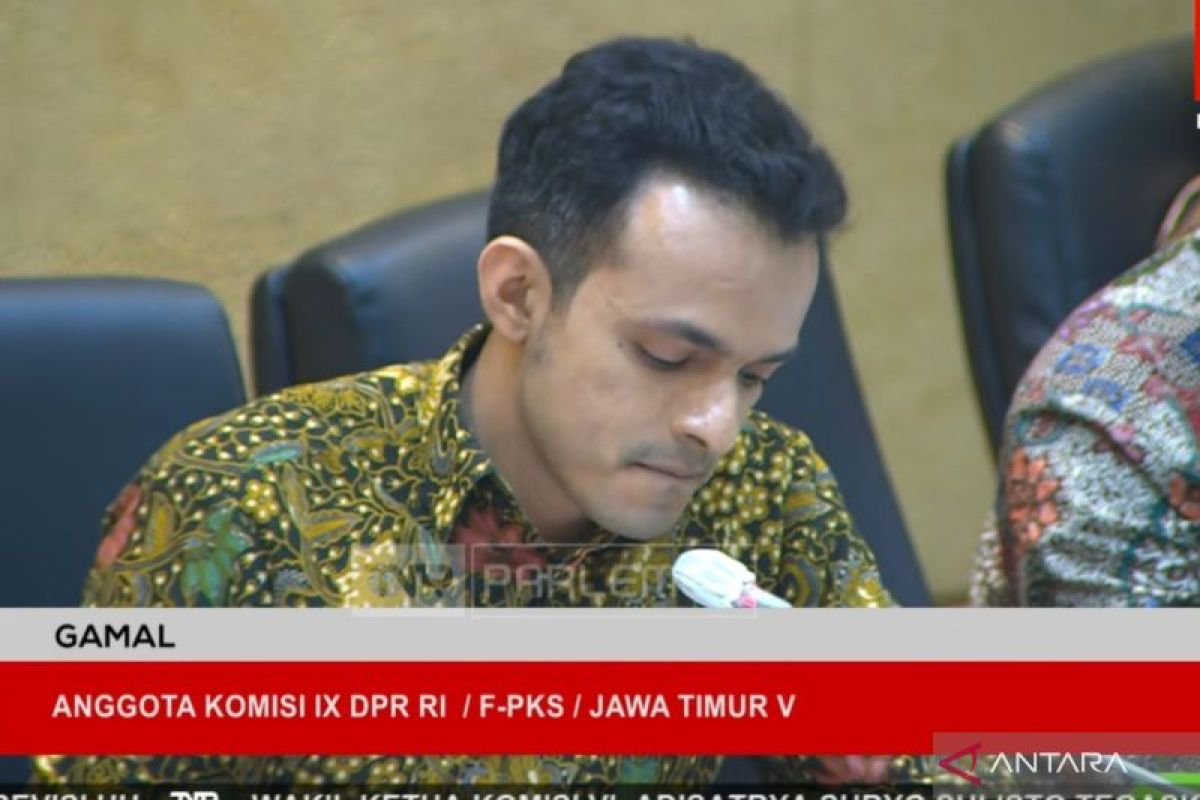
Society in deciles 5-6, or those with middle-income economies, also deserves protection guarantees due to their vulnerable socio-economic conditions. Jakarta (ANTARA) - House of Representatives Commission IX has proposed providing a budget for a buffer quota for Penerima Bantuan Iuran (PBI) Health Insurance to ensure the safety of vulnerable middle groups not yet covered in the current national health insurance scheme. Commission IX member Gamal revealed that the proposal is important because a data discrepancy or uncovered poverty has been found, where around 24 million people in decile groups 1 to 5 have not received premium assistance, either from the state budget or regional budgets. Deciles 1-10 represent the grouping of socio-economic conditions used by the Central Statistics Agency (DTSEN) as a basis for distributing aid or interventions, one of which is PBI from the government as regulated in Presidential Instruction Number 4/2025. Deciles 1-5 are included as PBI JKN beneficiaries with a quota of 98.6 million people. “Based on DTSEN BPS, there are 140.9 million people in deciles 1 to 5. Meanwhile, the central PBI JKN quota is set at only 98.6 million and local PBPU 20.5 million people. This means there are still many citizens whose health rights are not guaranteed,” said Gamal, during a working meeting attended by the Social Affairs Minister, Health Minister, BPS Head, and BPJS Kesehatan leadership at the Parliament Building in Jakarta on Wednesday. According to him, society in between deciles 5-6 or with middle economies also deserves protection guarantees due to their vulnerable socio-economic conditions. “Poverty is dynamic. Annual data often fails to capture citizens who suddenly fall into poverty, due to layoffs or bearing catastrophic health costs, so deciles 5 and 6 are certainly a category that is potentially vulnerable to being affected by economic changes,” he explained. Gamal realises there are limitations in the PBI state budget quota, so middle-decile residents experiencing economic class decline cannot immediately enter the beneficiary list without cleansing data of groups below them. In response, Social Affairs Minister Saifullah Yusuf stated his support for the proposal to increase the PBI quota allocation, considering that over the past four years, the PBI JKN allocation has remained at 96.8 million people due to budget limitations. He welcomes the parliamentary proposal to increase the premium beneficiary quota allocation to 120 or 140 million people to cover all citizens in the lowest to middle deciles. “We welcome the proposal to increase the allocation, but everything certainly depends on our fiscal capacity or budget allocation,” said Saifullah. He emphasised that currently, the government through BPS and the Ministry of Social Affairs is focusing on conducting checks or ground checks in stages on PBI beneficiary data to ensure targeting accuracy. This process is considered very crucial so that citizens who truly need it can enter the aid quota. “There are 11 million PBI JK whose participation has been verified, who are entitled to be reactivated as PBI, the rest are directed to switch segments (self-funded costs). From there, there are still around 8.8 million that are still in process in this second quarter,” he explained.