
House Commission IX Leadership Supports Evaluation of Free Nutritious Meals for High School Students
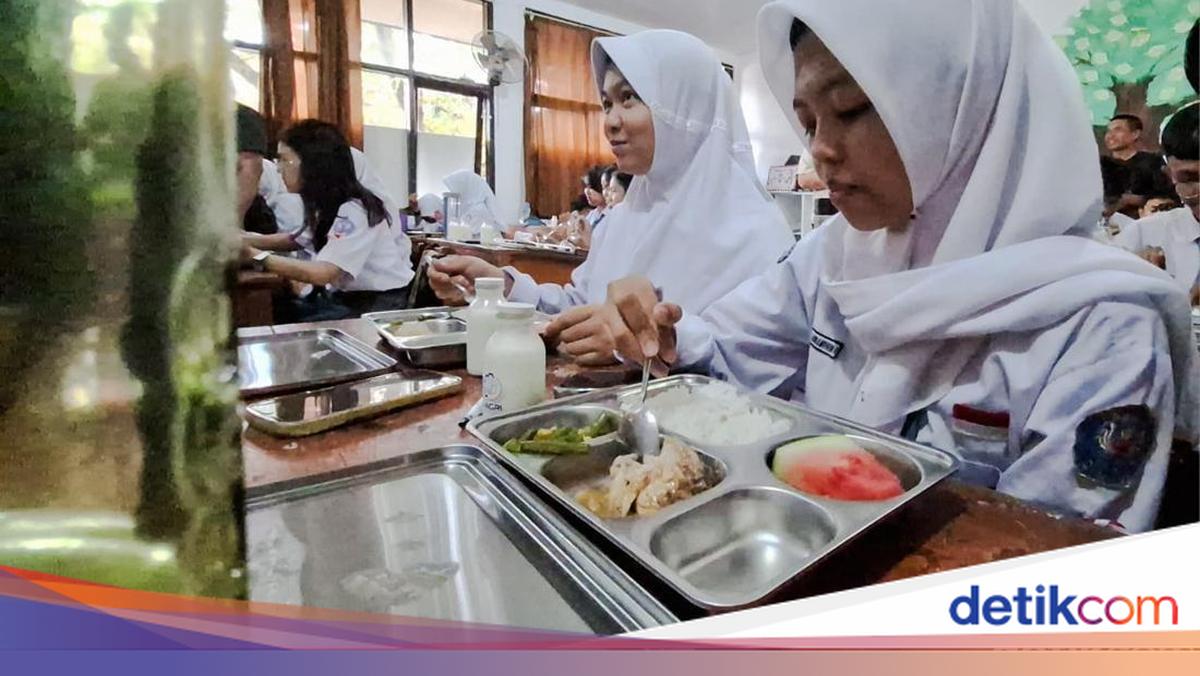
The Deputy Head of the National Nutrition Agency, Agustina Arumsari, stated that ‘high-class’ high school students with high pocket money should not receive the Free Nutritious Meal (MBG) programme. The Deputy Chair of Commission IX of the House of Representatives (DPR), Charles Honoris, agreed that halting MBG distribution to high school students is a valid consideration.
“I believe the step to stop providing MBG to high school students is not only worth considering but must be implemented as part of a programme refocusing,” Charles told reporters on Tuesday (16/6/2026).
Charles noted that the primary goal of the MBG is nutritional improvement and stunting prevention. Therefore, the state budget should be focused on groups requiring the most urgent nutritional intervention, namely pregnant women, breastfeeding mothers, toddlers, and children from poor and vulnerable families.
“We must be brave enough to differentiate between the need for nutritious food and the need for state intervention. While all children certainly need nutritious food, not all children require food subsidies from the state. In conditions of increasingly limited fiscal capacity, government assistance must be prioritised for those most in need,” Charles added.
He explained that most high school students have already passed the most crucial growth phases. Consequently, the additional benefits gained from providing MBG to this group are relatively smaller compared to using the same budget for pregnant women, toddlers, or children from impoverished families who still face the risk of malnutrition.
“I believe the new leadership at the National Nutrition Agency (BGN) must be bold in redesigning the programme entirely. If beneficiaries are focused on pregnant women, breastfeeding mothers, and school children from deciles 1 to 3, the number of beneficiaries is estimated to be only around 25 million people. Even if high school students are no longer targeted, that number could be even lower,” he continued.
By doing so, he said, the state could save a significant amount of the budget while ensuring that aid truly reaches the groups in need. “The success parameter of MBG should not be how many meal boxes are distributed, but how much improvement in nutritional status is achieved. The programme focus must shift from the quantity of beneficiaries to the quality of the impact produced,” Charles added.
Similar sentiments were expressed by a member of Commission IX of the DPR from the NasDem Party, Irma Suryable Chaniago. Irma mentioned that from the beginning, she had proposed that MBG beneficiaries should only include students up to the junior high school level.
“From the start, I suggested it should only be for kindergarten to junior high school students, similar to Japan, for stunting elimination, and provided only for pregnant women from poor families, toddlers, and malnourished children,” said Irma.
“For high school students in poor areas, I understand it is still being provided, at least to help reduce poverty. While it is good for nutritional improvement to boost immunity, it is not necessary for increasing IQ,” she continued.
Previously, Arumsari stated that her agency would refocus the MBG beneficiaries. The BGN will coordinate with the Ministry of Health regarding the determination of these beneficiaries.
“One of the improvement steps we are taking is refocusing the beneficiaries. We have coordinated with the Ministry of Health and several other ministries,” said Arum.
“The core point is that, technically, according to the Ministry of Health, nutritional health interventions should be performed, for example, from conception through the first 1,000 days of life to maximise brain volume, and then nutritional intervention continues up to age two, and so on,” she added.
She mentioned that the budget ceiling received by the BGN will change according to budget adjustments. According to her, the indicative ceiling will decrease in line with the BGN’s efficiency policies.
“We have exercised several aspects, though we have not yet discussed the specific figures with the Ministry of Finance and Bappenas. However, it is clear there will be further efficiency,” she said.
She hopes that through this, the objectives of the nutritional intervention for beneficiaries will be achieved. Arum also touched upon the fact that ‘high-class’ high school students with high pocket money should not receive MBG.
“The goal is to ensure that the indicators for nutritional intervention objectives are met, but the beneficiaries are more focused. For example, a simple example: high school students may no longer need to be provided with MBG. Especially for high schools where students’ pocket money might already be around Rp 100,000 or Rp 200,000,” said Arumsari.
“Those who are ‘high class’ probably do not need it anymore. That alone would reduce the number of beneficiaries by approximately 8 million people,” she added.
Source: jawawa.id (https://jawawa.id/newsitem/house-commission-ix-leadership-supports-evaluation-of-free-nutritious-meals-for-high-school-students-1781657473)
Originally published by detikcom (https://news.detik.com/berita/d-8534811/pimpinan-komisi-ix-dpr-dukung-mbg-untuk-siswa-sma-dievaluasi), translated from Indonesian