
House Commission IV Urges National Priority Status for Kalimantan Forest Fire Handling
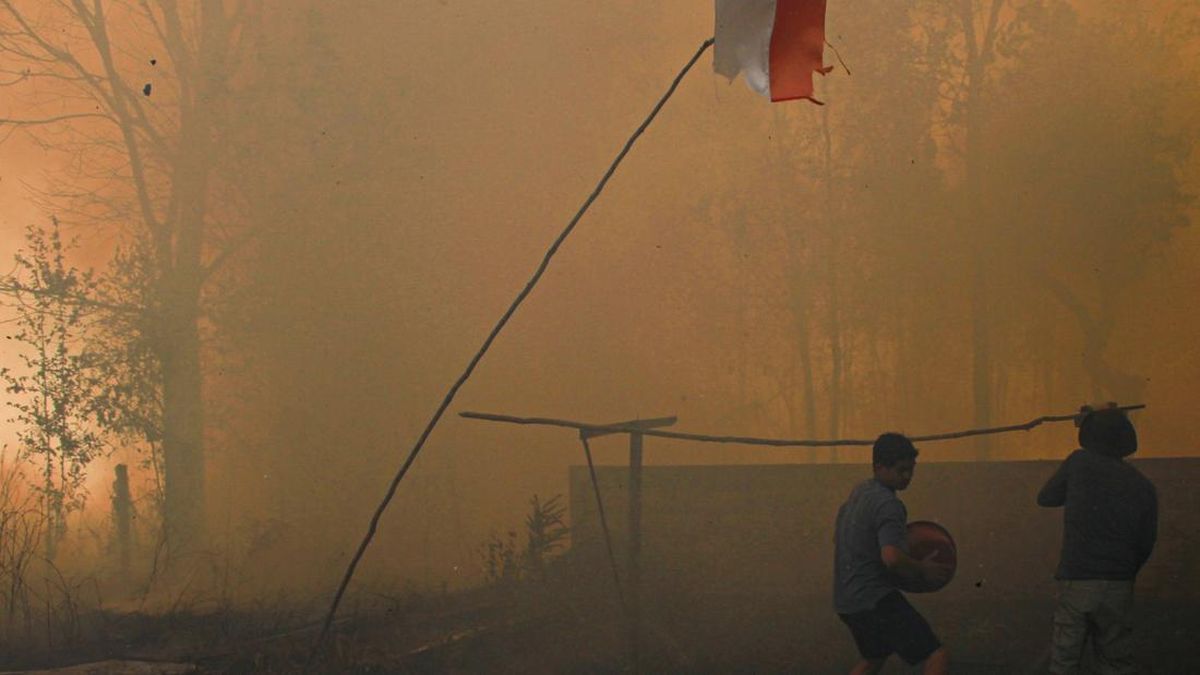
Deputy Chairman of House Commission IV, Alex Indra Lukman, has urged the government to act in an extraordinary manner in tackling the forest and land fires in Kalimantan, whose impacts have spread across health, education, transport and economic activity.
“The widening impact is inseparable from the dry weather phenomenon caused by El Niño, which peaks in August–September 2026,” Alex Indra Lukman said in Jakarta on Thursday (20/8).
Alex urged the government to make the handling of the Kalimantan fires a priority. “The handling of the Kalimantan forest and land fires must immediately become a national priority,” he said.
According to Alex, in 1997–1998 Indonesia was also hit by an El Niño phenomenon that subsequently caused a major crisis by triggering fires across more than nine million hectares of Kalimantan land.
“That event became the largest environmental disaster in Southeast Asia in the 20th century. It must not be repeated now,” he said.
He said the Kalimantan fires have had a direct impact on the air quality index. In Palangka Raya, he said, the AQI reached 487 on 19 August 2026, which falls into the hazardous category.
In addition, thick smoke haze from the Kalimantan fires has forced the Education Office to delay school start times for primary and lower secondary schools until 08.00 WIB, while early childhood education has been shifted to distance learning.
“Meanwhile, visibility in several areas has dropped drastically to as low as 1.4 kilometres,” he said.
According to data compiled by the National Disaster Management Agency as of 19 August 2026, there were a total of 1,487 hotspots across Kalimantan.
He detailed 767 hotspots in Central Kalimantan, 441 in West Kalimantan, 315 in Central Kalimantan, 34 in South Kalimantan and 17 in North Kalimantan.
The spread of fire hotspots has occurred in almost every province, with Central Kalimantan as the epicentre of the fires with the highest concentration.
Alex stated that the Kalimantan fires must become a national priority because they have forced several regional governments to extend their emergency response status, such as in West Kotawaringin Regency, which has been extended until 4 September 2026.
Furthermore, he continued, the fires have scorched 859.49 hectares of land across 189 incidents and 461 hotspots in West Kotawaringin Regency, Central Kalimantan Province. Within Central Kalimantan, the districts of Arut Selatan and Kumai are the worst affected areas.
He detailed that there were 98 fire incidents affecting 180.475 hectares of land with 226 hotspots in Arut Selatan. Meanwhile in Kumai, 63 incidents burned 584.41 hectares of land.
He said MapBiomas Fire data shows that during the peak fire periods of 2014, 2015 and 2019, around 61 per cent of forest and land fires occurred between September and November, with the peak in October.
“This historical record is a warning to the government that the methods used so far need to be totally evaluated so that the impacts do not recur,” he said.
According to him, the evaluation of Kalimantan fire policy must include strengthening early detection and patrols in vulnerable areas.
Satellite-based early warning systems also need to be continuously improved in accuracy. The role of the community in fire prevention is also crucial.
The Fire Care Village programme and community empowerment through training on alternative land clearing without burning need to be expanded.
“I emphasise that mitigation of the Kalimantan fires requires a long-term approach focused on prevention, improving socio-economic welfare and sustainable land governance,” he said.