
House Commission IV Pledges to Optimise Marine Resources for Economic Growth
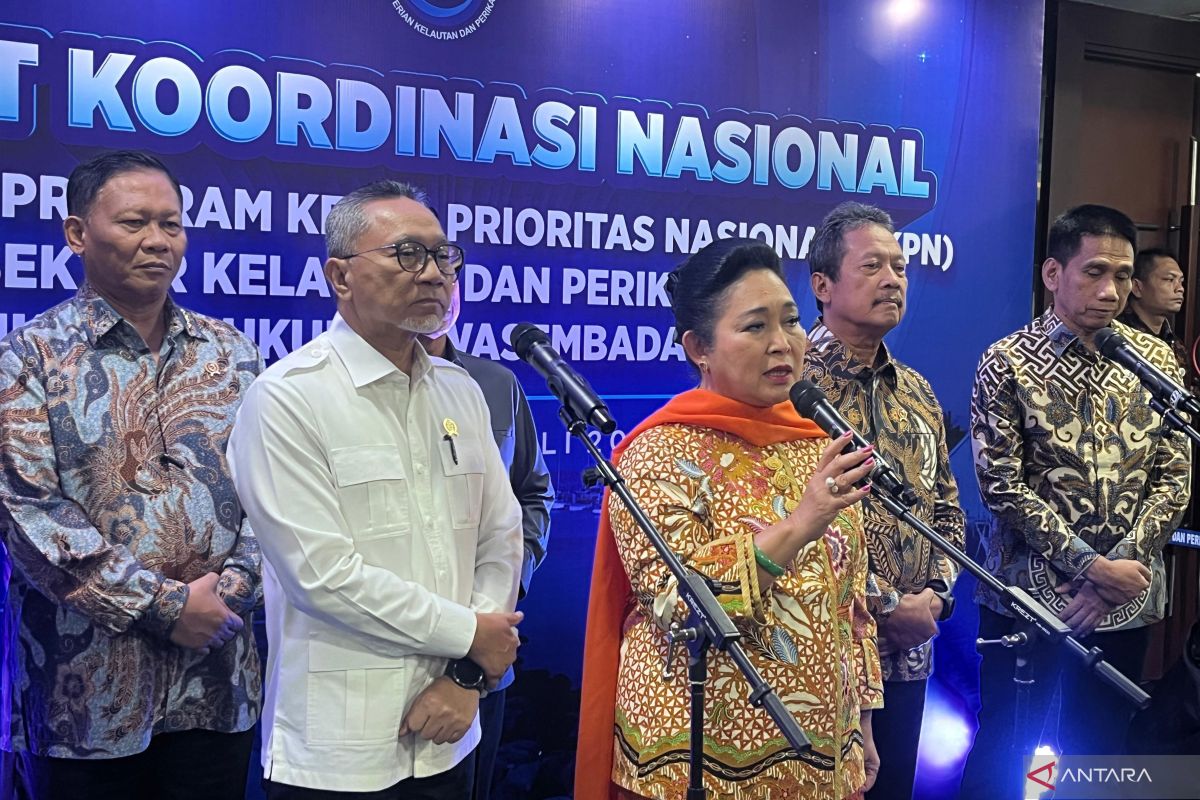
Jakarta (ANTARA) - The Chairperson of Commission IV of the House of Representatives (DPR), Siti Hediati, popularly known as Titiek Soeharto, has emphasised her committee’s commitment to optimising the management of marine and fisheries resources as an effort to drive economic growth, food security, and the improvement of community welfare.
Speaking at the 2_026 National Coordination Meeting for the Marine and Fisheries Sector in Jakarta on Thursday, Titiek stated that the marine and fisheries sector is a strategic sector playing a vital role in Indonesia’s future.
“The marine and fisheries sector is a strategic sector for the nation’s future. It is not only related to fish production and the utilisation of marine resources, but also concerns food security, economic growth, job creation, and the improvement of community welfare,” she said.
As a working partner of the Ministry of Marine Affairs and Fisheries (KKP), she continued, Commission IV of the DPR RI continues to maximise its role through legislative, budgetary, and supervisory functions to support the sustainable development of the marine and fisheries sector.
In terms of legislation, Commission IV of the DPR RI has encouraged the creation of various strategic regulations, including the Fisheries Law, the Law on the Protection and Empowerment of Fishermen, Fish Farmers, and Salt Farmers, the Marine Affairs Law, and the Law on the Management of Coastal Areas and Small Islands.
“These regulations are essential to provide legal certainty, protection, and support for fishermen, fish farmers, salt farmers, as well as marine and fisheries business actors,” she said.
Meanwhile, from a budgetary perspective, the support of Commission IV of the DPR RI is reflected in the increased budget for the KKP. For the 2026 fiscal year, the KKP budget has increased to IDR 13 trillion; furthermore, Commission IV of the DPR RI has also approved an indicative ceiling for the KKP for the 2027 fiscal year of IDR 15.6 trillion.
According to Titiek, this budgetary support serves as an important instrument in supporting national priority programmes in the marine and fisheries sector to meet the needs of regions according to their respective characteristics.
For coastal and beach areas, priority programmes are directed towards strengthening the economy of fishermen through the development of the ‘Kampung Nelayan Merah Putih’ (Red and White Fishing Village), the modernisation of fishing vessels, the strengthening of production facilities, fisheries product processing, marketing, and the strengthening of fishermen’s economic institutions.
For aquaculture areas and coastal cultivation zones, programmes are being strengthened through the revitalisation of aquaculture ponds on the North Coast of Java, the development of integrated shrimp pond areas, and the accelerated development of national salt industry centres to achieve national salt independence.
Commission IV of the DPR RI also emphasised the importance of equitable development in the fisheries sector for regions that do not have coastal areas. These efforts are carried out through the development of inland fish aquaculture based on local potential so that the benefits of development can be felt equally by the community.
In exercising its supervisory function, Commission IV of the DPR RI continues to oversee the implementation of KKP programmes and policies to ensure they are well-targeted and provide real benefits to the community.
Supervision is also conducted regarding various issues in the field, such as handling sea barriers in the waters of Tangerang Regency to reopen access for fishermen, as well as improving the governance of the Muara Angke National Fisheries Port.
Titiek also left a message for governors, regents, mayors, and all levels of local government to ensure that the various programmes and infrastructure built by the KKP are maintained, utilised, and developed optimally.
She emphasised that programmes such as the ‘Kampung Nelayan Merah Putih’ must not stop merely as symbols of development, but must be able to become centres of community economic activity that drive production, processing, marketing, institutional strengthening, access to finance, and the increase of added value in fisheries products.