
House Commission IV Backs Budget Boost for Agriculture Ministry in 2027
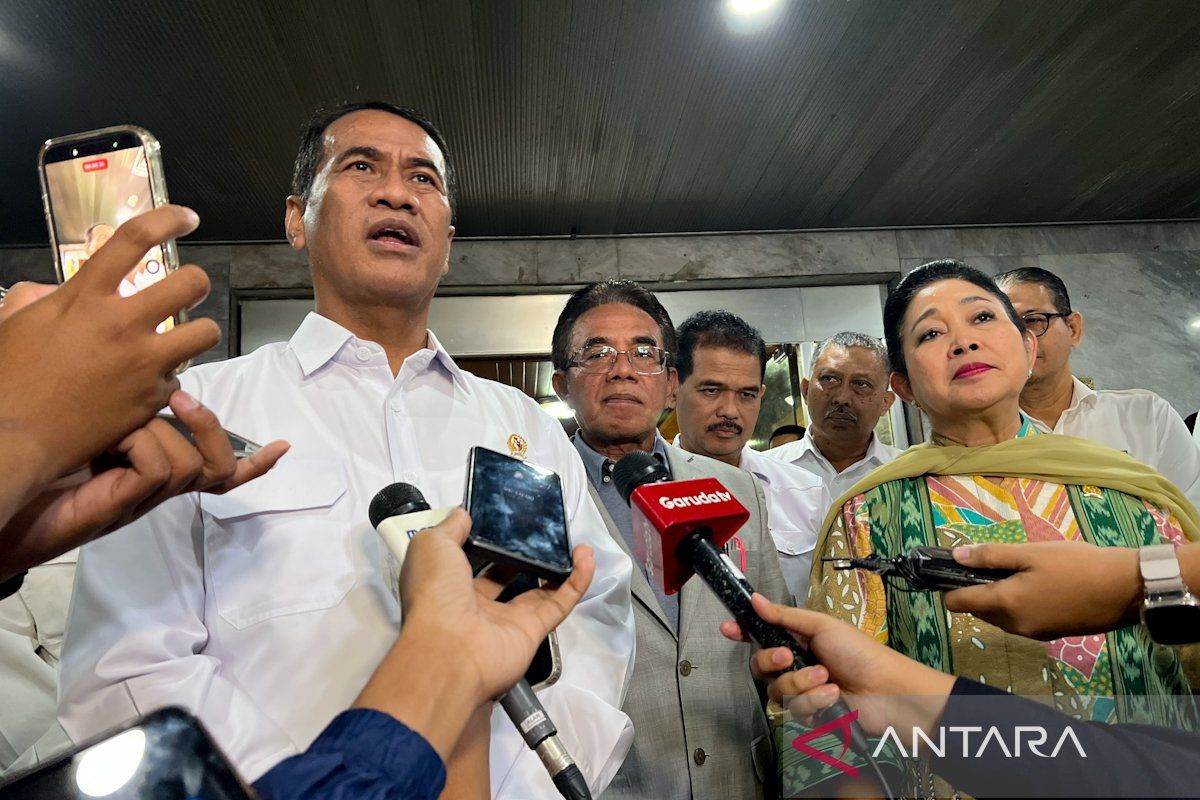
Jakarta - Commission IV of the Indonesian House of Representatives (DPR RI) is supporting the strengthening of the Ministry of Agriculture’s budget for the 2027 Fiscal Year to bolster priority national programmes, increase food production, and accelerate the achievement of sustainable self-sufficiency. Commission IV Chair Siti Hediati Hariyadi, widely known as Titiek Soeharto, stated that the commission had received Agriculture Minister Andi Amran Sulaiman’s explanation regarding the ministry’s 2027 indicative ceiling of Rp23.23 trillion, along with a proposal for an additional budget of Rp22.43 trillion aimed at reinforcing the agricultural sector’s priority programmes. “Commission IV of the DPR RI accepts the Agriculture Minister’s explanation regarding the Ministry of Agriculture’s Indicative Ceiling for the 2027 Fiscal Year of Rp23,226,698,027,000 and the proposed additional budget of Rp22,429,628,620,000,” Titiek said while reading the conclusions of a hearing between Commission IV and the Agriculture Minister, who also serves as Head of the National Food Agency, in Jakarta on Wednesday. The budget is directed towards strengthening the implementation of priority agricultural programmes, including land and irrigation, agricultural infrastructure and facilities, increased production of agricultural commodities, livestock, extension services and human resource development, agricultural modernisation, and management support. Consequently, the indicative ceiling for the Ministry of Agriculture would be adjusted from Rp23.23 trillion to Rp45.65 trillion for the 2027 Fiscal Year. In its meeting conclusions, Commission IV also emphasised the importance of boosting production of strategic food commodities that still rely on imports. Therefore, the ministry is encouraged to develop food and horticultural zones to support self-sufficiency, including for soybeans and garlic. Agriculture Minister Andi Amran Sulaiman explained that the additional budget was needed to support the achievement of production targets and the 2025–2029 National Medium-Term Development Plan (RPJMN). The additional budget allocation is intended for increasing strategic commodity production, downstream plantation processing, livestock development, seed source production, strengthening agricultural extension and training including support for extension motorcycles, agricultural education, and the operations of work units within the Ministry of Agriculture. “In accordance with the direction of President Prabowo Subianto, the Ministry of Agriculture is tasked with immediately increasing the production of strategic food commodities whose domestic needs have so far remained dependent on imports,” the Minister said. Based on a joint letter from the Minister for National Development Planning/Head of Bappenas and the Minister of Finance, the indicative ceiling for the Ministry of Agriculture for the 2027 Fiscal Year was set at Rp23.23 trillion. The largest allocation is for the Directorate General of Agricultural Land and Irrigation at Rp7.06 trillion, followed by the Secretariat General at Rp3.58 trillion, the Agricultural Extension and Human Resources Development Agency (BPPSDMP) at Rp3.41 trillion, and the Directorate General of Agricultural Infrastructure and Facilities at Rp2.19 trillion. Further allocations include the Directorate General of Food Crops at Rp2.1 trillion, the Directorate General of Plantations at Rp1.68 trillion, the Directorate General of Livestock and Animal Health at Rp1.42 trillion, the Agricultural Assembly and Modernisation Agency (BRMP) at Rp1.29 trillion, the Directorate General of Horticulture at Rp350 billion, and the Inspectorate General at Rp90.9 billion. To meet production targets and the RPJMN 2025-2029 goals, the ministry proposed an additional Rp22.43 trillion. The largest proposed increases were allocated to the Directorate General of Agricultural Infrastructure and Facilities at Rp5.04 trillion, and the Directorate General of Agricultural Land and Irrigation at Rp3.55 trillion. This was followed by the Directorate General of Plantations at Rp3.27 trillion, the Directorate General of Horticulture at Rp3.02 trillion, BPPSDMP at Rp2.68 trillion, BRMP at Rp1.73 trillion, the Directorate General of Livestock and Animal Health at Rp1.69 trillion, the Directorate General of Food Crops at Rp1.56 trillion, and the Secretariat General at Rp284 billion. According to Amran, strengthening the budget is crucial because the food sector is a strategic issue that determines a nation’s survival amidst the growing threat of a global food crisis. “Food is not merely a basic need, but a strategic issue that determines the life or death of a nation. Therefore, safeguarding food is a top priority to protect the country’s sovereignty and future,” he stated. To address these challenges and sustainably meet the food needs of Indonesia’s 286 million people, the government is focusing on four main programmes directed by President Prabowo Subianto, namely food self-sufficiency, Free Nutritious Meals, energy security through biofuels, and downstream processing. In line with the 2027 Government Work Plan theme, the Ministry of Agriculture is directing development programmes to support food sovereignty through integrated food zone development, plantation zone development, and increased livestock production.