
House Commission IV Applauds Nusakambangan Food Security Programme
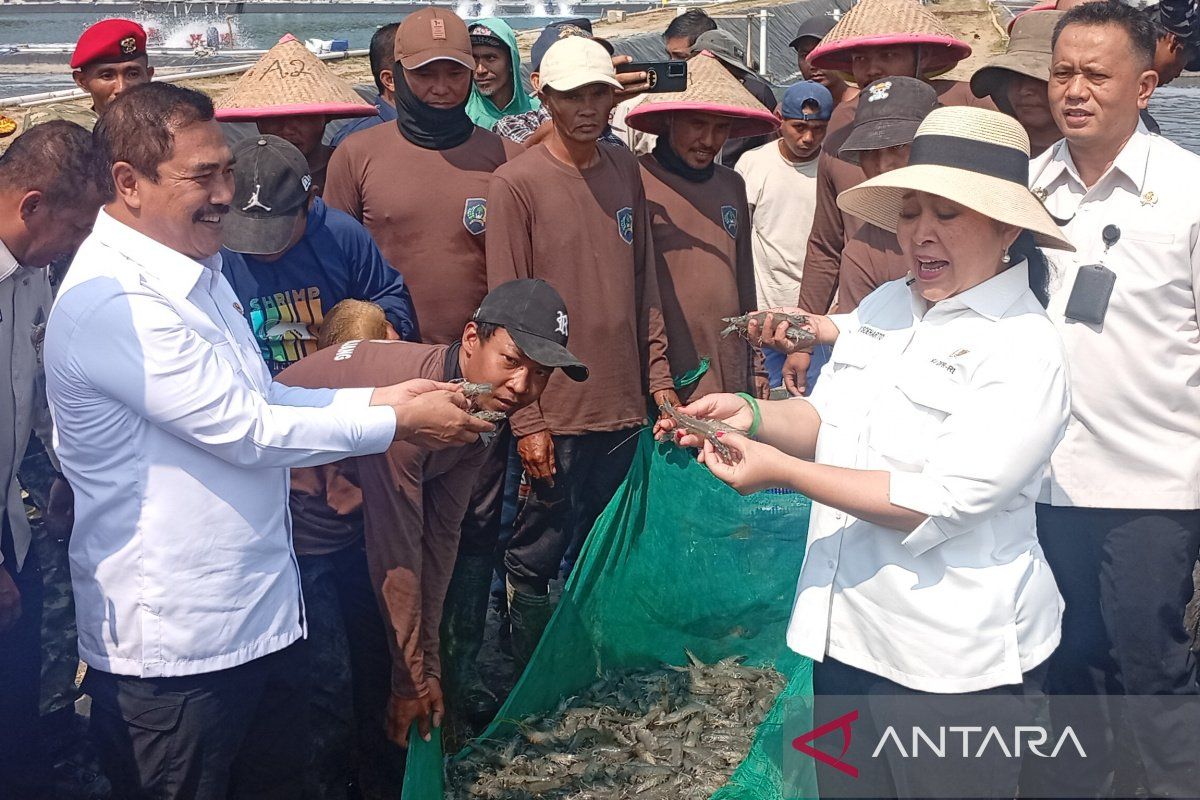
Cilacap (ANTARA) - The Chairperson of Commission IV of the Indonesian House of Representatives (DPR RI), Siti Hediati Hariyadi, has expressed appreciation for the food security programme developed by the Ministry of Immigration and Correctional Services on Nusakambangan Island, as it has successfully converted unproductive land into areas producing various food commodities.
Following a visit to several food security activity sites within various correctional institutions (lapas) on Nusakambangan Island, Cilacap Regency, Central Java, on Saturday afternoon, she stated that this success demonstrates that various food sectors can be optimally developed if supported by the will and creativity of the managers.
“Today (20/6), we from Commission IV of the DPR RI came to Nusakambangan to see firsthand the efforts to increase food security. We observed that land which was previously unproductive has now become productive, ranging from rice, grapes, poultry farming, to shrimp and eel cultivation,” she said.
According to her, the results achieved by the correctional institutions in Nusakambangan serve as a worthy example for other regions or agencies that possess potential land for development to support the national food self-sufficiency programme.
She assessed that this success is inseparable from the commitment of the Ministry of Immigration and Correctional Services (Imipas) to utilise available resources to support the government’s priority programmes.
“On behalf of Commission IV of the DPR RI, I express my gratitude and highest appreciation to the Minister of Imipas and his staff. Hopefully, this can be emulated and duplicated in other locations,” said the legislator, popularly known as Titiek Soeharto.
She added that the success of developing food areas in Nusakambangan proves that various regions in Indonesia have the same opportunity to increase food production if managed seriously.
“If Nusakambangan can achieve this, then other regions certainly can. Indonesia possesses fertile soil and vast natural resources. It simply depends on how we process our land and sea to provide the greatest possible benefit to the community,” she said.
In addition to producing various food commodities, the programme is also considered to have a social impact as it involves inmates in production activities.
According to her, the involvement of inmates provides added value, as they acquire skills and incentives that can serve as preparation for their reintegration into society.
“Most importantly, this programme involves inmates. Before they return to society, they are equipped with skills and receive premiums from the work performed, which will serve as a foundation once they are released,” said Titiek.
Meanwhile, the Minister of Imipas, Agus Andrianto, stated that the visit from Commission IV of the DPR RI provides important input for the refinement of the food security programme developed within the correctional environment.
“We thank the Chairperson of Commission IV of the DPR RI and her delegation for the visit. The evaluations and directions provided will be followed up to improve the ongoing programme,” he said.
He noted that the utilisation of unproductive land is not only being carried out in Nusakambangan but is also being implemented in various correctional institutions and detention centres (rutan) across Indonesia.
He stated that the entire correctional apparatus is encouraged to optimise available land to support food security, particularly to meet the internal needs of inmates and officers.
“This is also an effort to assist the government in maintaining food price stability. For example, regarding egg requirements, we are encouraging correctional institutions and detention centres to produce their own, so as not to add pressure to market demand and contribute to inflation,” said Agus.