
House Commission III Prioritises Asset Forfeiture Bill Deliberation
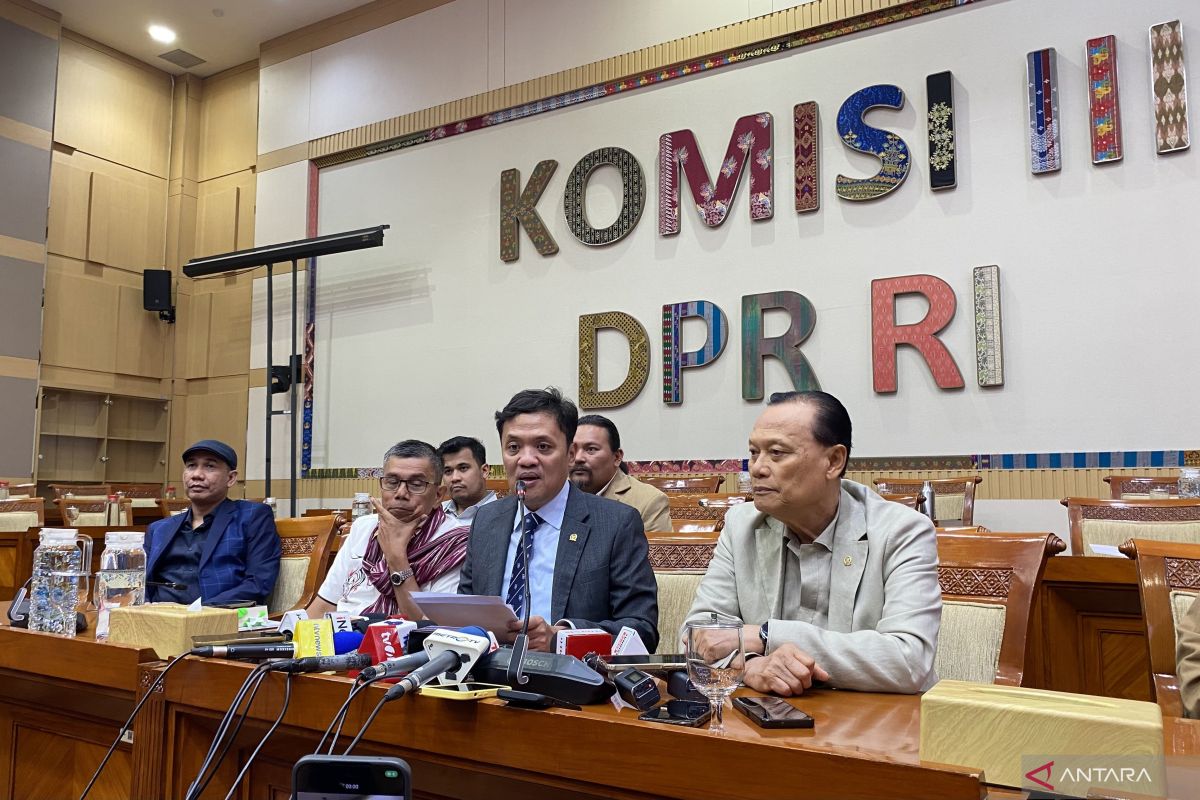
Jakarta (ANTARA) - Commission III of the House of Representatives (DPR) has affirmed that deliberation of the Asset Forfeiture Bill is a priority, conducted through a series of public hearing meetings (RDPU) to absorb public aspirations. Commission III Chairman Habiburokhman stated that the commission is currently focusing its agenda on the Asset Forfeiture Bill and has not yet scheduled RDPUs for other draft laws. “We are going full throttle. For now, we have not scheduled RDPUs for other laws besides the Asset Forfeiture Bill because we are indeed prioritising it,” Habiburokhman said during a press conference at the DPR Building, Jakarta, Monday. He made the statement in response to narratives on social media claiming the DPR had rejected the passage of the Asset Forfeiture Bill. According to him, that information is incorrect. “This is a completely new law, not an amendment. Therefore, there is more to discuss,” he said. He noted that substantive discussions on the bill are still evolving based on input received. One issue of concern is limiting the potential for abuse of power by law enforcement officials. “There must be no abuse of power in the name of this law. There has been considerable input regarding this matter, and we need to enrich the discussion on its limitations,” he said. “This has not been decided yet. We still want to hear input from the public,” he added. Previously, Deputy Chairman of the DPR Legislation Body Martin Manurung confirmed that narratives claiming the Asset Forfeiture Bill had been removed from the 2026 Priority National Legislation Programme (Prolegnas) were untrue. “There has been no decision from a DPR plenary meeting stating that the Asset Forfeiture Bill has been removed from the 2026 Priority Prolegnas,” Martin said in a written statement on Saturday (11/7). He explained that the Asset Forfeiture Bill is still listed in the 2026 Priority Prolegnas as number six, proposed by the DPR, with its deliberation prepared by Commission III. According to Martin, the DPR and the government have agreed to include the bill in the Prolegnas as a form of commitment to drafting regulations by involving public participation in the formulation of its norms.