
House Commission III Pledges 'Full Throttle' Deliberation on Asset Forfeiture Bill
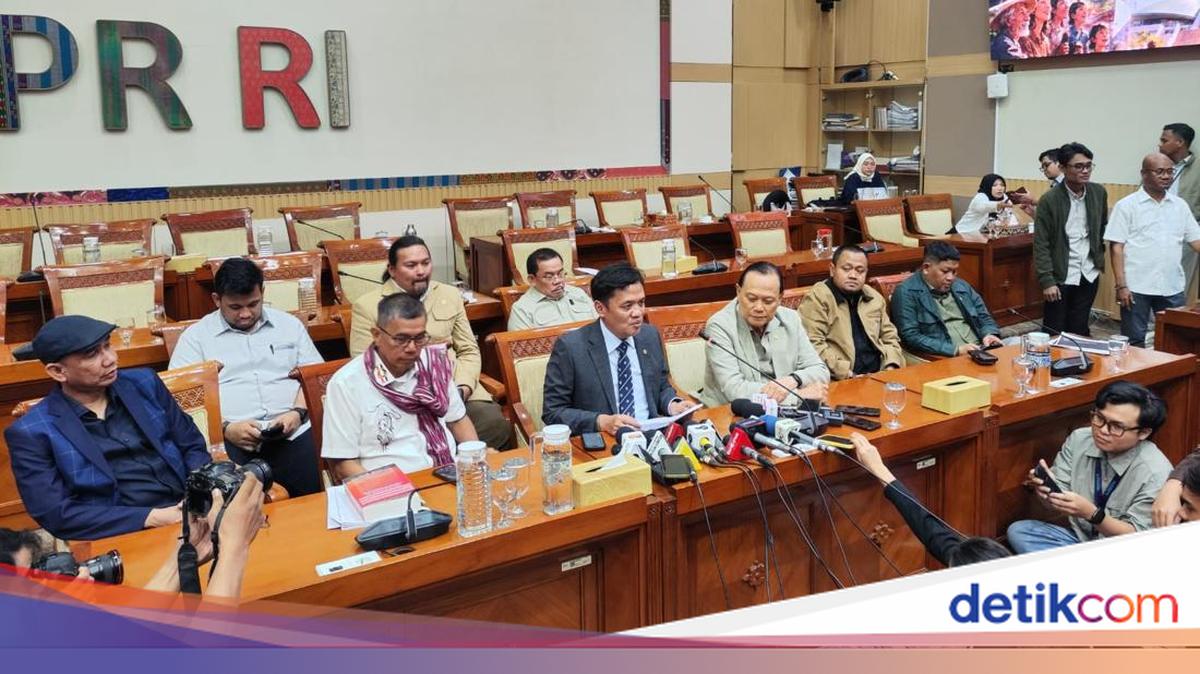
The House of Representatives’ (DPR) Commission III is continuing its deliberation of the Asset Forfeiture Bill. Chairman Habiburokhman stressed that the commission is pushing the discussion of the draft legislation as hard as possible. He dismissed allegations that Commission III is refusing to discuss the Asset Forfeiture Bill during a Public Hearing Meeting with the Indonesian Advocates Association (Peradi). “We are going full throttle, turbo speed, on the discussion and drafting of the Asset Forfeiture Bill. So, it is not true that the DPR is refusing to discuss the Asset Forfeiture Bill. In fact, we have invited the best advocates who deeply understand law enforcement in Indonesia to give their opinions,” Habiburokhman said at the parliamentary complex in Senayan, Jakarta, on Monday. Habiburokhman confirmed that Commission III is discussing the bill almost daily. The Deputy Chairman of the Gerindra Party stated that this deliberation is crucial because the Asset Forfeiture Bill is a completely new piece of legislation. “Why do we need to hear as many aspirations as possible regarding this law? Because this is something new. We are not making an amendment to a law, but we are creating a new law based on new thinking as well,” he said. Habiburokhman emphasised the constitutional burden now facing Commission III. According to him, precision is needed in discussing the Asset Forfeiture Bill. “We have a constitutional burden on our shoulders. If we pass it, it must be done carefully and by listening to people’s input because there is a concept of meaningful participation. We want to maximise that. Clearly, we are not stalling for time; public input is important,” he stated. Habiburokhman assured that the public will be involved in the drafting of the Asset Forfeiture Bill. He mentioned that the DPR is continuously discussing the bill, which is part of the 2026 National Legislation Programme. “Regarding the discussion of the Asset Forfeiture Bill, there is a hoax circulating today that Commission III is refusing to discuss the Asset Forfeiture Law. You are witnesses here to how we have been going full speed on this Asset Forfeiture Law for weeks now,” Habiburokhman said at a press conference at the DPR on the same day. He said Commission III is maximising public participation in drafting the bill, noting that it is an entirely new law, not a revision. “We are maximising invitations or fulfilling requests for opinions from various elements of society regarding the Asset Forfeiture Bill. We need to convey that this law is a completely new law, not an amendment. Therefore, there is more to discuss compared to laws discussed here like the Criminal Procedure Code or the Police Law, which only discuss a few articles,” he continued. He stressed that the public will continue to be involved in the drafting of the Asset Forfeiture Bill. Habiburokhman said that so far, public enthusiasm to participate in the drafting has been very high. “Previously we were criticised for not involving the public in the drafting. Now, we are maximally involving the public from the drafting stage. We are asking for input from the public, and many people are indeed enthusiastic about attending today’s Public Hearing Meeting,” he added. Habiburokhman confirmed that the discussion on the Asset Forfeiture Bill is still ongoing. The Gerindra politician revealed that several substantive points remain under debate. He said one of the debates concerns the potential for abuse of power, and that the commission is striving to balance the interests of asset recovery with limiting potential abuse by law enforcement. “The debate is about how to balance the interest of asset recovery to return state losses with limiting the potential for abuse of power by law enforcement officials. It must not become an abuse of power in the name of asset forfeiture,” Habiburokhman said. He noted that many have provided input regarding the appropriate limits, hoping the Asset Forfeiture Bill can maximally recover criminal assets without criminalising people. “This was the input from our friends earlier, about where the appropriate limit is. We will certainly commit to ensuring as much asset recovery as possible, but on the other hand, innocent people must not be criminalised by unscrupulous law enforcement officials,” he said. Furthermore, Habiburokhman confirmed that the commission has received substantial input regarding a special agency to manage criminal assets. Many parties have proposed that the assets not be managed by law enforcement agencies. “There is a lot of input about the need for a special institution to handle the management of these seized assets. Because if it is only the Attorney General’s Office, their duties are investigation, prosecution, and so on. They do not handle where this asset management goes,” he said. He also mentioned ongoing debate regarding the nomenclature, including whether to follow the UNCAC term ‘asset recovery’. “There is also input on that. Then the nomenclature, whether we will follow what is stated in UNCAC, which is asset recovery. If translated, asset recovery is ‘pemulihan aset’, so will we use the term asset forfeiture?” he asked. He noted there is input to name the bill ‘asset recovery’. However, he said asset forfeiture is a concrete action of asset recovery. “But this has not been decided yet. We still need input from the public on what it will be like later,” he concluded.