
House Commission III Gathers Academic Input to Finalise Asset Forfeiture Bill
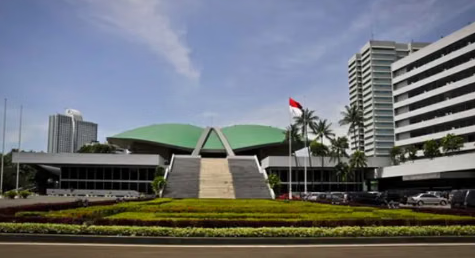
The House of Representatives (DPR) Commission III is continuing to mature the discussion of the Asset Forfeiture Bill by gathering input from academics and stakeholders. The move aims to ensure the drafted regulation can strengthen crime eradication while guaranteeing the protection of citizens’ rights and legal certainty.
Commission III member Adang Daradjatun said the bill’s deliberation is ongoing through various consultation forums. Most recently, the commission held a Public Hearing Meeting (RDPU) with criminal law academics Dr. Toetiek Rahayuningsih from Airlangga University and Dr. Lucky Raspati from Andalas University.
Various views were presented regarding the need for a more effective legal instrument to trace, freeze, and seize assets derived from criminal acts. The academics also stressed the importance of protecting citizens’ rights in the application of such rules.
“Commission III of the DPR continues to gather input from academics and stakeholders to ensure the Asset Forfeiture Bill becomes an effective legal instrument in combating crime while remaining aligned with the principles of the rule of law and the protection of human rights,” Adang said in a statement on Friday (19/6).
According to Adang, one of the challenges in discussing the bill is the public’s misunderstanding of the concept of asset forfeiture. He stressed that asset forfeiture cannot be carried out arbitrarily based merely on suspicion of a criminal act, but must follow a clear and measurable legal mechanism.
“The rule of law demands a clear legal basis, measurable mechanisms, and strong oversight to prevent injustice,” he said.
Adang explained that the concepts of seizure and forfeiture of assets are already recognised in various laws, such as the Corruption Eradication Law, the Money Laundering Law, and the Narcotics Law. However, the Asset Forfeiture Bill is considered important to complement unmet legal needs and strengthen efforts to recover assets derived from crime.
The legislator from the Prosperous Justice Party (PKS) faction assessed that the asset forfeiture approach has strategic value in eradicating corruption and organised crime because it not only punishes the perpetrators but also cuts off the economic benefits obtained from criminal acts.
“Asset forfeiture is not only oriented towards punishing the perpetrator, but also ensures that profits obtained from criminal acts can be returned to the state or the rightful party,” he said.
Nevertheless, Adang reminded that the authority granted to the state must be balanced with a strong oversight mechanism to avoid violating citizens’ constitutional rights.
“The spirit of eradicating crime must not ignore the principles of protecting citizens’ rights. Therefore, the deliberation must be thorough to produce a regulation that is strong, fair, and provides legal certainty,” he stressed.
Commission III also hopes that the process, which involves various parties, will produce an Asset Forfeiture Bill that is not only effective in supporting law enforcement but also upholds the principles of the rule of law and human rights protection.