
House Commission III Disappointed as National Police Criminal Investigation Chief Skips Agrarian Conflict Meeting
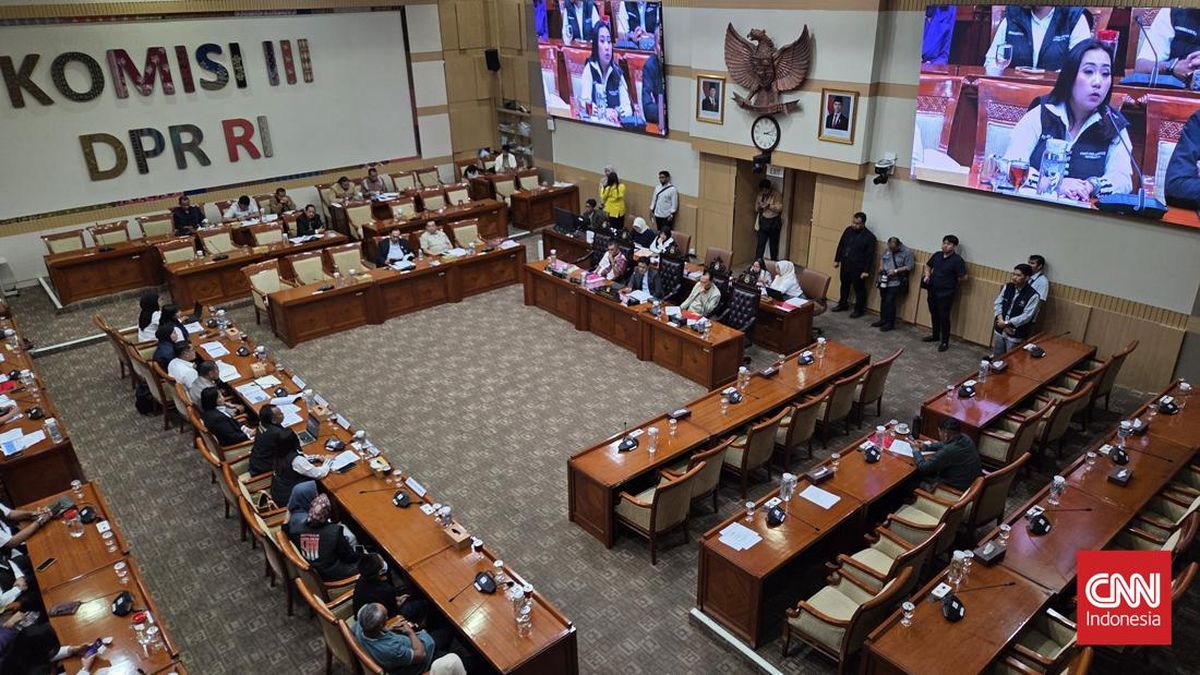
Commission III of the House of Representatives (DPR) decided to postpone a meeting to discuss agrarian cases following the absence of National Police Criminal Investigation Chief (Kabareskrim) Commissioner General Syahardiantono on Thursday (20/8).
The meeting was originally scheduled to discuss a number of agrarian conflicts together with the Consortium for Agrarian Reform (KPA). Due to Syahar’s absence, the meeting was postponed.
“We have reached a conclusion from fellow Commission III members that, because no representative is present yet, we will postpone this meeting until a time to be determined later,” said Commission III Deputy Chairman Dede Indra Permana, who chaired the meeting.
On that occasion, several Commission III members expressed their disappointment over Syahar’s absence. Commission III member from the Gerindra faction, Martin Daniel Tumbelaka, regretted the Kabareskrim’s absence.
He said the meeting was important because it concerned many aspects of people’s lives. He proposed that the meeting be postponed until the Kabareskrim could be brought in.
“So, once again, we deeply regret this. This moment is very important, but no, he did not attend,” Martin said.
Commission III member Adang Daradjatun reminded that meetings at the DPR are not a place for games. He requested an explanation regarding the reason for the Kabareskrim’s absence and urged that this not be repeated.
“I think this room is not a place for games. The case is already like this, then it is postponed, he does not attend, postponed again, he does not attend. This is unclear; we ask for an explanation as to why he did not attend,” Adang said.
On that occasion, KPA Secretary-General Dewi Kartika also expressed her disappointment over the Kabareskrim’s absence. She noted that her organisation had previously discussed with the National Police Chief the importance of meeting soon.
Dewi said a number of agrarian conflicts must be resolved immediately because they affect many people’s lives.
“There has already been discussion with the National Police Chief and the police about the importance of meeting soon, to end the violence and criminalisation experienced by farmers, indigenous communities, activists, and advocates fighting for land rights,” she said.
Dewi said that in the meeting, her organisation wanted to ensure that the police adopt a humanitarian approach in the field and cannot arbitrarily arrest people in agrarian cases.
“Why the emphasis is that it cannot be legalistic and cannot simply arrest farmers or indigenous communities, and also to understand why a purely legalistic or legal approach is very dangerous for communities at the grassroots level,” she said.