
House Commission II to Oversee 7 Agendas Ensuring 30 Percent Female Representation in Parliament
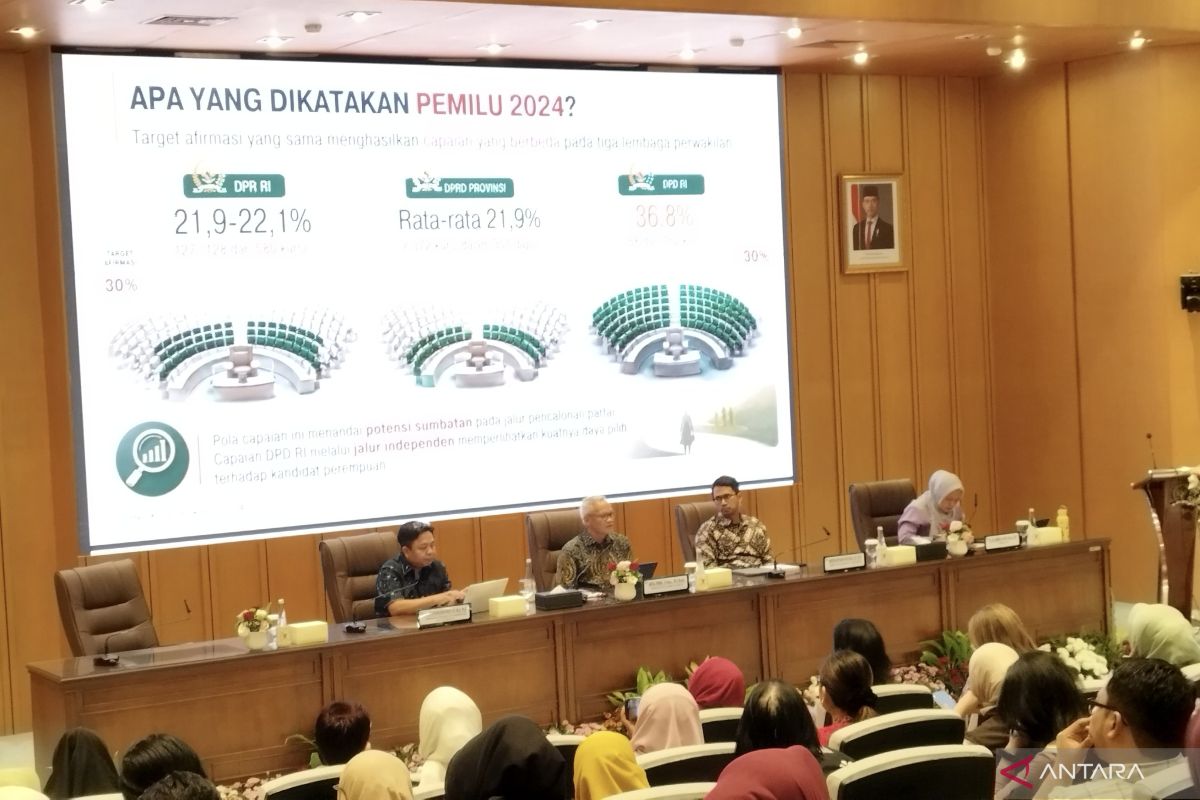
Jakarta - Deputy Chairman of the House of Representatives’ Commission II, Aria Bima, has revealed that the commission will oversee seven agendas to ensure women’s representation in parliament reaches 30 percent, in accordance with regulations and legislation. He believes that a healthy democracy will broaden fair competition. When the space for competition is fair, women will have a much stronger opportunity to be present and be elected. “So, what we are overseeing is not just administrative and procedural matters in the law revision. We want this focus to also safeguard the quality of democracy,” Bima said during a discussion with the Indonesian Parliament Women’s Caucus at the parliamentary complex in Jakarta on Wednesday.
He explained that the first agenda is to ensure that Constitutional Court Decision Number 128/2026 is fully implemented throughout the candidacy chain. The 30 percent quota for women, he said, must be maintained from the submission of candidates to the final candidate list, including the disqualification of electoral districts that violate the rule, from the central to the regional level. “Political parties that register provisional to final candidates without fulfilling the 30 percent quota must be disqualified, not necessarily nationally, but in that specific region, the political party concerned is not entitled to participate as an election contestant,” he said.
The second agenda is to ensure women are placed in positions with a genuine chance of winning. He therefore urged political parties to fight for at least one woman among the top two positions on the ballot paper in every electoral district. “The third point is that the electoral system design, whether open, closed, or mixed, must be measured by the strength of placement rules. The zipper mechanism must have binding power, not just be an option that is easily ignored,” he said.
Regarding the fourth point on district magnitude, he stated that proposals to reduce the size of electoral districts need careful consideration, as a narrow space tends to erode opportunities for women. “The smaller the electoral district, the more women’s potential to gain electoral support is eroded. That is the fact,” he said. The fifth agenda is that the 30 percent quota must be applied when political parties determine their candidates for each electoral district. Female party cadres must fight to secure the women’s quota. He added that if the quota is not met, sanctions with significant weight should be imposed, such as barring the party from participating in the election in that region.
He further stated that the General Elections Commission must rigorously supervise the 30 percent female representation requirement. This condition must be a minimum quota enforced by the KPU and the Elections Supervisory Body at all levels. The seventh agenda is to establish an official complaints channel, sanctions for violators, and disaggregated data on gender issues at every stage of the election. He noted that many discriminatory practices occur during the process from quota allocation to election.
Meanwhile, KPP RI member and House member Nurul Arifin confirmed that all input from the discussion would be conveyed to the House leadership. She expressed hope that the discussed points would strengthen affirmative action policies for women in the electoral system, from the nomination mechanism to increasing women’s representation in legislative institutions. “Our hope is that this entire series of processes will produce electoral regulations that are more inclusive, fair, and capable of strengthening women’s political representation in Indonesia,” Nurul said.
Source: jawawa.id (https://jawawa.id/newsitem/house-commission-ii-to-oversee-7-agendas-ensuring-30-percent-female-representation-in-parliament-1784123739)
Originally published by Antara (Indonesian) (https://www.antaranews.com/berita/5650972/komisi-ii-dpr-kawal-7-agenda-pastikan-30-persen-perempuan-di-parlemen), translated from Indonesian