
House Commission II Pushes for Harmonisation of Election Crime Rules with New Criminal Code
The House of Representatives’ Commission II is pushing for the harmonisation of provisions on election crimes in Law Number 7 of 2017 on General Elections with the new Criminal Code (KUHP) and Criminal Procedure Code (KUHAP). The move is considered crucial to ensure law enforcement remains effective, especially if the revision of the Election Law is not ratified soon.
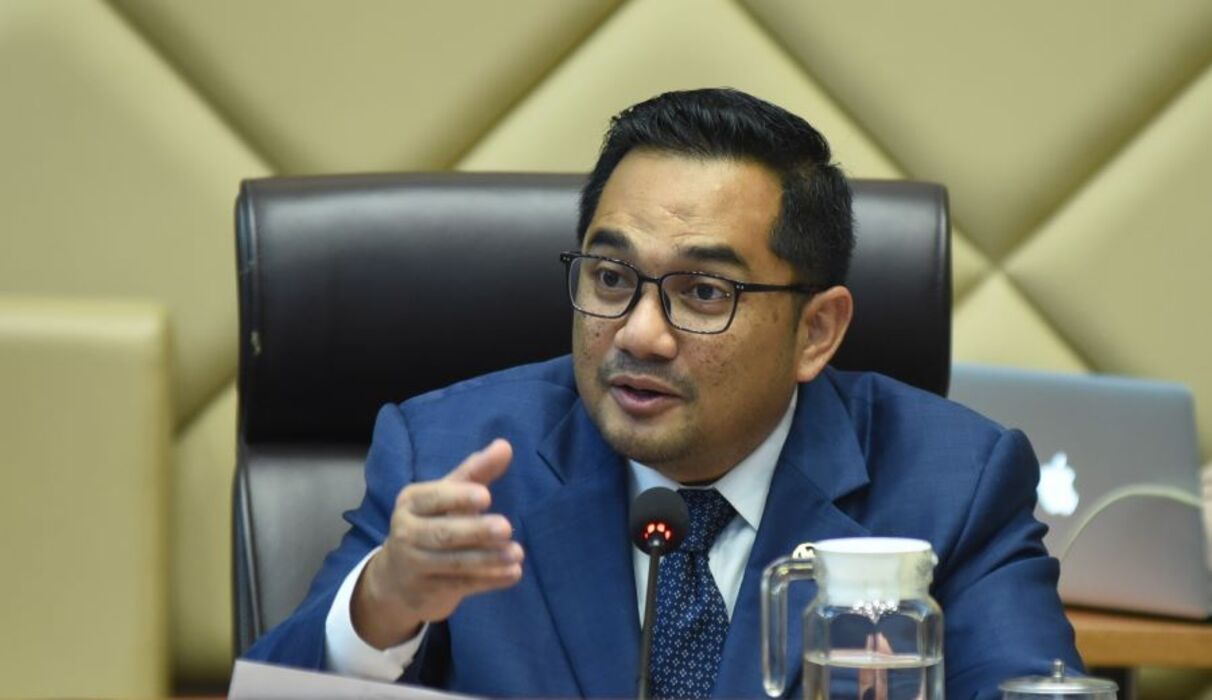
Commission II Chairman M. Rifqinizamy Karsayuda stated that there are two scenarios the government and the House need to prepare. The first scenario is if the revision of the Election Law is not carried out, making it necessary to synchronise existing regulations with the new KUHP and KUHAP. “If Law Number 7 of 2017 is not revised, how do we synchronise the provisions in the Election Law with the new KUHP and KUHAP?” Rifqi said at the Bawaslu office on Monday (29/6).
He noted two main aspects requiring alignment: the process of proving criminal acts and the regulation of sanctions. He explained that the new KUHAP’s evidentiary system actually makes it easier for the Election Supervisory Body (Bawaslu) and the Integrated Law Enforcement Centre (Gakkumdu) to handle election crime cases. “Only two things have changed significantly. One, the evidence process through evidentiary tools, which I think actually benefits Bawaslu and the Gakkumdu Centre because the tools are much easier and more flexible. The second is regarding sanctions,” he said.
If the revision of the Election Law cannot be carried out, Rifqi believes harmonisation can also be achieved through the formulation of a Bawaslu Regulation (Perbawaslu). “If Law Number 7 of 2017 is not revised, we can make a breakthrough through a Perbawaslu. Bawaslu drafts it, we discuss it in Commission II, and we ratify the new Perbawaslu if a clear-cut reference is still needed,” he said. However, he assessed that a simpler step would be to directly refer to the provisions in the new KUHAP and Law Number 1 of 2026 without creating new legal products.
Beyond regulatory harmonisation, Rifqi highlighted that the current election law enforcement system still faces fundamental problems. Based on an evaluation of the 2024 General Election, Commission II found many overlapping dispute resolution mechanisms that could disrupt legal certainty. He noted that election crimes have a different character compared to general crimes because they are directly linked to strict election timelines. “Elections are held periodically for political terms that are also periodic. Therefore, the handling of election crimes must be swift. The criminal process must not hold the periodisation of office hostage,” he said.
He gave an example that a single alleged election violation can currently be processed through various legal channels simultaneously, including Bawaslu, the Gakkumdu Centre, the Constitutional Court, general courts, administrative courts, and the Election Organiser Honour Council (DKPP). This condition is considered to create legal uncertainty. “We have a big problem because we do not have a procedural law for resolving election disputes. The same object can be brought to various legal resolution mechanisms,” he said.
Rifqi also highlighted that ethical rulings on election organisers are sometimes issued after the elected candidate has been inaugurated. He believes this situation can create new legal problems and disrupt the legitimacy of election results. “The process of handling election law, including ethics, cannot be arranged in such a way that it stops or ends before the inauguration stage is carried out. This disrupts the legitimacy of the office and disrupts the legitimacy of the stages and the election itself,” he said.
Therefore, Commission II is pushing for the establishment of an integrated electoral justice system. The system is expected to unify dispute resolution mechanisms, clarify the division of authority among institutions, and avoid overlapping legal processes for the same case. “Commission II has an interest in ensuring that in the future we have an electoral justice system. Not only a system of handling election law that is interconnected, but also to overcome the fragmentation of authority. If one case is brought everywhere, we will never finish dealing with this issue,” Rifqi said.