
House Commission II: Election Bill Talks Cannot Proceed Without Party Leaders' Approval
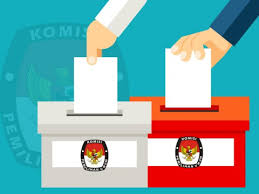
Chairman of the House of Representatives’ Commission II, Muhammad Rifqinizamy Karsayuda, has revealed that the discussion on revising Law Number 7 of 2017 concerning Elections cannot formally commence as it is still awaiting the green light from political party chairpersons. According to him, the approval of party leaders is the determining factor for members of parliament to proceed to the official deliberation stage. “For us politicians, if there is no green light from the chairman, we cannot move. If we talk about political party institutionalisation, this condition is indeed not ideal. But I have to convey it as it is. I feel the need to present the political reality that is actually happening,” Rifqi said during a public discussion in Tangerang on Tuesday.
He explained that the revision process is still pending a political decision at the party leadership level. Nevertheless, Commission II has requested all its members to submit the problem inventory list (DIM) for the Election Bill revision to their respective party chairpersons and faction leaders as an effort to accelerate formalisation. “Currently, we are asking all members of Commission II of the DPR RI to submit this DIM to their respective chairpersons and faction leaders. This is part of our effort to encourage the acceleration of the formalisation of the revision of Law Number 7 of 2017,” he stated.
Rifqi emphasised that although internal discussions have been intensive, formal deliberations on the Election Bill revision have not yet begun because the working committee (panja) has not been formed. He admitted he could not yet confirm when the official deliberation process would open. “Regarding when the formal discussion will start, I must honestly say: wallahu a’lam bishawab. What is clear is that discussions in Commission II are intensive. The 28 DIMs have been discussed internally within Commission II, although the discussions are not open to the public out of respect for the political factions,” he said.
According to Rifqi, Commission II has actually been preparing the substance of the Election Bill revision since early 2026, even though the working committee had not yet been formed. At that time, Commission II received two legislative assignments, namely the discussion of the Population Administration Bill and the revision of the Election Bill. However, under the direction of the House leadership, the discussion of the Population Administration Bill was prioritised first. Despite this, Rifqi reminded that the revision of the Election Bill cannot be postponed indefinitely as it could clash with crucial electoral stages, particularly the selection of KPU member candidates across Indonesia in October 2026.
“If the Election Bill is not moved forward, we could potentially enter a crucial stage at the end of 2026, namely the selection of KPU member candidates throughout Indonesia in October 2026, without adequate regulatory updates,” he said. To prepare the revision material, Commission II has been inviting experts, specialists, NGOs, and community organisations since January 2026 to discuss the substance of the changes to the Election Law. Rifqi described this step as a breakthrough, as according to the DPR’s rules of procedure, the formation of a working committee should be carried out first before discussions with external parties.
From this series of meetings, Commission II compiled 28 problem inventory lists (DIM) for the Election Bill revision. Rifqi stated that the preparation of the DIM was based on the decisions of the Constitutional Court regarding election cases. Out of 186 election-related petitions submitted to the Constitutional Court, 179 were registered and tried, resulting in 22 decisions that became the main foundation for Commission II. “These 22 decisions are our primary baseline in compiling the DIM,” said Rifqi. He also stressed that the 28 DIMs not only refer to the granted Constitutional Court decisions but also consider legal considerations in other relevant cases for the reconstruction of the Election Law norms.
From these DIMs, Commission II has prepared three alternative models of norms for the Election Bill revision. First, norms that fully follow the Constitutional Court decisions. Second, norms originating from experts, specialists, NGOs, and election observer institutions. Third, views from factions in the DPR, although these are not yet official. Rifqi also mentioned that these three alternative models of norms were submitted to the DPR leadership last month. In communication with the DPR leadership, Commission II also inquired whether the revision of the Election Bill would remain in Commission II, be changed to a special committee, or be handed over to the government. According to him, the DPR leadership decided that the discussion of the Election Bill revision remains assigned to Commission II.