
House Commission I Explains Rules on Deploying the TNI During Protests
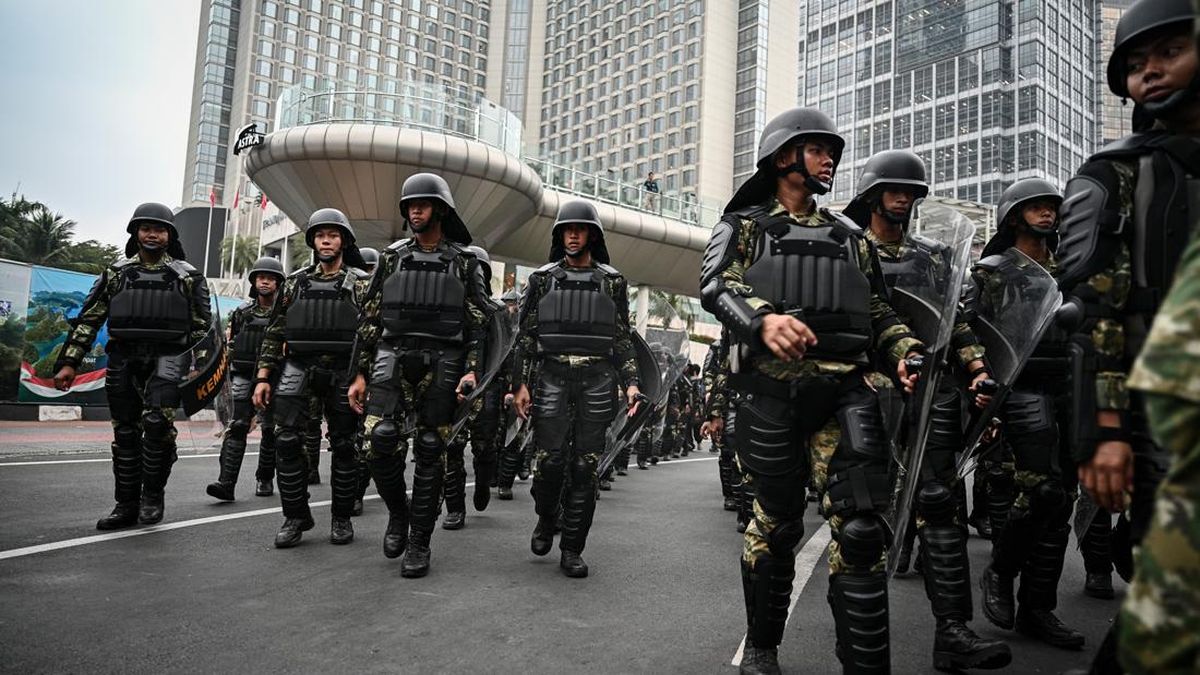
House Commission I has explained the rules on deploying Indonesian military (TNI) personnel during protests, an issue that has drawn attention following a student demonstration near the HI Roundabout in Jakarta on Wednesday (28 October).
“In the context of managing social conflict, procedures must be followed before the TNI is involved,” House Commission I member TB Hasanuddin said in a written statement on Thursday (29 October).
He said TNI involvement in protest security could not be undertaken arbitrarily. For protests with the potential to lead to conflict, Hasanuddin said the involvement of the TNI was governed by Law No. 7/2012 on the Management of Social Conflict.
Articles 44 and 45 of Government Regulation No. 2/2015 set out the rules on TNI involvement in managing social conflict. Hasanuddin said the deployment of TNI personnel must be preceded by a request to the President from the local government concerned.
In addition, during field operations, TNI personnel are under the control of the Indonesian National Police (Polri). Hasanuddin said TNI assistance to the police was also linked to provisions on Military Operations Other Than War (OMSP), as set out in Article 7 of the TNI Law and its amendments.
“Under the existing provisions, the TNI cannot be deployed without meeting the legal requirements and procedures. The legal basis for its involvement, who requested it and how it will be carried out must all be clear,” he said.
Meanwhile, House Commission I Deputy Chair Dave Laksono said the TNI’s presence at the protest near the HI Roundabout was normal and in accordance with the law. He said both the TNI and Polri were responsible for maintaining order and safeguarding democratic freedoms.
“That is normal and in accordance with the TNI Law, which gives it a role in providing security,” he said.