
House Budget Committee Chair Highlights Macro Indicator Targets in 2027 State Budget Bill
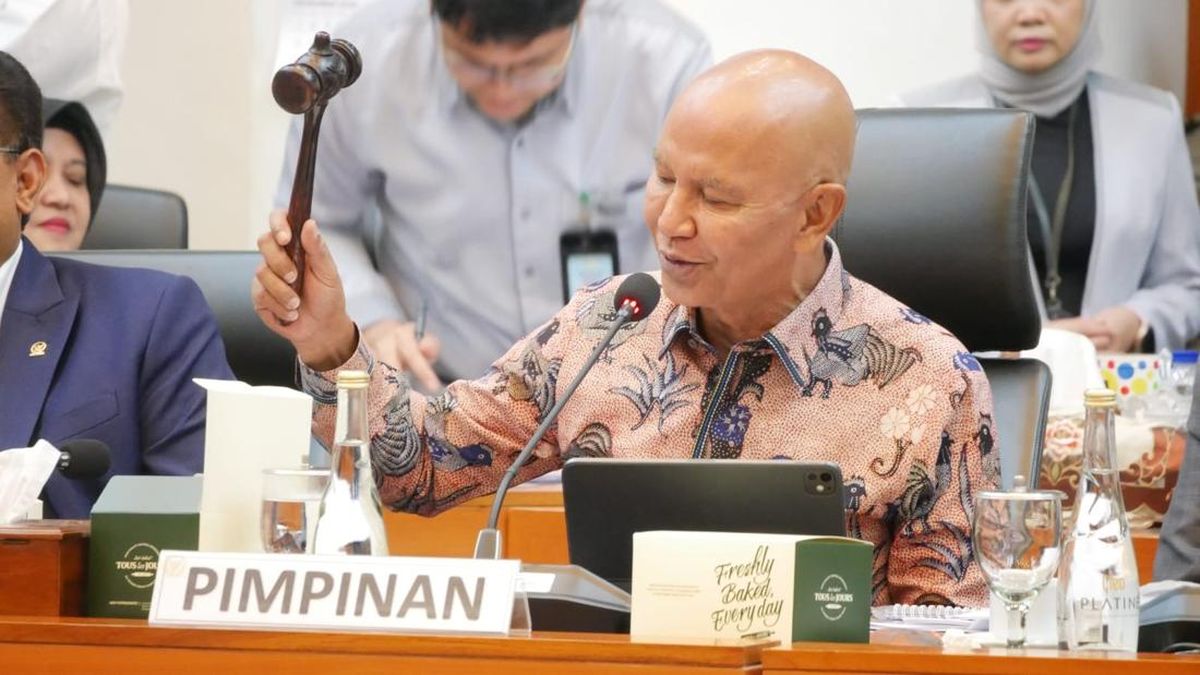
The House of Representatives’ Budget Committee (Banggar DPR) chair, Said Abdullah, has highlighted a number of strategic notes regarding the deliberation of the 2027 State Budget Bill (RUU APBN) on Thursday (27/8). These notes cover adjustments to macro indicators, validation of poverty data, and state revenue targets.
He assessed that every planned state spending programme must have clear objectives and measurable impacts. This step is considered important so that state spending correlates directly with growth, equity, and economic justice.
“Last week we agreed on a number of important matters, the results of our joint evaluation of the implementation of the 2025 State Budget. In essence, going forward the State Budget must contain; every programme has clear objectives, every programme must be able to have its impact measured,” he said in a written statement on Thursday (27/8).
Said continued that the Budget Committee has observed the alignment of indicators between the KEM PPKF and the Financial Note of the 2027 State Budget Draft. However, several indicators are considered to need reconsideration because the latest figures from Statistics Indonesia (BPS) are already close to the government’s targets.
The government has proposed an economic growth target of 6 percent in the Financial Note of the 2027 State Budget Draft. In addition, the Gini ratio target is proposed in the range of 0.362 to 0.367, while the current Gini ratio stands at 0.368.
For the unemployment rate, the Financial Note proposes a target of 4.30 percent to 4.87 percent, while BPS data stands at 4.68 percent. Meanwhile, the proportion of formal workers is proposed at 40.8 percent, even though the previous realisation had touched 40.83 percent.
Regarding the assumption of the rupiah exchange rate against the US dollar, the House considers the midpoint figure of Rp17,500 to be quite realistic. Nevertheless, Said emphasised the importance of clarity in the narrative and orchestration of monetary policy in facing global uncertainty.
“Then what is our monetary policy orchestration? Will we focus more on strengthening commodity export expansion, or will we prioritise reducing inflation in the food and energy sectors which are largely supported by imports,” he added.
Said stressed that every State Budget programme must use accurate data so that budget interventions are well targeted. He asked BPS to immediately validate data to prevent errors in determining community decile groups.
Data validation is considered very crucial so that no poor citizens lose their right to economic justice. Moreover, the National Energy Sector Integrated Data (DTSEN) is the main reference for various government policies.
State spending in the 2027 State Budget Draft is planned to reach Rp4,097.2 trillion. This spending figure exceeding Rp4,000 trillion is the first in the history of Indonesia’s State Budget.
The increase in spending demands a consistent increase in state revenue from the taxation and non-tax state revenue (PNBP) sectors. The House asked the government to be careful in designing new taxation policies so as not to burden the public.
“We see there are targets for increases in income tax and VAT. We hope the increase targets are natural, caused by economic growth, not from new taxation that could potentially burden the people,” Said asserted.
The income tax revenue target is proposed to increase by Rp64.8 trillion, while VAT is targeted to increase by Rp132.8 trillion. Conversely, the PNBP target in the 2027 State Budget Draft has decreased to Rp517.4 trillion from the estimated 2026 realisation of Rp575 trillion.
The Budget Committee asked for the 2027 PNBP target to be recalculated through improvements in natural resource governance. This step is considered to still allow the PNBP target to remain high even though commodity prices have the potential to decline.
In addition to revenue, Said reminded the government about the roadmap for gradual fiscal management towards a balanced State Budget. Fiscal discipline is needed to build market confidence and improve the debt burden ratio.
The potential 2026 State Budget deficit is estimated to reach 2.85 percent, an increase from the previous year’s 2.81 percent. The House hopes the government can control and maintain the 2027 fiscal deficit at the level of 2.4 percent.
“We hope the government is disciplined in maintaining the 2027 fiscal deficit at the level of 2.4 percent. Because this step is a gradual path towards a balanced State Budget. Our debt service ratio is already so large,” Said concluded.
Efforts to reduce the deficit are seen as an important step to address concerns over Indonesia’s debt service ratio. This step is expected to bring the national fiscal direction back to a healthy and sustainable condition.
Source: jawawa.id (https://jawawa.id/newsitem/house-budget-committee-chair-highlights-macro-indicator-targets-in-2027-state-budget-bill-1787817164)
Originally published by CNN Indonesia (https://www.cnnindonesia.com/nasional/20260827141245-633-1396951/ketua-banggar-dpr-soroti-target-indikator-makro-dalam-ruu-apbn-2027), translated from Indonesian