
Hotspots Triple in 2026, Forest and Land Fire Threat Expands
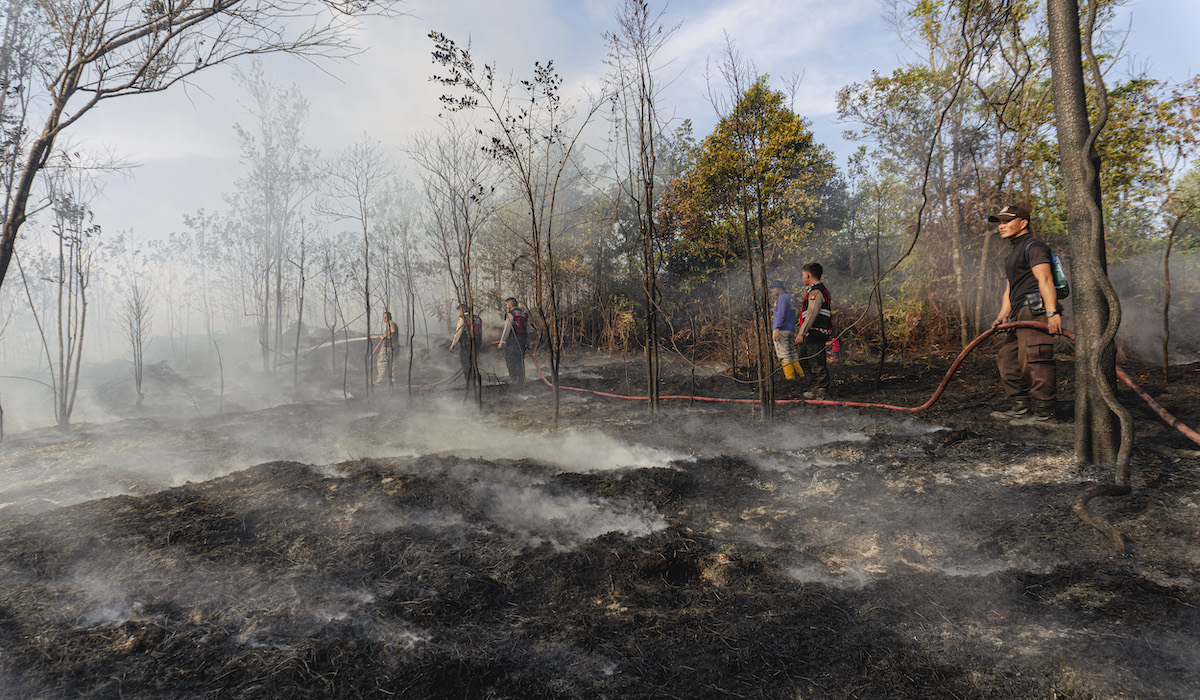
The government has warned of a more serious threat of forest and land fires (karhutla) in 2026. This warning comes after a sharp increase in the number of hotspots and the area of burned land since the beginning of the year.
Environment Minister Hanif Faisol Nurofiq stated that Indonesia is now entering a crucial phase in controlling karhutla. He conveyed this during the 2026 Forest and Land Fire Control Coordination Meeting on Tuesday (7/4).
“Up to 5 April 2026, 700 hotspots with high confidence levels have been recorded. That number has increased almost threefold compared to the same period last year, which was 262 hotspots,” Hanif said.
There has also been a surge in the extent of forest and land fires. Up to the end of February 2026, the burned area reached 32,637 hectares, surging about twentyfold compared to the same period in 2025, which was recorded at 1,617 hectares.
According to Hanif, this data is a strong signal that prevention efforts must be tightened early, especially ahead of the dry season.
Based on forecasts from the Meteorology, Climatology, and Geophysics Agency (BMKG), the potential for karhutla is expected to start increasing in July and peak in August to September 2026. Vulnerable areas include Sumatra, Kalimantan, and southern Papua.
Hanif emphasised that the karhutla threat is not only triggered by weather factors. Human activities also play a significant role, from land clearing by burning to unsustainable peatland management.
“Natural factors such as El Niño and extreme weather conditions further worsen the situation,” Hanif said.
Karhutla not only causes environmental damage but also contributes significantly to greenhouse gas emissions that accelerate global warming. The impacts are widespread, from health disruptions due to smoke, damage to biodiversity, to economic losses reaching trillions of rupiah.
On the other hand, Indonesia has committed to reducing emissions by 31.89 percent by 2030 and achieving net zero emissions by 2060. Therefore, controlling karhutla is an important part of the national climate agenda.
To date, only two provinces have declared a karhutla emergency alert status, namely Riau and West Kalimantan. The central government is urging other vulnerable regions to take similar steps so that handling can be carried out more quickly and effectively.
Hanif stressed that declaring an emergency alert status is key to mobilising central government support promptly.
He asked all regional heads in vulnerable areas to immediately take concrete steps, from strengthening prevention, increasing patrols and hotspot checks, to ensuring readiness of human resources, facilities, and budgets.
In addition, Hanif also emphasised the importance of law enforcement against perpetrators of forest and land burning.
“We must act quickly, structured, and without compromise. This is about lives, the environment, and the nation’s future,” he asserted.