
Hotspots Surge in Central Kalimantan as Cross-Border Haze Threatens Health
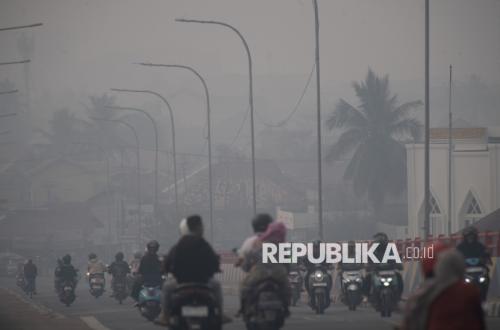
Forest and land fires (karhutla) in Indonesia continue to raise concerns about air quality and the impact of transboundary haze in Southeast Asia. Amid calls for stronger regional co-operation, the Ministry of Forestry has recorded a surge in hotspots in Central Kalimantan, while environmental campaigners say tackling the crisis requires political will, better forest governance and cross-border accountability.
Data from the Ministry of Forestry’s Early Detection Information System for Forest and Land Fire Control (SiPongi) showed 793 high-confidence hotspots nationwide as of 9pm WIB on Saturday (10 October 2026). This was an increase of 356 from the 437 recorded the previous day.
Central Kalimantan recorded the largest rise among the six provinces prioritised for fire control, with hotspots climbing from 122 to 288. South Sumatra recorded 60, down from 107. West Kalimantan had 44, South Kalimantan 28, Jambi one, and Riau none.
“Overall, the six priority provinces recorded 421 hotspots, up from 270 the previous day,” the Ministry said in a statement on Sunday (11 October 2026).
The fires have also affected public health. Ministry of Health data showed 170,000 cases of acute respiratory infection (ARI) in areas affected by haze from August to mid-September 2026. More than 40,000 cases were among children.
The Center of Economic and Law Studies (Celios) estimates that the economic losses caused by the fires between January and August 2026 amounted to between Rp39.29 trillion and Rp123.1 trillion. Haze also led to the closure of several schools in Malaysia and brought air quality in Malaysia and Singapore to unhealthy levels.
Auriga Nusantara executive director Timer Manurung said recurring transboundary haze could not be separated from deforestation and political policies that encourage forest exploitation.
“Government policy has legitimised exploitation and fuelled the spread of forest fires and deforestation in Indonesia,” Timer said during a discussion titled “From Forest to Transboundary Haze: A Call for Collective Action in Southeast Asia” at Bangkok Climate Action Week 2026 in Bangkok on Thursday (8 October).
He said forest management policies often failed to involve Indigenous communities meaningfully. As a result, traditional knowledge that could help prevent fires was frequently overlooked. Timer said recurring haze had prompted protests from Malaysia, Singapore, Brunei Darussalam and the Philippines because it disrupted people’s lives. Malaysia and Brunei Darussalam have also raised the issue through ASEAN mechanisms.
Former head of the ASEAN Environment Division Apichai Sunchindah said the haze crisis in Southeast Asia was not merely an environmental issue, but also a political, social and economic one.
“The multifaceted nature of the haze requires more parties to play a role in preventing it,” Apichai said.
Nusanterra co-founder and director Khairun Nisa Zabidi said tackling haze could not rely solely on negotiations between governments. Investors and global supply-chain businesses, she said, should also help drive improvements in forest governance.
“We need a global finance movement to intervene in the transboundary haze problem. The more investors care about the fate of forests and the communities that depend on them, the more everyone in their supply chains will care too,” Nisa said.
Melinda Martinus, a fellow at the ASEAN Studies Center of the ISEAS-Yusof Ishak Institute, added that tackling haze required strong political will from ASEAN countries.
“Will ASEAN institutions continue to allow their people to suffer from illness year after year?” she said.
MapBiomas Fire data showed that the area burned increased on every major Indonesian island in August 2026. The highest numbers of fires were in Kalimantan and Papua. Seventy per cent of the total burned area was in Bali, Nusa Tenggara and Papua.
A study by Auriga Nusantara recorded 6.1 million hectares of land burned in Indonesia between 2013 and 2023. Fifty-five per cent of the fires occurred in Kalimantan and Sumatra, most of them in areas with natural vegetation cover.
In response to the latest developments, the Ministry of Forestry has stepped up monitoring, patrols, field inspections and firefighting operations, particularly in Central Kalimantan. Control efforts are being carried out by Manggala Agni alongside the National Disaster Mitigation Agency (BNPB), the Indonesian National Armed Forces (TNI), the National Police (Polri), the Meteorology, Climatology and Geophysics Agency (BMKG), regional disaster management agencies (BPBD), local governments, communities, volunteers and businesses.
Source: jawawa.id (https://jawawa.id/newsitem/hotspots-surge-in-central-kalimantan-as-cross-border-haze-threatens-health-1791697841)
Originally published by Republika (https://esgnow.republika.co.id/berita/tmq91j490/hotspot-karhutla-di-kalteng-melonjak-kabut-asap-lintas-batas-negara-ancam-kesehatan), translated from Indonesian